
Lawn
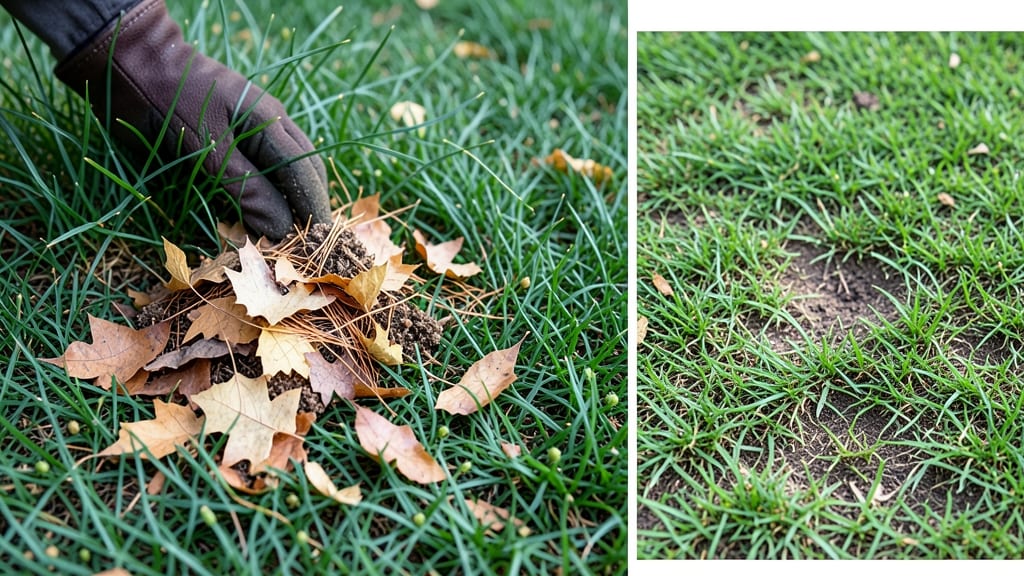
Leaving leaves on lawn creates a natural mulch layer that improves soil health by recycling nutrients, moderating temperature extremes, and preserving moisture while fostering beneficial soil microbes and organic matter accumulation.
This natural approach mimics how forest floors retain nutrients—when leaves decompose, they release nitrogen, phosphorus, and potassium back into the soil, which grass roots readily absorb. 🌱 The leaf layer also acts like a thermal blanket, protecting roots from both winter frost and summer heat stress while reducing evaporation.
Studies show lawns with leaf mulch often require 20-30% less watering during dry spells compared to bare soil.
The key is proper management: chop leaves into ½-inch pieces with your mower to prevent smothering grass, and distribute them evenly. I've found that fall is the best time to leave leaves—when they're already breaking down naturally.
For heavy accumulations, simply mow them into the grass rather than raking them away.
💡 In This Article
- How Lawn Leaves Improve Soil Fertility
- Best Practices for Mulching Leaves on Grass
How lawn leaves improve soil fertility
When leaves decompose on your lawn, they undergo a natural process called mineralization where complex organic compounds break down into simpler nutrients. This releases essential elements like nitrogen (N), phosphorus (P), and potassium (K)—the same trio found in synthetic fertilizers—directly into the soil.
A single layer of shredded leaves (about ½-inch thick) can contribute roughly 2-3 pounds of nitrogen per 1,000 square feet over a winter season, which is equivalent to a light fertilizer application. 🌱
The decomposition process also stimulates soil microbes, particularly decomposers like bacteria and fungi that thrive on cellulose and lignin in leaves. These microorganisms create microscopic channels in the soil, improving aeration and water infiltration by up to 30% compared to compacted soil.
The mycelium networks formed by fungi even help grass roots access nutrients more efficiently—a process called "nutrient mining." Over time, this organic matter builds soil structure, increasing its ability to hold water and resist compaction from foot traffic.
What makes this particularly effective is how the leaf layer moderates soil temperature. In winter, a 1-inch mulch layer can keep soil temperatures 5-10°F warmer than exposed ground, protecting roots from frost damage.
During summer, it provides shade that reduces soil temperature swings by 15-20°F, creating a more stable environment for microbial activity. This temperature buffering is why forest floors (which naturally accumulate leaves) maintain consistent soil conditions year-round.
One often overlooked benefit is the leaf layer's role in water conservation. By reducing evaporation from the soil surface, mulched lawns can maintain 20-30% more moisture during dry periods. This moisture retention is crucial because grass roots grow deeper when they don't experience rapid drying cycles—a phenomenon called "drought stress."
The result? Healthier root systems that make your lawn more resilient to heat waves and prolonged dry spells. 💧
For maximum fertility benefits, aim for a ½- to 1-inch layer of shredded leaves—thicker layers can become mat-like and block sunlight from reaching grass.
The decomposition rate varies by leaf type: maple and oak leaves break down faster (about 3-6 months) due to their higher nitrogen content, while pine needles take nearly twice as long. This variation means mixing leaf types can create a more balanced nutrient release over time.
The long-term impact on soil health becomes apparent after just one season. Research from the University of Minnesota shows that lawns with consistent leaf mulching develop 15-20% more organic matter in their top 6 inches of soil within three years.
This organic matter acts like a sponge, holding onto nutrients and water that would otherwise leach away, while also improving the soil's cation exchange capacity—the ability to hold onto essential plant nutrients. 🌿