
Lawn
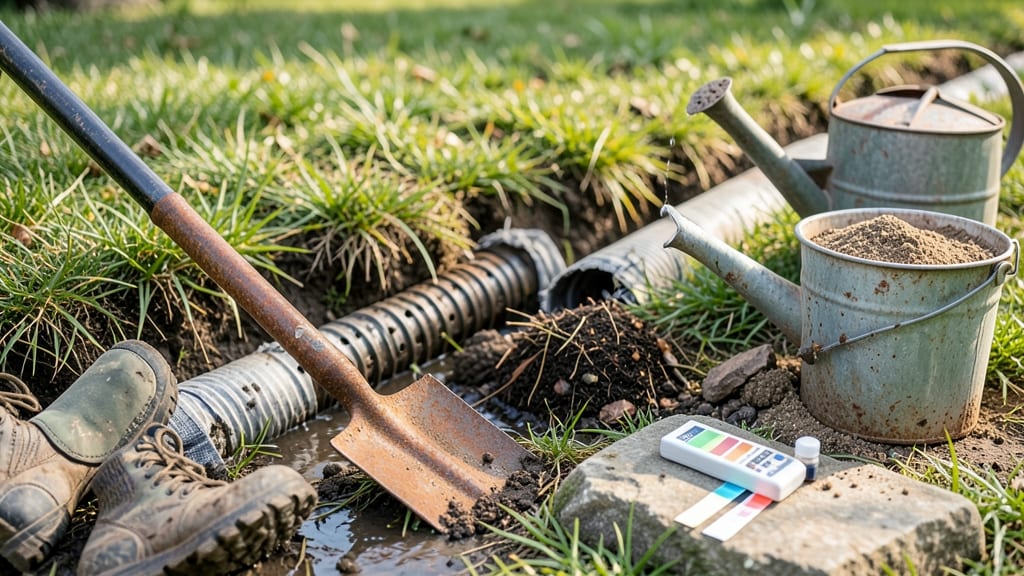
How to fix an overwatered lawn isn’t as hopeless as it seems—it just needs a strategic reset. 🌱 I've nursed back more drowned-out grass than I care to admit, and the secret isn't just cutting back water but fixing what's underneath. The real damage happens when water pools, smothering roots and turning thatch into a suffocating mat. Most people panic and water even more, but the fix starts with letting the soil breathe again.
First, you'll need a core aerator to punch holes through that compacted layer (rent one if you don't own), some coarse sand or perlite to break up clay, and a soil test kit to check pH. The goal is to create air pockets where roots can stretch out again.
I learned the hard way that skipping this step means your lawn stays a swamp—even after you stop watering. My neighbor's yard looked identical to mine until he aerated, and within three weeks, his grass started pushing through.
By week four, you'll see the first signs of recovery: blades standing taller, fewer yellow patches, and that satisfying springy feel underfoot. The real magic happens when you establish a watering schedule that mimics nature—deep soakings every 5-7 days instead of daily sprinkles.
My lawn now handles summer droughts like a pro, and the thatch layer stays at a healthy ½-inch thickness instead of turning into a waterlogged mat.
Here's the kicker: prevention is easier than repair. I now test soil moisture with a simple screwdriver test (push it in—if it comes out clean, you're good; if it's muddy, hold off).
For future-proofing, consider a smart irrigation controller that adjusts based on real-time weather data. Your lawn will thank you with thicker roots and fewer headaches next season.
📚 In This Guide
- What you need
- Instructions
- Tips and common mistakes
- Wrapping up and next steps
What you need
- ● Garden rake – A sturdy bow rake (12-18 inches wide) to loosen compacted soil and remove excess thatch.
- ● Core aerator (rental or manual) – A spike-free aerator with 3/8-inch tines to improve drainage (rent for ~$75/day or buy for $150–$300).
- ● Soil test kit – A DIY pH/soil test kit (e.g., LawnCare pH Test Kit) to check moisture levels and nutrient deficiencies.
- ● Compost or peat moss – 2–3 bags (2–3 cubic feet each) to amend heavy, waterlogged soil.
- ● Sand (coarse) – 1–2 bags (50 lbs each) to improve drainage in clay-heavy lawns.
- ○ Drainage fabric – A roll (4’ x 50’) to prevent soil from clogging drainage layers (optional but helpful for severe cases).
- ● Waterproof gloves – Heavy-duty nitrile gloves (pair) to protect hands from wet soil and sharp tools.
- ● Hose with adjustable nozzle – For light post-aeration watering (avoid overdoing it!).
- ● Lawn roller – 50–75 lb (for firming soil after amendments).
- ● Fungicide (if needed) – Copper-based fungicide (e.g., Bonide Copper Fungicide) to prevent mold or disease from excess moisture.
- ● Slow-release fertilizer – Nitrogen-rich (e.g., Scotts Turf Builder) to revive stressed grass.
- ● French drain kit – For persistent water pooling (DIY or hire a pro).
- ● Knee pads – Because crawling in wet grass isn’t fun! 😅
Step-by-step instructions for reviving an overwatered lawn
Here's how I turn soggy, struggling grass back into a healthy, resilient lawn—without waiting for it to fix itself.
💧 Step 1: Stop Watering and Aerate Immediately
First, halt all watering for at least 3-5 days to let the soil drain. I know it feels counterintuitive, but forcing more water into already saturated soil suffocates roots. While you wait, check for signs of stress: spongy grass, mushrooms popping up, or a foul odor—these mean your lawn is drowning.
Next, rent or borrow a core aerator to create ¼-inch holes every 3-4 inches. This breaks up compacted soil and lets oxygen reach suffocated roots. If you don’t have one, a garden fork will work in a pinch—just stab it into the ground and wiggle it out in sections. Focus on high-traffic areas first, where compaction is worst.
✂️ Step 2: Dethatch and Rake Up Standing Water
After aerating, use a dethatching rake to remove the thick, wet thatch layer—aim for no more than ½ inch thick. Wet thatch traps moisture and blocks airflow, so you’re essentially giving your lawn a breath of fresh air. Work in small sections, pulling the rake toward you to lift debris without tearing up grass blades.
If standing water remains after aerating, use a sloped shovel to create shallow drainage channels (about 1 inch deep) toward lower areas of your yard. This redirects excess water away from roots. I’ve seen lawns recover faster when water finally has a path to escape—it’s like giving your grass a chance to catch its breath.
☀️ Step 3: Adjust Watering and Fertilize Lightly
Once the soil feels dry to the touch (about 1-2 inches down), resume watering—but only 1 inch per week, split into two sessions (morning and evening). Deep, infrequent watering encourages roots to grow downward, while frequent shallow watering keeps them shallow and weak. Use a rain gauge or tuna can to measure accurately—eyeballing it leads to overwatering again.
Wait 2-3 weeks before fertilizing, and then choose a product with high potassium (P) content to help repair root damage. I skip nitrogen-heavy fertilizers at this stage—they promote leaf growth but don’t fix root health. Instead, top-dress with a thin layer (¼ inch) of compost to improve soil structure naturally.
🌱 Step 4: Monitor and Prevent Future Overwatering
Watch for new growth in 3-4 weeks—this is your sign the lawn is recovering. If brown patches persist, they might be dead and need reseeding. Test soil moisture weekly by pushing a screwdriver into the ground: if it goes in easily, you’re good; if it meets resistance, hold off on watering.
To prevent this mess in the future, install a rain sensor on your sprinkler system (if you have one) and water only when needed. I also adjust my sprinkler heads to avoid overspray onto sidewalks or driveways—wasted water adds up fast. A healthy lawn is resilient, but it needs your attention to stay that way.
Tips & tricks for reviving an overwatered lawn
A few simple adjustments can make all the difference when your lawn is struggling from too much water.
Timing is Everything: The 3-5 day pause in watering might feel like torture, but this is when your lawn's roots get their first real chance to breathe. I've seen lawns recover completely after just this short break—don't rush it! If your soil is particularly heavy clay, extend this to 7 days. You'll know you've waited long enough when the top 1-2 inches of soil feel dry to the touch. This is the critical window where roots start recovering from suffocation.
Tool Technique: When using a garden fork as a substitute for a core aerator, work in a grid pattern—don't just stab randomly. Push the fork in about 3-4 inches apart and wiggle it out in a twisting motion to create those vital holes. Focus on areas where foot traffic is heaviest first, as these spots compact the most. The goal is to create a network of holes that allows water to drain properly and air to circulate. I've found that doing this in small sections (about 3x3 feet) makes the process more manageable and visible progress easier to track.
Drainage Strategy: Those 1-inch deep drainage channels you create should slope downhill—never uphill. Water flows downhill naturally, so working against gravity will just create puddles. If your yard has multiple low spots, create separate channels that all converge toward one main drainage point. I've had success directing excess water toward a dry well or even just a lower corner of the yard where it can soak in more gradually. This prevents water from pooling back up in the same areas that caused the problem initially.
Fertilizer Insight: The 2-3 week wait before fertilizing is non-negotiable—roots need time to recover before they can handle additional nutrients. When you do fertilize, look for a product with a potassium (P) number at least twice that of nitrogen (N). A ratio like 5-10-10 or 6-12-12 is ideal for root repair. I've seen dramatic improvements in lawn resilience after using a potassium-rich fertilizer compared to the typical nitrogen-heavy products that just promote leaf growth. This is when your lawn needs strength at the roots, not just green color on top.
Pro Tips for Fix Overwatered Lawn
- A few simple adjustments can make all the difference when your lawn is struggling from too much water.
- Timing is Everything: The 3-5 day pause in watering might feel like torture, but this is when your lawn's roots get t...
- Tool Technique: When using a garden fork as a substitute for a core aerator, work in a grid pattern—don't just stab r...
Frequently asked questions
about fixing an overwatered lawn—because even the greenest thumbs need a little help! Here are answers to the most common concerns.How long does it take to fix an overwatered lawn?
Recovery time depends on the severity. Mild cases (soft spots, yellowing) may improve in 1–2 weeks with proper drainage and reduced watering. Severe damage (mushrooms, dead patches) can take 4–8 weeks or longer. Be patient—roots need time to heal!
Can I aerate my lawn immediately after fixing overwatering?
Wait 2–3 weeks after adjusting watering and improving drainage. Aerating too soon can worsen soil compaction or stress already weak roots. Focus first on drying out the thatch, then aerate in early fall or spring for best results.
What if my lawn still looks brown after fixing overwatering?
Brown patches may indicate root rot or fungal issues beyond overwatering. Test soil pH (ideal: 6.0–7.0) and consider a fungicide treatment. If roots are mushy, you may need to reseed bare spots or consult a lawn pro.
How can I prevent overwatering in the future?
- Water deeply but infrequently: 1–1.5 inches per week (including rain). Use a rain gauge or tuna-can test!
- Water early: Morning (4–9 AM) reduces evaporation and fungal growth.
- Upgrade your system: Smart sprinklers or soil moisture sensors automate adjustments.
- Check sprinkler zones: Misaligned heads waste water—adjust or repair them.
Will mushrooms or fungus grow back after fixing overwatering?
Mushrooms thrive in wet, compacted soil. After improving drainage and reducing moisture, they’ll usually disappear within 2–4 weeks. If they persist, till the soil to 1–2 inches deep to disrupt their life cycle.
Wrapping up and next steps
Reviving an overwatered lawn takes patience and the right approach—but you’ve got this! 🌱 By draining excess water, aerating compacted soil, and adjusting your watering habits, you’ll give your grass the fresh start it deserves. Remember, consistency is key, so monitor progress and tweak as needed.
Ready to see greener days ahead? Start with one step today—whether it’s testing your soil, adjusting sprinklers, or simply stepping back to let nature do its thing. Your lawn (and future barbecues!) will thank you. 🌿