
Lawn
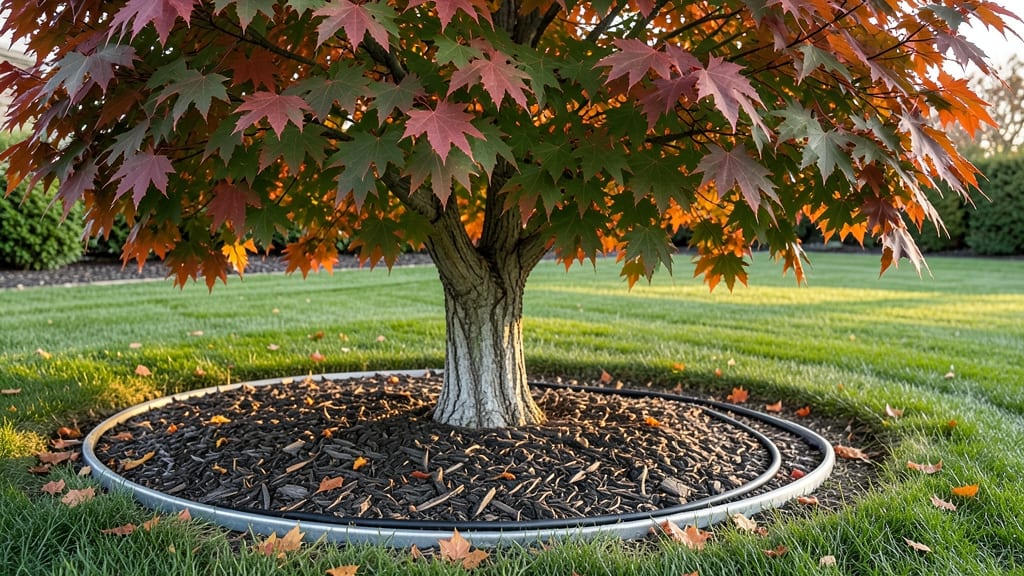
Lawn around trees needs more than just grass—it needs roots to breathe and soil that stays healthy. 🌳 I’ve learned the hard way that mowing too close or piling mulch against the trunk can strangle trees over time.
The secret lies in creating a 3-4 inch mulch ring that protects roots while keeping grass at bay, plus edging that guides growth without harming bark.
Start with a 12-inch-wide strip of mulch (wood chips or pine straw work best) around the tree base, keeping it 6 inches away from the trunk. This prevents moisture buildup and rot while blocking weeds.
For edging, use plastic or metal borders buried slightly into the soil—they last longer than stone and won’t compact like rocks. Grass can still grow outside this zone, but roots stay safe.
By summer, you’ll see thicker grass outside the mulch ring and healthier trees with fewer pests. The mulch stays in place, suppresses weeds naturally, and even improves soil over time.
Plus, the clean lines make your yard look intentional, not chaotic. It’s the kind of detail that turns a "just okay" lawn into a showstopper.
Works for any tree size or yard style—just adjust the mulch width based on trunk diameter. If you’ve got shade-loving grasses like fine fescue, they’ll thrive in the outer lawn while the tree gets the care it deserves. Let’s get that soil breathing right!
📚 In This Guide
- What you need
- Instructions
- Tips and common mistakes
- Wrapping up and next steps
What you need
- ● Organic mulch: 2–3 cubic yards (depending on tree size and root spread). Opt for wood chips, pine straw, or shredded bark—avoid dyed or chemically treated mulch.
- ● Edging tool: A half-moon or oscillating blade edger for clean lines (rent or buy a sharp, stainless-steel model for durability).
- ● Shovel or spade: A sturdy, 5–6-inch-wide garden spade for digging and shaping.
- ● Rake: A bow rake (for leveling mulch) and a leaf rake (to clear debris).
- ● Measuring tape: 25-foot tape for precise spacing (aim for 3–4 inches of mulch depth, no more!).
- ● Garden hose or sprinkler: To keep mulch moist during the first few weeks.
- ● Protective gear: Gloves, safety goggles, and knee pads (trust us, your knees will thank you!).
- ● Tree ring or landscape fabric: A 3-foot-wide roll to suppress weeds (leave gaps for water/moisture to reach roots).
- ● Soil conditioner: Compost or mycorrhizal fungi to boost root health (mix 1–2 inches into soil before mulching).
- ● String or spray paint: For marking clean edges before edging.
- ● Wheelbarrow: To haul mulch efficiently (a 2–3 cubic-foot capacity works great).
- ● Post-hole digger: If you’re installing tree guards for young saplings.
Step-by-step guide to protecting lawn areas around trees
Here's how I keep lawns lush while shielding tree roots from damage.
🪴 Step 1: Mark the Tree's Root Zone
Use a hula hoop or spray paint to mark a 3-foot radius from the tree trunk. This represents the critical root zone where most feeder roots spread. I always step back to visualize the full area before making cuts—roots can extend far beyond where you think.
For larger trees, expand the zone to 4-5 feet. You'll notice the soil within this circle stays darker and more moist than the surrounding lawn. This is your visual cue that roots are actively growing here. Avoid disturbing this area when mowing or edging.
✂️ Step 2: Create a Safe Mulch Barrier
Lay down landscape fabric in a 2-inch wide strip around the tree, extending 2-3 feet outward from the trunk. This creates a mulch volcano-free zone that prevents mulch from piling against the bark. I use staples to secure it tightly—loose fabric can shift and create gaps where weeds grow.
Overlap edges by 4 inches to block light completely. This ensures no grass or weeds will push through. The fabric should sit 1-2 inches below soil level—if it's too high, it can wick moisture away from roots during dry spells.
🌱 Step 3: Apply Mulch in the Right Pattern
Spread 3-4 inches of mulch (like wood chips or shredded bark) only in the outer ring beyond the root zone. Keep it 6 inches away from the trunk to prevent rot. I use a rake to create a slightly concave shape—this helps water flow toward the roots instead of pooling near the base.
Refresh mulch annually in late spring when old material breaks down. You'll know it's time when the layer looks thin (under 2 inches) or when you see bare soil peeking through. Fresh mulch also suppresses weeds naturally by blocking sunlight.
💧 Step 4: Adjust Mowing and Watering Practices
Set your mower blade to 3-4 inches high when cutting grass near trees. Taller grass shades the soil, reducing moisture loss. I always mow away from the tree in straight lines—never in circles—to avoid damaging roots with the mower's weight or blades.
Water the lawn deeply 1-2 times per week (not daily). Use a soaker hose placed 3 feet from the trunk to deliver moisture directly to the root zone. You'll see darker, more vibrant grass within 2-3 weeks as roots get consistent hydration without competition from shallow watering.
☀️ Step 5: Monitor and Maintain Year-Round
Check the tree's base and surrounding area every 4-6 weeks for signs of stress—like yellowing leaves or mushrooms (a sign of rot). If you spot grubs or ants, treat only the lawn area, never the root zone. I use beneficial nematodes for organic control—they target pests without harming trees.
In fall, add a 1-inch layer of compost to the mulch ring. This boosts soil fertility without smothering the tree. You'll notice faster regrowth in spring as roots access more nutrients. Skip fertilizing the lawn right next to the trunk—too much can burn tender roots.
Tips & tricks for perfect lawn care around trees
These simple strategies will help you protect your trees while keeping your lawn thriving—no more guessing or damage.
Root Zone Visualization: Step back and look at your tree from all angles before marking the 3-foot radius. Roots often spread farther than you'd expect—sometimes even twice as wide as the tree's canopy. I've seen roots extend 10-15 feet from the trunk in mature trees, so don't be afraid to expand that zone for larger specimens.
Fabric Placement Precision: When installing the 2-inch wide landscape fabric strip in Step 2, create a slight trench around the tree first. This keeps the fabric buried just below soil level, preventing it from wicking moisture away during dry spells. Use a garden knife to make clean cuts if you need to adjust the fabric after installation.
Mulch Application Technique: For that perfect 3-4 inch mulch layer, use a straight-edged tool like a trowel or ruler to measure depth consistently. The concave shape trick works best when the center is about 1 inch lower than the edges—this creates a natural water channel toward the roots. I like to mound mulch slightly higher at the outer edge to prevent erosion during watering.
Watering Timing Hack: The 1-2 times per week deep watering schedule works best when done in the early morning (before 10 AM). This gives roots time to absorb moisture before evaporation kicks in. Place your soaker hose 3 feet from the trunk and let it run until water appears 6 inches beyond the mulch ring—this ensures the entire root zone gets hydrated.
Pro Tips for Lawn Around Trees
- These simple strategies will help you protect your trees while keeping your lawn thriving—no more guessing or damage.
- Root Zone Visualization: Step back and look at your tree from all angles before marking the 3-foot radius. Roots ofte...
- Fabric Placement Precision: When installing the 2-inch wide landscape fabric strip in Step 2, create a slight trench ...
Frequently asked questions
Got questions about keeping your lawn lush and your trees thriving? You’re not alone! Here are answers to the most common concerns—plus a few pro tips to keep your green space looking its best.
How close to the tree trunk can I mow my lawn?
Keep grass at least 3–6 inches away from the trunk to avoid damaging roots or bark. Use a string trimmer (not a mower) for the final edge, and never mow over the root flare—the swollen base where roots meet the trunk. Pro tip: Mark the safe zone with landscape fabric or mulch for a visual guide!
When is the best time to mulch around trees?
Spring or fall are ideal—after the ground thaws (spring) or before the first frost (fall). Avoid mulching in summer’s heat, which can suffocate roots. Apply a 2–4-inch layer of organic mulch (like wood chips) and keep it 6 inches away from the trunk. Warning: Pile mulch too high or too close, and you risk volcano mulching, which harms trees.
What’s the difference between mulch and grass around trees?
Grass competes with trees for water and nutrients, while mulch conserves moisture, regulates soil temperature, and blocks weeds. For young trees, mulch is a must; for mature trees, a mixed approach works—keep grass short near the drip line (the tree’s canopy edge) and mulch closer to the trunk. Bonus: Mulch also improves soil health over time!
How do I fix a lawn that’s killing my tree roots?
If your lawn is too aggressive, reduce mowing frequency near the tree and switch to a shade-tolerant grass like fine fescue. For damaged roots, water deeply but infrequently to encourage deep growth. If soil compaction is the issue, aerate the area gently with a manual tool. Last resort: Replace grass with mulch or ground cover in the high-risk zone.
Are there grass alternatives for under trees?
Yes! Consider clover (nitrogen-fixing), creeping thyme (drought-resistant), or moss (low-maintenance). For a polished look, try living mulch like ajuga or pachysandra, which suppress weeds while letting sunlight reach the tree’s roots. Warning: Avoid invasive species like English ivy.
Wrapping up and next steps
Creating a thriving lawn around your trees doesn’t have to be a challenge—it’s all about balance and the right techniques! 🌳 By using mulch to protect roots, edging to define clean lines, and smart watering habits, you’ll keep your trees happy while keeping your yard lush.
Remember, a little patience and consistency go a long way.
Ready to give your lawn (and trees) the love they deserve? Start small: pick one tree, gather your tools, and take it step by step. Before you know it, your yard will be the envy of the neighborhood! 🌿✨