
Welcome to Lawn Edge
There’s a moment every gardener knows—the first time you press a seed into damp soil and watch it split open. That’s the magic we’re here to help you find, whether you’re wrestling with a stubborn patch of weeds or just trying to keep your basil alive.
This is for the people who want plants to thrive, not just survive.
No gardening advice is one-size-fits-all. Your soil isn’t the same as your neighbor’s, your climate isn’t identical to the one in the seed packet, and your time isn’t limitless.
Here, we cut through the guesswork with real answers: what actually works in a Northern winter, how to fix a tomato plant that’s wilting before it ripens, and why your compost still smells like rotten eggs after three months.
Our story
The missing piece wasn’t a lack of advice—it was a lack of *honesty*. Most gardening sites treat symptoms like a checklist, but a yellow leaf isn’t just ‘low nitrogen’; it’s often too much water, or a fungus hiding in the roots.
Rafael started *Lawn Edge* after spending a summer chasing generic solutions that never stuck. His first real breakthrough came at 3:17 AM, when he finally noticed the slugs weren’t the problem—they were just eating the *symptoms* of overwatered lettuce.
The first drafts were messy: handwritten notes in a spiral notebook, scribbled after failed experiments with heirloom beans in a rented backyard.
What changed was realizing no one talks about the *real* work—the way a drip irrigation system clogs in August, or how to save a dying rose bush when the dog keeps digging up its roots. The site became a record of those unglamorous truths.
Now, every guide here starts with a problem someone actually sent in—like the reader whose strawberries kept splitting open, or the one whose soil turned to concrete after a downpour.
The answers aren’t just fixes; they’re the *why* behind them, so the next time the same issue crops up, you’ll spot it before it spreads.
What we stand for
We believe gardening should feel like progress, not a gamble. That means no ‘plant these seeds in full sun’ without explaining what ‘full sun’ looks like on a cloudy June morning in Portland versus Phoenix. We also believe the best advice comes from failures—ours and yours.
What you will always get here
- Solutions tied to real conditions (your soil type, your microclimate, your schedule).
- Warnings about what *won’t* work—and why most ‘expert’ tips are wrong.
- Step-by-step fixes for common disasters (fungus outbreaks, gnawed seedlings, compost fires).
- Stories from gardens that look nothing like Pinterest boards.
Meet the team

The team at *Lawn Edge* are gardeners who’ve spent years fixing what didn’t work the first time.
They’re not academics with lab-grown plants; they’re the people who’ve lost entire crops to deer, salvaged dying trees with duct tape, and still can’t tell a squash bug from a ladybug at a glance. Their work here is built on those real-world lessons.
Rafael Carmichael
Rafael is the founder and editor of *Lawn Edge*, and his approach to gardening was shaped by his father’s rule: *‘If you can’t fix it in an hour, you’re doing it wrong.’* That philosophy still guides the site’s no-nonsense advice.
Before launching *Lawn Edge*, he ran a small urban farm in Chicago, where he learned that most ‘garden problems’ are actually misdiagnosed. His desk is permanently cluttered with seed packets, a half-empty coffee mug, and a notepad covered in scribbled soil pH numbers.
He’s terrible at remembering which end of the pruners goes where, and his compost bin once caught fire during a heatwave—but those mistakes are why the site’s guides focus on what *actually* happens in a garden, not what *should* happen in a textbook.
I’d rather tell you how to save a plant that’s already half-dead than teach you how to plant one perfectly. Most gardeners don’t have time for perfection anyway.
Rafael Carmichael
How we create our content
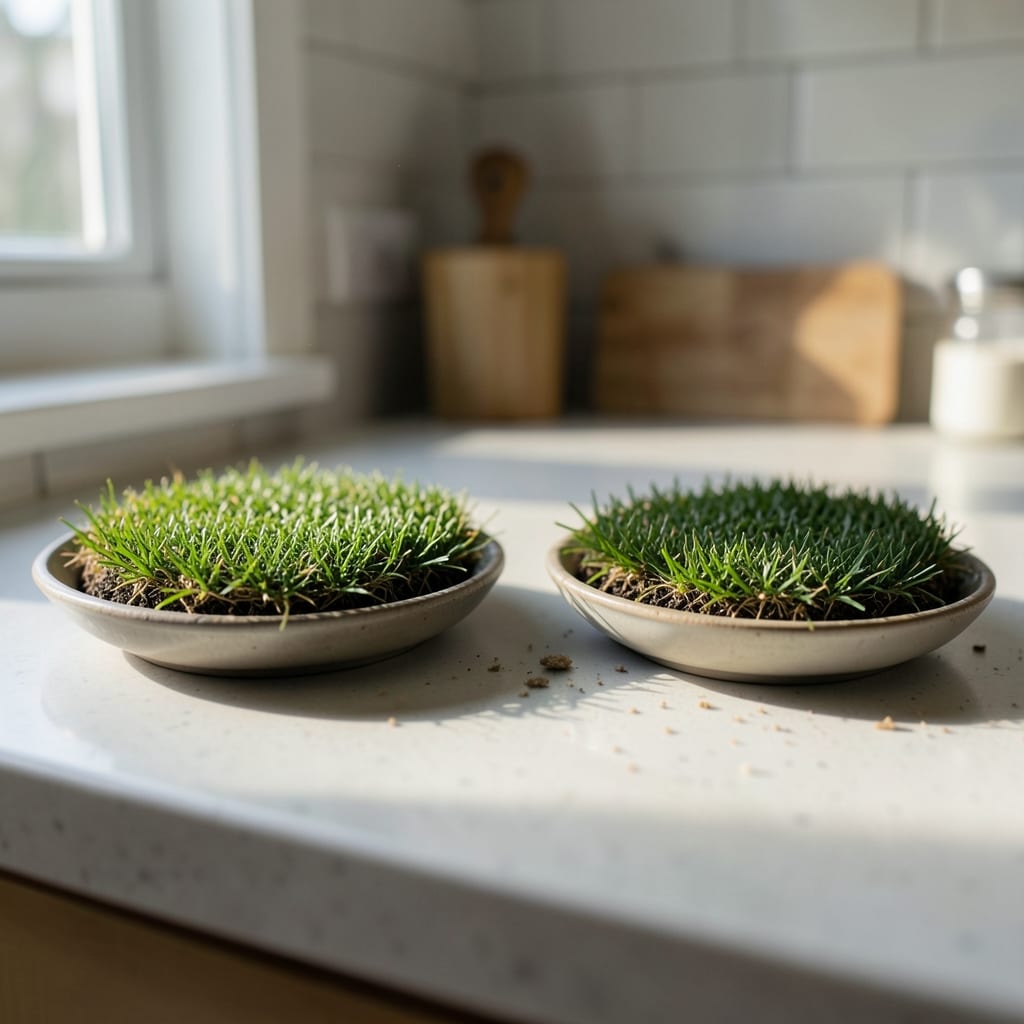
Every guide starts with a question someone sent in—whether it’s ‘Why is my zucchini flowering but not fruiting?’ or ‘How do I stop my neighbor’s cat from using my garden as a litter box?’ The research isn’t just reading forums or old gardening books; it’s testing, failing, and testing again.
If a tip hasn’t been tried in at least three different gardens (or climates), it doesn’t make the page.
The first draft: real-world testing
The initial round happens in controlled but *unsterile* conditions—meaning real soil, not lab mixes, and real pests, not just the ones in a bug jar.
For example, a guide on saving drought-stressed tomatoes was tested over six weeks in a backyard with no irrigation system, where the plants had to rely on morning dew and hand-watering.
Temperatures hit 95°F (35°C) three times during the trial, and the only ‘cheat’ allowed was a shade cloth to mimic partial sun.
Data isn’t just numbers; it’s observations like ‘the basil wilted by 11 AM unless watered at 7 AM’ or ‘the squash vines collapsed at 3 PM every day—until we moved the trellis to the east side.’ These details are what turn a generic tip into a real solution.
The second draft: fixing the flaws
The second phase is where the ‘this worked for me’ becomes ‘this works for *you*.’ For instance, a method to revive overwatered ferns was adjusted after readers in Seattle reported mold growth—so the guide now includes a step for adding pine needles to the soil.
Another example: a pruning technique for apple trees was simplified after a reader in a high-rise apartment struggled with the original instructions, leading to a ‘small-space hack’ section.
The final version always includes a ‘what could still go wrong’ section, because gardens are unpredictable. If a method fails in 10% of cases, we don’t sugarcoat it—we tell you how to spot the warning signs early.
Join our community
This isn’t a one-way street.
The questions that get answered here are the ones you send in—whether it’s ‘How do I grow carrots in rock-hard clay?’ or ‘My peppers keep falling off the plant before they ripen.’ Good suggestions (like a better way to store seed packets) get turned into guides, and the worst garden disasters become case studies.
The only rule? No question is too basic or too weird—because the weirdest problems often have the simplest fixes.
Let's connect
We love hearing about your garden’s victories and disasters—especially the ones that stumped you for weeks. If you’ve got a plant that’s defying all logic or a tip that finally worked after years of failure, share it.
The contact page is where to send your stories, your photos of ‘what went wrong,’ and your theories about why your roses bloom in October but not June.
This is for the gardeners who show up with dirty gloves and no expectations. Let’s grow something together.
The guides are grouped by category: Advice, Aphids, Blooming, Companion Plants, Container Gardens and Diseases.