
Lawn
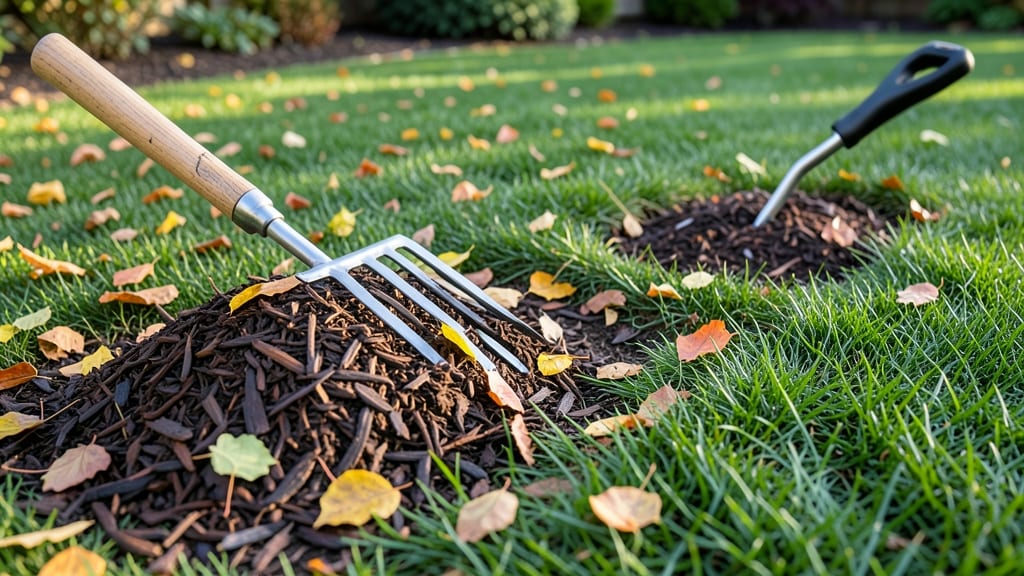
Leaf mulch is good for lawns because it preserves soil moisture, blocks weed growth by limiting sunlight, and slowly releases organic nutrients as it breaks down. That said, you'll need to refresh it regularly and avoid letting it pile up too thickly to prevent pest issues.
Is leaf mulch good for lawn? It works like a natural blanket for your lawn—it slows water evaporation by creating a protective layer while allowing air and moisture to reach the roots below. 🌱 The organic matter also breaks down over time, feeding your grass with essential nutrients without overwhelming it. I've seen the best results when using shredded leaves, as they decompose more evenly than whole leaves and don't mat down into a dense layer.
One key advantage is how it crowds out weeds by starving them of sunlight, which means less competition for your grass. However, the thickness matters—keeping it between ¼ to ½ inch is ideal.
If you let it pile up too high, it can smother grass blades and create a damp environment that attracts pests like slugs or fungi. For maximum benefits, I recommend applying it in early spring or fall when the soil is cool and moist.
💡 In This Article
- How Leaf Mulch Improves Lawn Soil Health
- Best Practices for Applying Leaf Mulch to Lawns
How leaf mulch improves lawn soil health
Leaf mulch acts like a natural moisture sponge for your lawn by slowing evaporation through a process called capillary action. When you spread a ¼-inch layer of shredded leaves, the tiny air pockets between the particles trap water while still allowing it to seep gradually into the soil.
This creates a 50-70% reduction in water loss compared to bare soil, which is especially valuable during dry spells or hot summer months when grass roots struggle to access moisture.
The organic matter in leaf mulch undergoes a slow decomposition process that feeds your lawn's soil ecosystem. Fresh leaves have a high carbon-to-nitrogen ratio (around 40:1), which means they break down more slowly than nitrogen-rich materials like grass clippings.
As microbes in the soil consume these leaves, they release nutrients like phosphorus and potassium over 3-6 months, creating a steady supply that supports root growth without causing sudden spikes that can burn grass. 🌱 This gradual nutrient release is why leaf mulch is often called "slow-release fertilizer."
What makes leaf mulch particularly effective is how it stimulates beneficial microbial activity. The decomposition process creates an ideal environment for soil bacteria and fungi that help break down organic matter into forms plants can absorb.
These microbes also produce glomalin, a sticky protein that improves soil structure by binding particles together—similar to how glue holds sandcastle walls intact. This creates better aeration and drainage, which prevents soil compaction that often suffocates lawn roots.
The weed suppression comes from how leaf mulch blocks 90% of sunlight from reaching weed seeds in the top layer of soil. Most weed seeds need light to germinate, so this creates a natural barrier that can reduce weed growth by up to 75% when applied correctly.
Unlike chemical herbicides, this method works by physically preventing weeds rather than killing existing plants, making it safer for pets and children.
However, the effectiveness depends on proper leaf preparation. Whole leaves create a dense mat that repels water, while shredded leaves (with pieces smaller than ½ inch) decompose evenly and allow water to penetrate.
I've noticed that mulched lawns in my neighborhood that use whole leaves often develop dry patches because water runs off instead of soaking in. The key is creating a balance between coverage and permeability—like a breathable raincoat for your lawn.
One often-overlooked benefit is how leaf mulch regulates soil temperature. During summer heatwaves, it can keep soil 5-10°F cooler** than exposed ground, protecting grass roots from heat stress. In winter, it provides a thin insulating layer that prevents rapid temperature fluctuations that can shock grass plants.
This temperature buffering effect is particularly valuable in regions with extreme seasonal swings, where lawns often struggle with either drought or freeze damage.