
Lawn
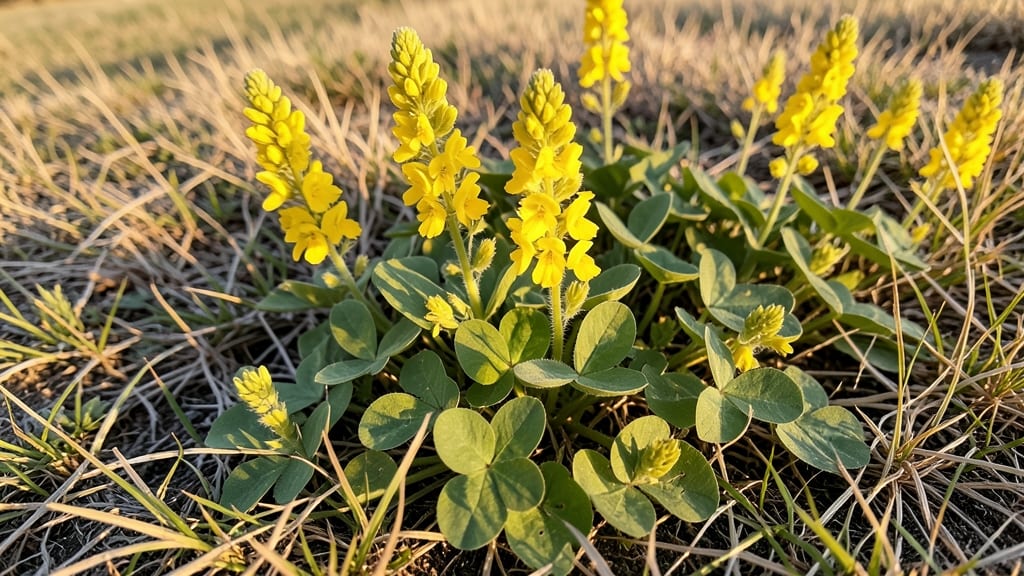
Struggling to tell clover from weeds in your lawn? These 10 imposters mimic clover’s appearance but can choke your grass. Learn how to identify them and remove them safely to keep your lawn lush and healthy.
White Clover Lookalike: White Dutch Clover
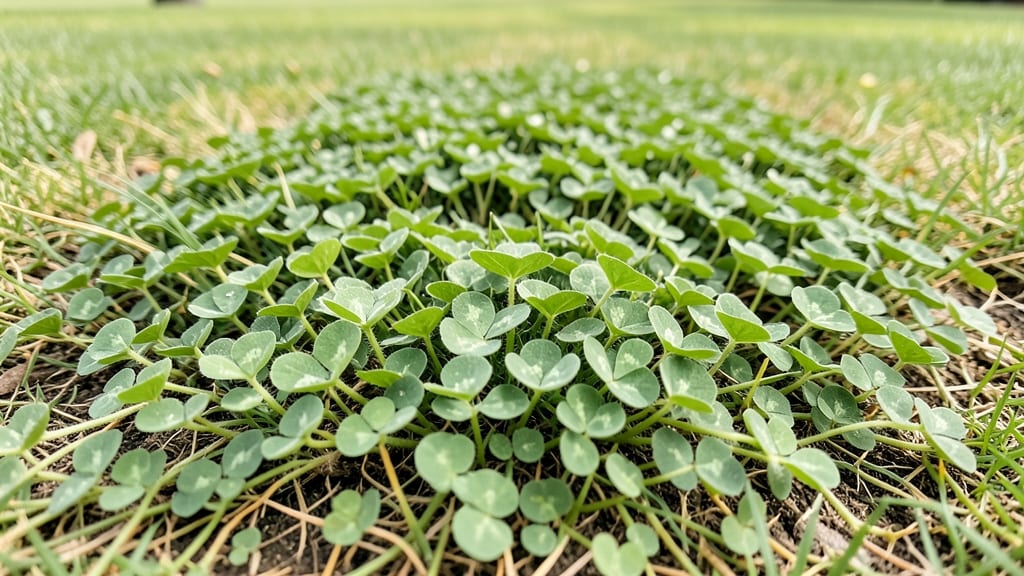
That sweet-smelling clover you love might actually be white Dutch clover, a sneaky weed that mimics its appearance but steals nutrients from your grass. Unlike real clover, this imposter lacks the familiar scent and spreads aggressively with broader leaflets that form dense mats.
White Dutch clover thrives in full sun to partial shade and spreads via stolons (horizontal stems), smothering grass roots as it goes. Its leaflets are typically broader than true clover’s, with a more rounded shape and noticeable white veins. The small white flowers appear in late spring, signaling it’s time to act before the weed takes over.
Homeowners with newly seeded lawns or those struggling with patchy grass should watch for this weed—it’s especially common in areas with compacted soil. Pull it early, or use a spot treatment of vinegar-based herbicide for stubborn patches. 💪
Yellow Flowered Imposter: Yellow Oxalis
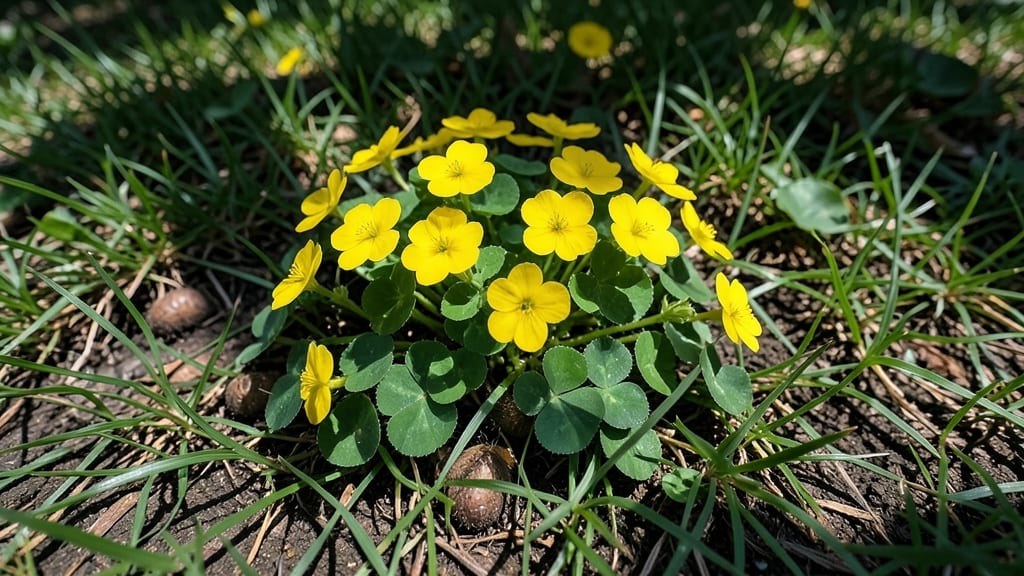
If your lawn has bright yellow flowers popping up among the grass, you might be dealing with yellow oxalis—a sneaky weed that mimics clover’s trifoliate leaves but packs a sour punch. Unlike clover, this invader thrives in shady, moist areas and spreads aggressively through underground tubers, making it a persistent nuisance.
The heart-shaped leaves and cheerful yellow blooms make it look harmless, but yellow oxalis outcompetes grass for nutrients and water. A quick way to identify it? Crush a leaf—its sour, lemony scent gives it away. This weed loves disturbed soil, so it often appears after renovations or in thin lawn patches. Pull it early, or smother it with thick mulch or a layer of cardboard before reseeding.
Homeowners with shady lawns or those who’ve recently renovated their grass should watch for yellow oxalis—it’s especially common in areas with poor drainage. 🌻
Spiky Leafed Weed: Creeping Charlie
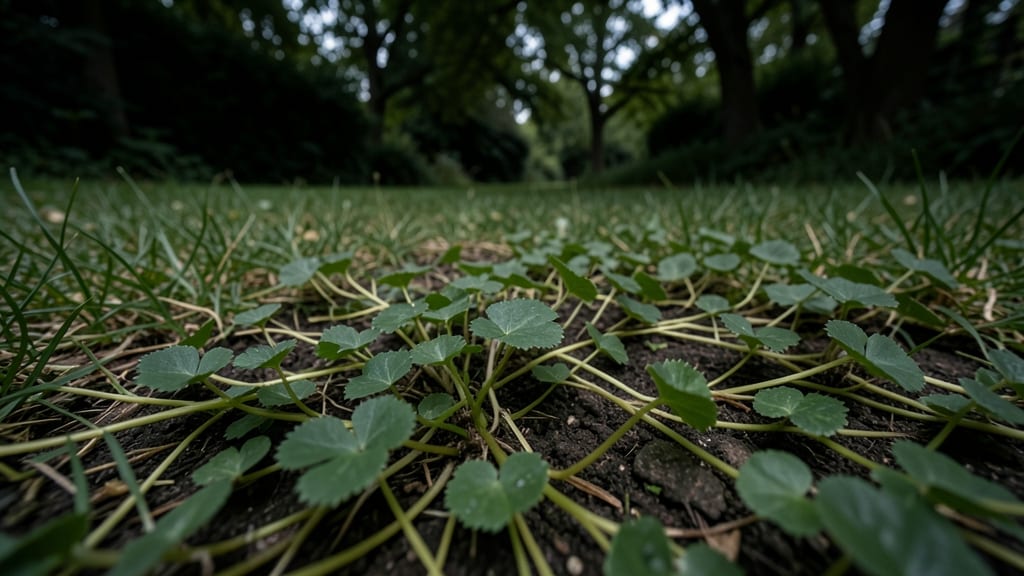
If your lawn has shady spots where clover almost looks right but feels "off," you’re likely dealing with creeping Charlie—a weed that mimics clover’s trifoliate leaves but with a key difference: its edges are jagged and serrated, not smooth. This aggressive spreader thrives in low-light areas, forming dense mats that smother grass roots and create bare patches.
Creeping Charlie spreads via creeping stems that root at nodes, making it difficult to pull by hand. Look for its small purple flowers in late spring to early summer, a dead giveaway it’s not the beneficial clover you’re hoping for. Unlike clover, it lacks the sweet scent and often appears in moist, shaded lawns where grass struggles to grow.
Homeowners with wooded lawn edges or dense shade should prioritize this weed—it’s especially persistent in areas where grass is weak. Try corn gluten meal in early spring to prevent seed germination, or spot-treat with vinegar-based herbicide for established patches. 🌱
Small Flowered Deceiver: Black Medic
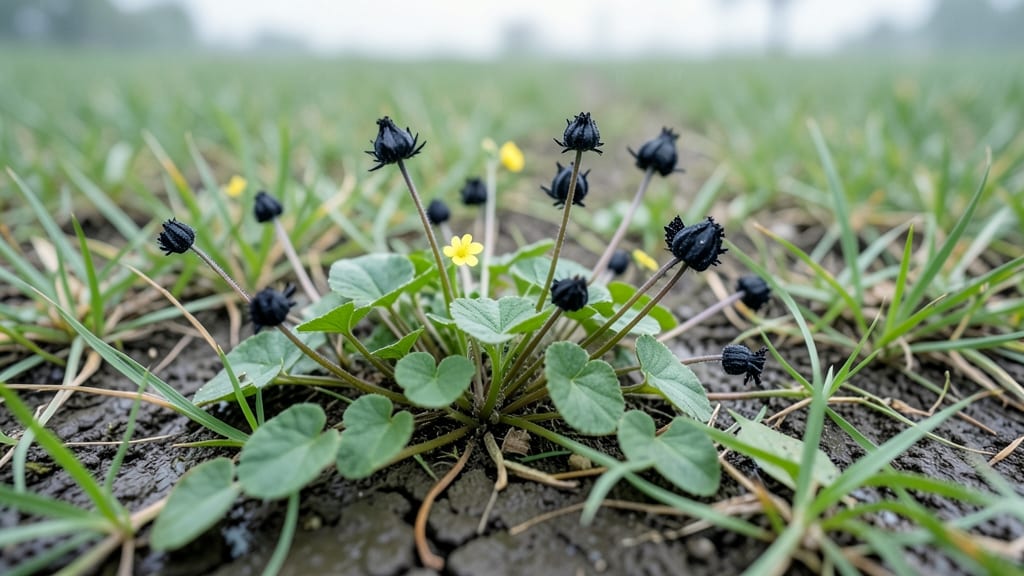
If your lawn has tiny yellow flowers that vanish by summer, you might be dealing with black medic—a clover lookalike that thrives in compacted soil. Unlike clover, this weed produces distinct black seed pods that pop open when dry, scattering seeds everywhere.
Black medic loves poorly drained areas and spreads via both seeds and creeping stems. The trifoliate leaves resemble clover, but the flowers are smaller and less showy. Look for the black seed pods as your key identifier—once you spot them, you’ll know this weed is taking over.
Lawn owners dealing with patchy, compacted soil should prioritize removing black medic early. Over-seeding with grass and improving drainage will help crowd it out naturally. 🌱
Broadleafed Intruder: Broadleaf Plantain
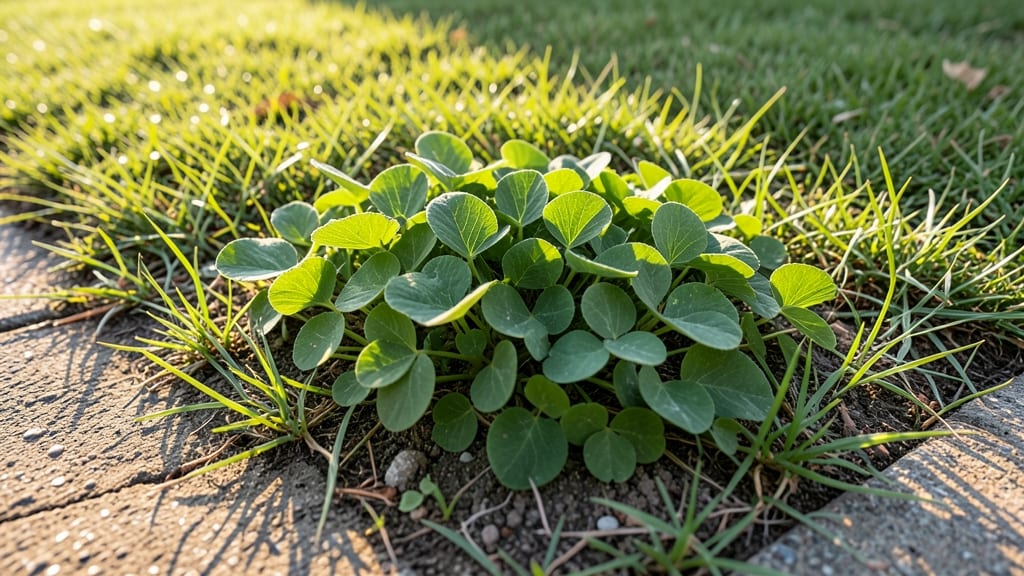
If your lawn has patches where grass refuses to grow—especially near sidewalks or play areas—you might be dealing with broadleaf plantain, a weed that mimics clover’s hardiness but lacks its charm. Its wide, oval-shaped leaves and deep roots make it a tough intruder in worn or high-traffic zones.
Unlike clover, broadleaf plantain has smooth, ribbed leaves that grow in a rosette pattern, often with a slightly yellowish tint. It thrives in compacted soil and spreads via seeds, popping up where grass struggles. The key difference? Broadleaf plantain doesn’t fix nitrogen like clover, so it doesn’t benefit your lawn—it just crowds out grass.
For homeowners with dog runs, pathways, or thin lawns, this weed is a common nuisance. Pull it early, or spot-treat with a vinegar-based herbicide to avoid harming nearby grass. 🌿
Flowering Mimic: Yellow Woodsorrel
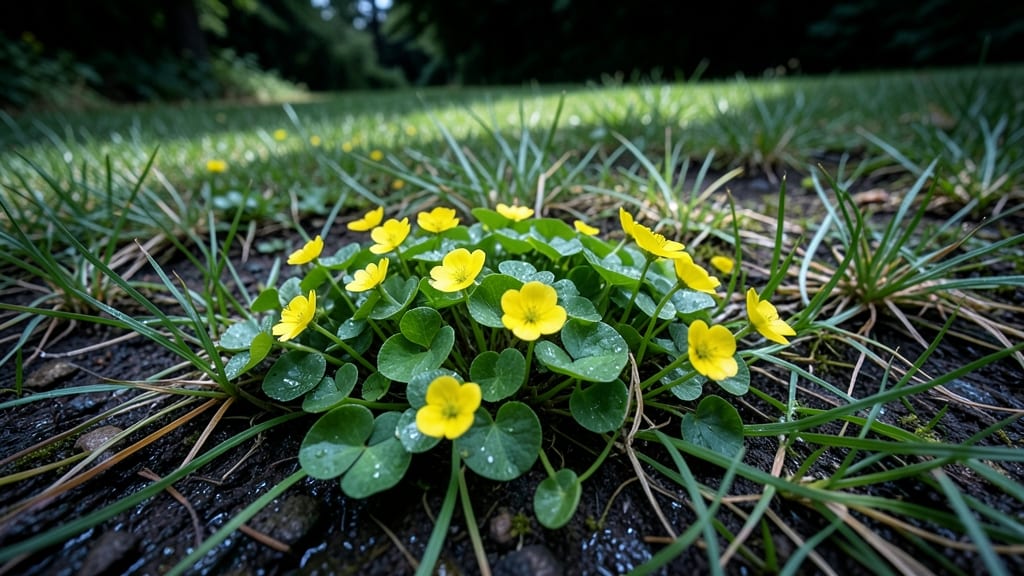
If your lawn has moist, shaded spots where grass struggles to grow, you might be dealing with yellow woodsorrel—a sneaky weed that mimics clover’s trifoliate leaves but adds a splash of bright yellow flowers. Unlike its clover cousins, this weed thrives in damp conditions and often goes unnoticed until it forms dense patches.
Yellow woodsorrel spreads via underground tubers, making it resilient to simple pulling. Its heart-shaped leaves resemble clover, but the vibrant yellow flowers (appearing in spring and summer) are a dead giveaway. This weed is especially common in shady lawns with poor drainage, where it outcompetes grass for nutrients and space.
Homeowners with shaded or damp lawns should watch for this weed, as it can quickly take over if ignored. Pull it early in the season or use a targeted herbicide to prevent its spread before it becomes a full-blown lawn takeover. 🌻
Tough Competitor: Knotweed
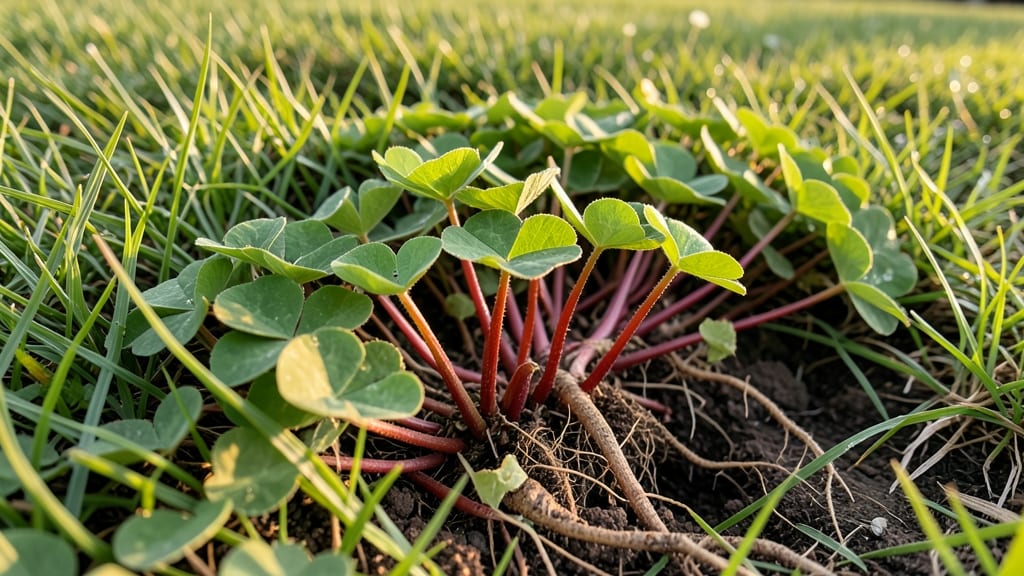
If your lawn has patches of what looks like clover but refuses to stay pulled, you might be dealing with knotweed—a sneaky weed that starts with trifoliate leaves but grows into a stubborn invader with square stems and deep roots.
Unlike clover, knotweed develops a reddish tint in its stems as it matures and spreads through thick, fibrous roots that regrow even after cutting. It thrives in full sun to partial shade, often appearing in disturbed soil or along pathways. The key to stopping it? Pull it early before the roots establish, or use a glyphosate-based herbicide for larger patches—just avoid treating during drought conditions.
Lawn owners with newly renovated grass or those dealing with persistent patches should watch for this weed—it’s especially aggressive in compacted or poorly drained soil. 💪
Shady Lawn Threat: Wild Violet
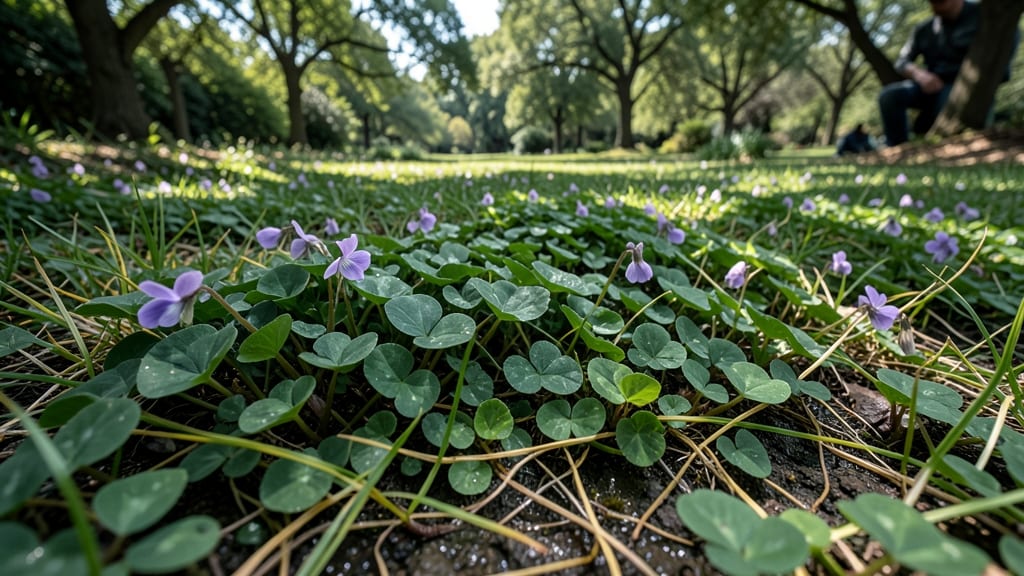
If your shady lawn looks like a sea of three-leafed greenery but lacks the familiar clover scent, you might be dealing with wild violets—a sneaky weed that thrives where grass struggles. These purple-blooming troublemakers mimic clover’s leaf shape but spread aggressively, forming dense patches that smother grass roots.
Wild violets love moist, shaded spots and produce distinctive lavender-purple flowers in spring, signaling it’s time to act. Their shallow roots make them easy to pull by hand, but they’ll bounce back if you miss even a small piece. For stubborn patches, a targeted application of corn gluten meal (a natural pre-emergent) can help prevent regrowth.
Gardeners with wooded lawns or areas under large trees should watch for this weed—it’s especially persistent in damp, low-light conditions. Pull them early, and your grass will thank you with a thicker, healthier look. 💚
Fast-Spreading Invader: Clover Mimic: Microclover
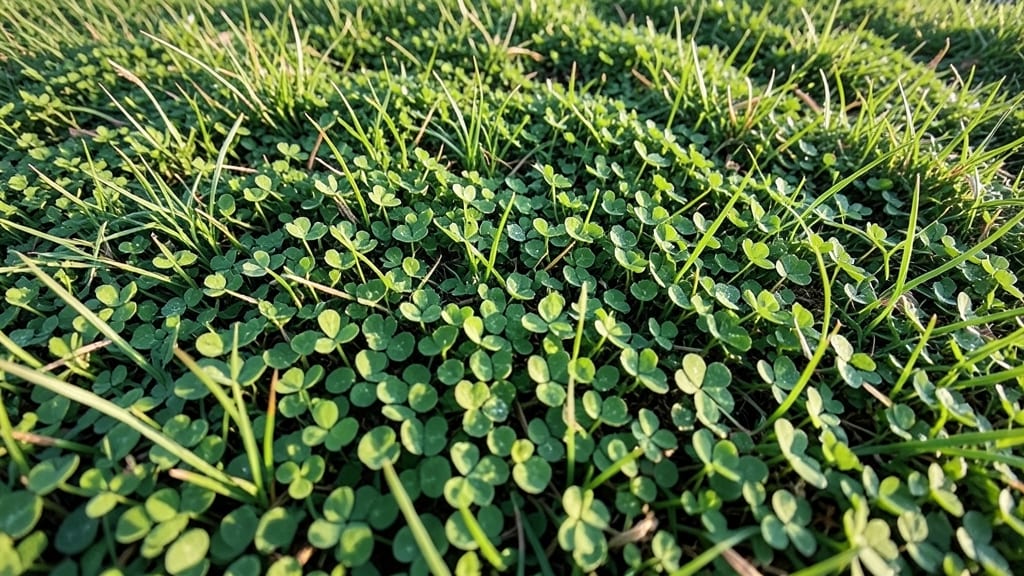
If your newly seeded lawn looks like it’s taking forever to fill in, microclover might be the culprit. This tiny but tenacious imposter mimics clover’s trifoliate leaves but grows in dense, low-lying mats that smother grass seedlings before they can establish.
Unlike traditional clover, microclover stays under 1 inch tall and spreads aggressively through shallow roots, making it nearly impossible to pull by hand. It thrives in full sun to partial shade and often appears in areas where grass seed hasn’t germinated yet. The key giveaway? Its tiny, rounded leaves and lack of the sweet scent associated with true clover.
Lawn care enthusiasts with newly seeded areas or those struggling with patchy grass should monitor for this weed—it’s especially common in spring and fall when soil conditions are ideal. Pre-emergent herbicides applied before seeding can help prevent it, while post-emergent treatments should target it early to avoid long-term competition. 🌱
Flowering Lookalike: Yellow Toadflax

If your lawn has patches of trifoliate leaves but no clover scent, you might be dealing with yellow toadflax—a sneaky weed that hides until it bursts into bright yellow blooms. Unlike true clover, this persistent invader thrives in dry, sunny conditions, making it a common sight in neglected lawns where grass struggles to grow.
The key giveaway is its bright yellow flowers (resembling buttercups) that appear in late spring, often catching gardeners off guard. Its leaves resemble clover’s but lack the sweet aroma and have a slightly waxy texture. Yellow toadflax spreads via seeds, so pulling it before flowering prevents further spread. For stubborn patches, a targeted herbicide like glyphosate works best in early spring before new growth emerges.
Homeowners with sandy or poor soils should watch for this weed—it’s especially aggressive in drought-prone areas. Early removal saves your lawn from becoming a patchwork of yellow blooms instead of green grass. 🌻