
Lawn
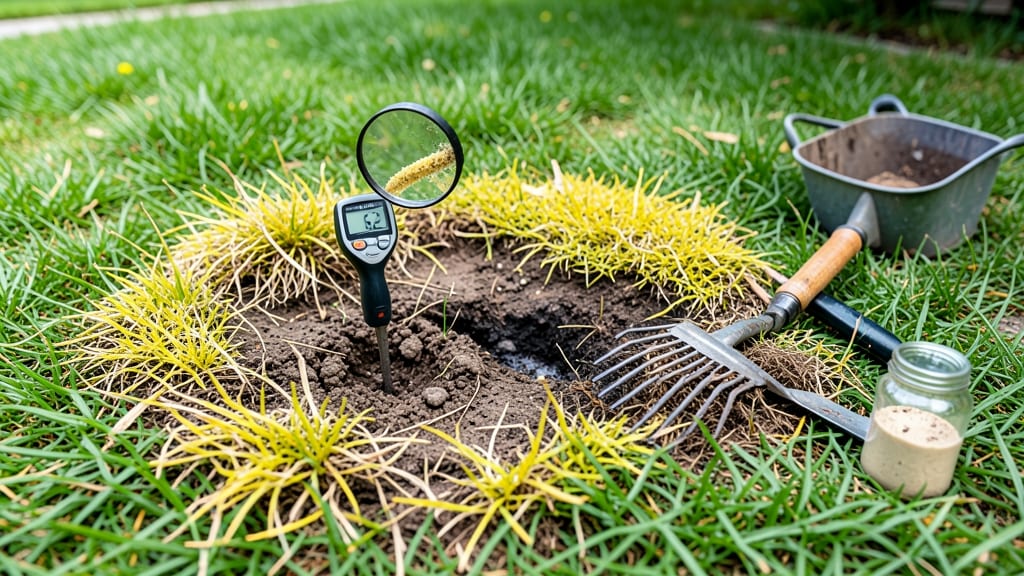
Yellow grass patches in your lawn don’t have to mean a total overhaul—just a few targeted fixes. 🌱 I’ve seen lawns go from patchy and sad to lush and green in just a few weeks by tackling the root cause, whether it’s fungal issues, thirsty roots, or hidden pests.
The key is acting fast before the problem spreads.
Most yellow patches aren’t a death sentence—they’re just your lawn’s way of saying, “Hey, something’s off!” It could be overwatering (yes, too much is just as bad as too little), compacted soil, or even shade stress.
We’ll walk through how to diagnose it quickly and get your grass back to its vibrant self without harsh chemicals.
By the end, you’ll have a plan that works for your yard’s specific needs—whether it’s adjusting your watering schedule, feeding the soil with the right nutrients, or giving those patches a little TLC. The best part? These fixes are simple, cost-effective, and prevent future patches from popping up.
No more guessing games—just clear steps to revive your lawn’s health. Let’s get those patches looking spotless again, so you can enjoy that perfect green carpet all season long.
Root Causes of Deadly Spots
Yellow grass patches in your lawn aren’t just an eyesore—they’re often a cry for help from your turf. Understanding the why behind these unsightly patches is the first step to restoring a lush, green lawn.
Below, we break down the most common culprits, backed by science and actionable insights to diagnose your specific issue.
Grass thrives on consistent moisture, but too much water—or water that doesn’t drain properly—can suffocate roots and invite disease. Here’s how it happens:
- Root suffocation: Overwatering creates an oxygen-poor environment, starving roots of the air they need to absorb nutrients. Think of it like drowning your plants—even if they’re "drinking," they can’t breathe.
- Fungal feasts: Excess moisture (especially in warm weather) turns your lawn into a buffet for fungi like Dollar Spot or Brown Patch. These pathogens thrive in damp, shaded areas, leaving behind straw-colored patches.
- Compacted soil: Poor drainage often stems from compacted soil, which prevents water from seeping down. Test this by pressing your finger into the soil—if it springs back slowly, compaction is likely the villain.
💡 Pro Tip: Water deeply 2–3 times per week (early morning is best) and let the top 2–3 inches of soil dry between sessions. If drainage is the issue, aerate your lawn in fall or spring to loosen soil and improve airflow.
Intense heat and direct sunlight can bleach grass blades, turning them yellow or even white. This is especially common with:
- Thin or drought-sensitive grasses: Varieties like Kentucky Bluegrass or Fescue wilt under prolonged heat, while Bermuda or Zoysia handle heat better.
- Sudden temperature spikes: A cold snap followed by scorching sun can shock grass, causing rapid dehydration and discoloration.
- Lack of shade adaptation: If you’ve recently planted grass in a sunny area (or moved a shaded plant into full sun), the transition can be brutal.
🌡️ Actionable Fix:
- Water early morning to reduce evaporation (aim for 1–1.5 inches per week).
- Mulch around patches to retain moisture and cool roots.
- Consider shade-tolerant grasses (like Fine Fescue) for hot, sunny spots.
Not all yellow patches are caused by water or weather—sometimes, tiny invaders are to blame. Here’s how to spot the difference:
| Pest/Disease | Signs | Why It Happens |
|---|---|---|
| Grubs (White Grubs) | Spongy, yellowing patches that pull up easily (like a carpet). Often see moles or skunks digging. | Grubs (larvae of beetles) munch on roots, leaving grass with no support. Common after wet springs. |
| Chinch Bugs | Small, brown insects at the base of blades. Patches start yellow near edges and spread inward. | These suck sap from grass, thriving in hot, dry conditions. They hide under thatch layers. |
| Fungal Diseases (e.g., Brown Patch) | Circular, straw-colored patches with a dark ring at the edge. Often slimy when wet. | Fungi spread in humid, warm weather (75–85°F) and thrive on thick thatch or overwatered lawns. |
| Dollar Spot | Small, coin-sized yellow patches with white or tan centers. Spreads in cool, wet springs/falls. | A fungus that attacks grass blades, weakening them. Loves high-nitrogen fertilizers and shade. |
🔥 Quick Diagnosis: Pull up a small section of the patch—if you see grubs, insects, or fungal threads, you’ve found your culprit. Treat pests with grub control (like Bacillus thuringiensis) or fungicides for diseases. Prevent recurrence by improving airflow (mowing high, aerating) and avoiding over-fertilizing.
Yellow patches can signal a hungry lawn. Grass needs a balanced diet of nitrogen (N), phosphorus (P), and potassium (K), plus micronutrients like iron and manganese. Here’s what’s missing when your grass turns yellow:
- Nitrogen (N) deficiency: Grass turns pale yellow or straw-colored, especially in new growth. Nitrogen fuels leaf growth—without it, blades weaken.
- Iron (Fe) deficiency: Causes yellowing between veins (a classic "chlorosis" sign). Common in alkaline soils (pH > 7.0), which lock out iron.
- Potassium (K) deficiency: Leads to weak roots and brown tips, making grass vulnerable to disease and drought.
📊 Soil Test First! Send a sample to a local extension office to identify deficiencies. In the meantime:
- Apply a balanced fertilizer (e.g., 10-10-10) in early spring or fall.
- For iron deficiency, use a chelated iron supplement (works in alkaline soils).
- Add compost or organic matter to improve soil structure and nutrient retention.
Even well-meaning lawn care can backfire. Here’s how you might be contributing to yellow patches:
- Cutting too short: Grass blades need 2–3 inches of height to photosynthesize efficiently. Mowing too low stresses roots and exposes them to heat/disease.
- Over-fertilizing: Excess nitrogen can burn roots and promote fungal growth (like Dollar Spot). Always follow label rates.
- Heavy foot traffic: Compacted areas from walking, pets, or play crush soil and roots, cutting off oxygen and water. Look for bare spots or flattened grass.
- Using herbicides improperly: Post-emergent herbicides (like 2,4-D) can drift or seep into soil, killing grass in treated areas.
Fixing Dead Spots Fast
Turn those unsightly yellow patches into lush green again with these targeted fixes—each tailored to the root cause. Whether it’s drought, disease, or pests, we’ve got you covered with step-by-step solutions and long-term prevention tips to keep your lawn thriving.
Fix: Revive dehydrated grass with deep hydration and shade adjustments.
- 💦 Deep Watering Technique - Water slowly and deeply (1–1.5 inches per week) to encourage roots to grow deeper.
Use a soaker hose or drip irrigation to avoid runoff. - Best time to water: Early morning (5–9 AM) to reduce evaporation and fungal risks. - Pro tip: 🌡️ Test soil moisture—stick a screwdriver into the ground. If it goes in easily, water again.
- 🌿 Adjust Mowing Height
- Raise your mower blade to the highest setting (3–4 inches for most grasses) to shade the soil and retain moisture.
- Avoid cutting more than 1/3 of the grass blade at once—this stresses the plant further.
- 🌳 Provide Temporary Shade
- Use lightweight shade cloth (30–50% coverage) over affected areas for 2–3 weeks to protect grass from direct sun.
- Alternative: Move potted plants or garden furniture to cast natural shade.
- 💡 Prevention for Future Droughts
- Install a rain gauge to track weekly rainfall and adjust watering accordingly.
- Mulch around trees/shrubs to reduce water evaporation from the soil.
- Choose drought-resistant grass (like tall fescue or buffalo grass) if your climate is consistently dry.
Fix: Starve the fungus, improve airflow, and restore balance to the lawn.
- 🧼 Apply Fungicide (When Needed)
- Use a broad-spectrum fungicide (like propiconazole or myclobutanil) for severe cases (e.g., brown patch or dollar spot).
- Spot-treat only the affected areas—no need to spray the whole lawn unless fungus is widespread.
- Follow label instructions for safety and effectiveness.
- ✂️ Improve Lawn Aeration & Airflow
- Core aerate the lawn in early fall or spring to reduce thatch buildup (which traps moisture and fuels fungus).
- Rake out dead grass and thin out dense areas to improve airflow.
- Pro tip: 🌬️ Avoid watering at night—wet grass stays damp longer, creating fungal paradise.
- 🌱 Boost Grass Health Naturally
- Overseed bare spots with disease-resistant grass seed (e.g., Kentucky bluegrass or perennial ryegrass).
- Fertilize lightly with a low-nitrogen, high-potassium formula (e.g., 5-10-10) to strengthen roots.
- Avoid overwatering—fungus thrives in soggy conditions.
- 🔄 Prevention Tips
- Clean mower blades after each use to prevent spreading spores.
- Remove thatch (layer of dead grass) if it’s thicker than ½ inch.
- Test soil pH—fungus loves acidic soil (aim for 6.0–7.0).
Fix: Identify the pest, eliminate it, and protect your grass.
- 🔍 Identify the Pest
- Grubs? Look for moles/skunks digging or sod pulling up easily.
- Chinch bugs? Check for yellowing grass in dry spells and tiny black bugs at the base.
- Armyworms? See irregular patches with chewed grass and green caterpillars.
- 💥 Treat the Infestation
- For grubs:
- Apply grub control (like imidacloprid or beneficial nematodes) in early summer.
- Handpick moles (humane traps work) or use castor oil-based repellents.
- For chinch bugs:
- Water deeply to force them to the surface, then spray with soapy water or neem oil.
- For armyworms:
- Bacillus thuringiensis (Bt) is a natural, pet-safe bacteria that kills caterpillars.
- For grubs:
- 🛡️ Prevent Future Pest Problems
- Encourage natural predators like birds, toads, and ladybugs by planting native flowers.
- Avoid over-fertilizing—rich lawns attract grubs.
- Keep grass at 3–4 inches—taller grass deters chinch bugs.
- 🧹 Clear Debris & Dead Grass
- Rake out yellowed or dead patches to expose soil for reseeding.
- Don’t bag it—compost the debris for nutrient recycling.
- 🌾 Reseed Bare Spots
- Choose fast-growing seed (like perennial ryegrass for quick cover).
- Mix seed with compost and sprinkle lightly over the area.
- Gently press into soil and keep moist until new grass sprouts (7–14 days).
- 💧 Keep Soil Moist (But Not Soggy)
- Light watering 2x daily (morning and evening) until new grass is 2–3 inches tall.
- Use a straw mulch (hay or straw) to retain moisture and block weeds.
- 🎯 Gradual Fertilizer Boost
- Wait 4–6 weeks after reseeding before applying slow-release fertilizer.
- Avoid high-nitrogen in the first month—it burns tender new shoots.
💡 Pro Tip: If patches persist after 4–6 weeks, dig up a small section—healthy roots should be white, while dead roots are brown and mushy. If roots are dead, you may need to sod repair instead of reseeding.
Frequently asked questions
Why do some yellow patches stay yellow even after watering?
If watering doesn't revive yellow patches, the issue is likely root damage from pests (like grubs) or disease. Check for spongy soil when pulling up grass—if roots are brown/mushy, they're dead. In this case, you'll need to reseeding or sod repair rather than just watering. Try spot-treating with fungicide first if you suspect disease.
How can I tell if my yellow patches are from fungus or pests?
Look closely: Fungal patches often have dark rings or slimy textures (like Brown Patch), while pest damage shows irregular shapes with visible insects or mole activity. Pull up a small section—healthy roots are white, while fungal roots appear thread-like and brown. For chinch bugs, check the base of blades for tiny black bugs during dry spells.
Is it better to use chemical or organic treatments for yellow patches?
Organic options work well for mild cases: Neem oil treats pests, compost tea boosts soil health, and beneficial nematodes target grubs. Chemicals (like fungicides) act faster for severe fungal outbreaks. For pets/kids, always choose organic—just be patient with results. Test soil first to diagnose the exact issue before choosing treatments.
Can I just overseed yellow patches instead of fixing the underlying problem?
Overseeding helps temporarily, but the patches will likely return if you don't address the root cause. For example, if fungus is spreading, new grass will get infected too. Fix drainage, pests, or nutrient issues first, then overseed. Use disease-resistant seed and keep soil moist (not soggy) for best results.
How often should I aerate my lawn to prevent yellow patches?
Core aerate once a year in spring or fall for most lawns, or twice yearly if your soil is clay-heavy or compacted. This improves water/air flow to roots, preventing both fungal growth and drought stress. For high-traffic areas, consider aerating in early fall when grass recovers fastest.