
Lawn
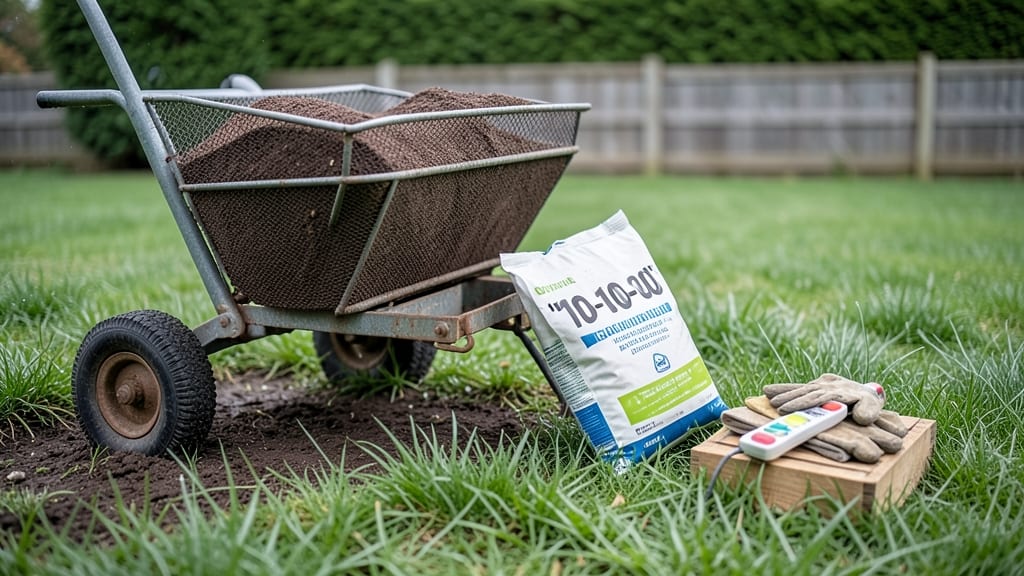
The best time to fertilize lawn grass is early spring and fall—when your grass is actively growing but before extreme heat or cold sets in.
Timing your lawn fertilization perfectly can mean the difference between a lush, green carpet and a struggling patchwork of brown—so when exactly should you feed your grass?
Most lawns thrive with two key feedings per year: one in early spring (March–April) to jumpstart growth and another in fall (September–October) to strengthen roots before winter. But climate zones and grass types (cool-season vs. warm-season) shift the schedule.
Below, I break down the exact windows for your region, how to spot when your lawn really needs fertilizer, and the one mistake that kills grass faster than drought.

Optimal fertilization timing by grass type: cool-season vs. warm-season schedules
Getting your lawn fertilization timing right depends entirely on whether you're growing cool-season or warm-season grasses. These two categories have completely different growth cycles, so feeding them at the wrong time can stress your grass or even invite pests.
For example, Kentucky bluegrass and fescue thrive in cooler months, while Bermuda and Zoysia peak in summer heat. Let's break down the best times to fertilize each type, adjusted for USDA zones 3-10.
Most gardeners make the mistake of fertilizing during dormant periods, which forces grass to grow when it can't sustain itself. Cool-season grasses need their last feeding 6-8 weeks before frost, while warm-season types should get their final feed 6-8 weeks before their dormancy begins.
Understanding these windows will save you time, money, and a lot of frustration.
| Grass Type | Cool-Season Peak Feeding | Warm-Season Peak Feeding | Early Spring (March-April) | Late Spring (May-June) | Summer (July-August) | Fall (September-October) |
|---|---|---|---|---|---|---|
| Kentucky Bluegrass | Early Spring & Fall | N/A | Pre-emergent + Light Feed | Full Feed (High N) | Light Feed (Dormant) | Heavy Feed (6-8 wks before frost) |
| Fescue | Early Spring & Fall | N/A | Pre-emergent + Light Feed | Full Feed (Balanced) | Light Feed (Dormant) | Heavy Feed (6-8 wks before frost) |
| Bermuda | N/A | Late Spring & Summer | Light Feed (Early Growth) | Heavy Feed (High N) | Maintenance Feed (Every 6 wks) | Dormant (No Feed) |
| Zoysia | N/A | Late Spring & Summer | Light Feed (Early Growth) | Heavy Feed (Balanced) | Maintenance Feed (Every 6 wks) | Dormant (No Feed) |
| St. Augustine | N/A | Late Spring & Fall | Light Feed (Early Growth) | Heavy Feed (High N) | Light Feed (Heat Stress) | Heavy Feed (6-8 wks before frost) |
*Adjust timings 2-4 weeks earlier in USDA zones 8-10 and later in zones 3-6.
For cool-season grasses like Kentucky bluegrass and fescue, your first fertilization should happen in early spring as soon as the soil warms to 50°F. This kickstarts growth after winter dormancy.
A pre-emergent herbicide can also be applied at this time to prevent crabgrass, but wait 4-6 weeks before fertilizing again to avoid overstimulating new shoots.
In late spring, cool-season grasses need a high-nitrogen feed to support rapid growth. This is when you'll see the most dramatic color improvement. Use a 16-4-8 or 20-5-10 fertilizer for best results.
In USDA zones 3-5, this feeding should happen by mid-June to avoid stressing the grass before summer dormancy begins.
Warm-season grasses like Bermuda and Zoysia follow a completely different schedule. They wake up in late spring when soil temps hit 65°F, so your first feed should be a light application of 10-0-10 fertilizer.
By June, these grasses are ready for heavy feeding every 6-8 weeks until late summer, when growth naturally slows.
One common mistake is fertilizing warm-season grasses in fall. Since they go dormant in cooler weather, feeding them too late can lead to fungal diseases like brown patch. Instead, focus on cool-season grasses in fall—their last feeding should be 6-8 weeks before frost to strengthen roots for winter.
In USDA zones 7-10, this might mean fertilizing as late as November.
If you're in a transition zone (like USDA zone 6-7
Climate zone-specific fertilization adjustments: northern vs. southern lawn care
Your lawn's fertilization schedule shouldn't follow a one-size-fits-all approach—especially when comparing northern climates like the Midwest or New England to southern regions like the Southeast or Southwest. The frost-free dates, rainfall patterns, and heat intensity create dramatically different growing conditions that demand tailored fertilization timing.
In northern zones (USDA 3-6), where winters are harsh and summers are shorter, your focus should be on early spring and fall fertilization to build root strength before dormancy. Meanwhile, southern zones (USDA 7-10) require more caution during summer heat to prevent stress or burning from over-fertilizing.
⚠️ callout warning ⚠️
⚠️ Critical Mistake: Fertilizing in Summer Heat
Applying high-nitrogen fertilizer during peak summer months (June-August) in southern climates can burn grass and increase drought stress. Even in northern zones, summer feeding should be light or skipped unless using slow-release formulas.
Solution: Shift to fall fertilization (September-October) for southern lawns, giving grass time to strengthen before winter. Northern lawns benefit from a light spring feeding (April) and heavy fall feeding (October).
For northern climates, I recommend starting your first fertilization 4-6 weeks after your last frost date—typically late April to early May. This timing aligns with when cool-season grasses like Kentucky bluegrass and fescue begin their active growth phase.
A second feeding in early fall (September), about 6-8 weeks before first frost, helps grass store nutrients for winter survival.
Southern lawns, however, should avoid fertilizing when daytime temperatures exceed 85°F.
Instead, focus on early spring (March) and late fall (November) applications. Warm-season grasses like Bermuda and Zoysia enter dormancy in winter, so feeding in late summer (August) with a low-nitrogen, potassium-rich formula can help them recover from heat stress.
Rainfall patterns also play a crucial role. In humid southern regions, excessive moisture can wash away fertilizer quickly, so use slow-release granules or apply after a light rain. Meanwhile, northern climates often experience dry springs, making it essential to water deeply after fertilizing to activate nutrient uptake.
Pro tip: Use a soil test before fertilizing—especially in southern zones where high humidity can lead to fungal issues if nitrogen levels are too high. Adjust your NPK ratio (e.g., 16-4-8 for northern, 10-0-10 for southern) based on your grass type and local climate challenges.