
Fertilization
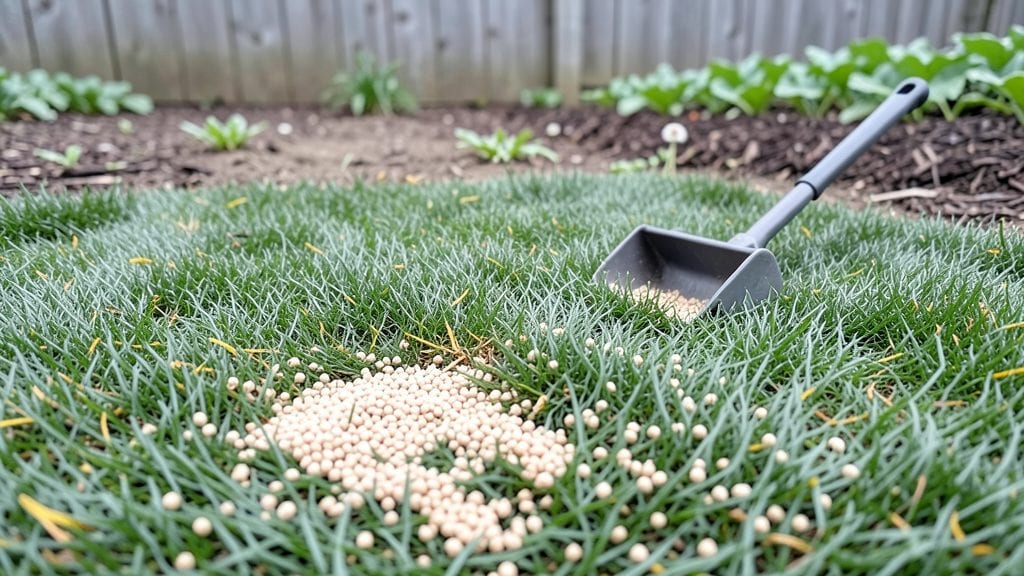
Fertilizing zoysia grass occurs in late spring to early summer and early fall, aligning with its active growth phases. Avoid fertilizing during dormancy (winter) or extreme heat, and use slow-release nitrogen to prevent overgrowth or stress.
Timing your fertilization depends on zoysia’s natural rhythm—it wakes up in spring when soil temperatures hit 65°F and ramps up growth, while fall applications (before first frost) help it store nutrients for winter.
My experience shows that skipping these windows can leave your lawn vulnerable to weeds or weak recovery, especially in regions with hot summers where dormancy kicks in earlier. Always check local frost dates, as northern climates may need to adjust their fall schedule slightly later than southern areas. 🌱
For best results, I pair spring feeding with a slow-release nitrogen blend (like 30-0-4) to fuel steady growth without burning the grass, while fall applications should focus on potassium to strengthen roots.
Overdoing it in summer stresses the grass, and winter fertilizing is pointless—zoysia’s dormant until temperatures drop below 50°F.
💡 In This Article
- Zoysia Grass Growth Cycles and Fertilizer Timing
- Step-by-Step Zoysia Fertilization Schedule by Season
Zoysia grass growth cycles and fertilizer timing
Zoysia grass thrives on temperature cues—its growth accelerates when soil temperatures consistently reach 65°F, typically in late spring. This triggers root expansion and blade growth, making it the perfect window for nitrogen-rich fertilizers to support recovery from winter dormancy.
The grass’s natural dormancy begins when temperatures drop below 50°F, signaling it to conserve energy rather than grow. Fertilizer applied too late in fall won’t be absorbed efficiently, while summer applications (above 85°F) can scorch the blades due to increased metabolic stress.
Soil temperature is the real game-changer here. Zoysia’s roots are most active when the top 4 inches of soil hover between 65-75°F, which aligns with spring’s warming trend.
In northern climates (like Zone 5-6), this might mean fertilizing in May-June, while southern regions (like Zone 8-9) can start as early as March-April.
Fall applications should occur 6-8 weeks before first frost to allow nutrient uptake without stimulating late-season growth that won’t harden before winter. 🌡️
Fertilizer timing isn’t just about seasons—it’s about growth stages. Spring feeding (with 20-30% nitrogen) helps zoysia recover from dormancy, while fall applications (with 15-20% nitrogen + potassium) strengthen roots for winter survival.
The key is matching fertilizer types to these phases: slow-release granules in spring prevent burn during rapid growth, while liquid fertilizers in fall ensure quick absorption before dormancy sets in. Over-fertilizing in summer stresses the grass, leading to brown patches or fungal issues.
Regional adjustments matter too. In Southern states, where summers stay hot, zoysia may enter dormancy earlier (as early as August), so fall feeding should happen by September. Northern lawns, however, can fertilize until October before frost locks the soil.
Always test your soil’s pH (ideal range: 6.0-7.0)—acidic soils reduce nutrient uptake, making even perfectly timed fertilizing ineffective. A simple soil test kit (costing $20) reveals whether you need lime or sulfur adjustments before applying fertilizer.
Here’s what’s happening biologically: Zoysia’s growth hormones (like gibberellins) peak in spring when daylight increases, while abscisic acid (the dormancy trigger) builds as days shorten in fall. Fertilizer with phosphorus (P) supports root development in spring, while potassium (K) in fall helps regulate water and disease resistance.
The grass’s ability to uptake nutrients slows when soil temps drop below 55°F, which is why late fall applications are wasted—nutrients just sit in the soil until spring thaw. 🌱
Pro tip: Pair your spring feeding with 0.5 inches of water post-application to activate nutrients, and avoid mowing for 2-3 days afterward. In fall, a lighter application (half the spring rate) prevents excessive top growth that weakens before winter.
This precision ensures your zoysia stays lush without the stress of over-fertilization or the waste of off-season applications.