
Watering
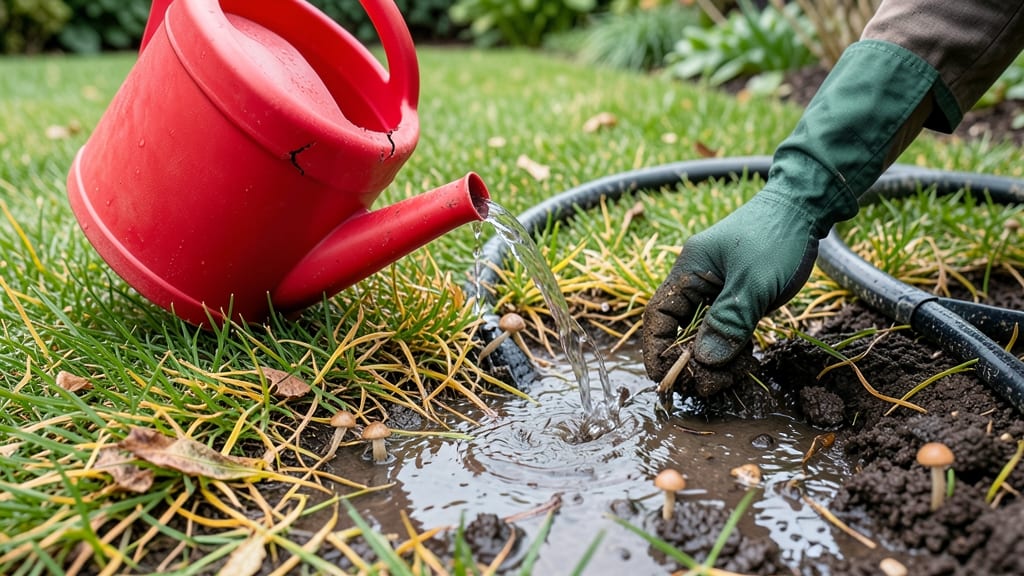
Those signs of an overwatered lawn are hard to miss—your grass turns a sickly yellow, sinks underfoot like a swamp, and feels mushy to the touch. 🌱 I’ve seen this mess firsthand after a week of heavy rain and automatic sprinklers running on autopilot.
The problem isn’t just soggy grass; it’s the hidden damage lurking beneath the surface.
Overwatering creates the perfect storm: fungal growth thrives in damp conditions, roots suffocate without oxygen, and pests like chinch bugs move in for the feast. The real kicker? Your lawn might look too green at first, but that’s just a mask for the rot setting in.
Most people don’t realize their watering habits are doing more harm than good.
Here’s the good news: fixing it starts with simple checks—press your foot down and see if water pools, or if grass springs back slowly. Adjust your sprinklers to water deeply but less frequently, and let the soil dry between sessions.
Within 2-3 weeks, you’ll see roots breathing easier and that spongy mess vanish.
Prevention is easier than cleanup: test your soil’s drainage, aerate compacted areas, and water in the early morning when evaporation helps. Trust me, your lawn will thank you—no more guessing games, just a thriving, resilient carpet of grass. Let’s get that watering schedule right!
The Hidden Triggers Behind Wet Grass
An overwatered lawn isn’t just the result of a heavy rain or a well-meaning hose left running too long—it’s often a mix of human habits, soil science, and even weather quirks.
Understanding why your grass ends up soggy and struggling is half the battle in fixing it. Let’s break down the real culprits behind those telltale signs of overly saturated turf.
Most homeowners water their lawns based on guesswork rather than science. Common mistakes include:
- Fixed schedules: Watering the same amount every day, regardless of weather. Grass only needs 1–1.5 inches of water per week (including rain), but many systems deliver far more—especially in humid climates where evaporation is low.
- Short, frequent sessions: Light waterings (under 0.5 inches) encourage shallow root growth and promote fungal diseases. Deep, infrequent watering (1–2 inches at a time) trains roots to seek moisture deeper in the soil.
- Ignoring soil type: Clay soils hold water like a sponge, while sandy soils drain quickly. If you’re watering based on a neighbor’s schedule without testing your soil, you’re likely overdoing it.
Pro tip: Use a rain gauge or tuna can to measure water output—most sprinklers deliver more than you think! 🌧️
Even the most disciplined waterer can drown their lawn if drainage is lacking. Here’s how it happens:
- Compacted soil: Heavy foot traffic, construction, or even natural settling can compress the topsoil, blocking water flow. Compacted layers act like a waterproof barrier, forcing excess moisture to pool at the surface.
- Clogged drainage paths: If your yard has slopes, low spots, or old drainage tiles that’ve filled with sediment, water has nowhere to go but upward—right into your grass roots.
- Impermeable surfaces: Driveways, patios, or dense mulch beds can redirect rainwater straight onto your lawn, overwhelming its capacity to absorb it.
Action step: Test drainage by digging a 6-inch hole and filling it with water. If it drains in less than 4 hours, you’re good. If it sits for hours, aerate or amend your soil with organic matter (like compost) to improve porosity. 🏗️
Fungi love wet conditions—think of them as the uninvited houseguests of your lawn. When grass stays soggy for more than 48 hours, fungi like Pyricularia (causing brown patch) or Rhizoctonia (red thread) thrive, weakening roots and turning patches spongy.
- High humidity + water = fungal buffet: Warm, damp air (common in summer or after rain) creates the perfect environment for spores to spread. Overwatering keeps the lawn’s surface constantly moist, giving fungi a 24/7 party to attend.
- Thatch buildup: A layer of dead grass and roots (thatch) can trap water against the soil, creating a greenhouse effect that fuels fungal growth. Ideal thatch depth? ½ inch or less.
Prevention tip: Water in the early morning (before 10 AM) to let grass dry faster. If you see mushrooms popping up, it’s a sign your lawn’s been overwatered—and fungi are moving in. 🍄
Automatic sprinklers are supposed to make lawn care easier, but misconfigured systems often do the opposite. Common issues include:
- Overlapping zones: Sprinkler heads spraying into each other’s areas can deliver double the water in some spots, while others dry out.
- Incorrect pressure/nozzles: High-pressure settings can cause water to sheet off the soil instead of soaking in, while low pressure may leave dry patches.
- Leaky or broken heads: A single faulty sprinkler can waste thousands of gallons per month, turning your yard into a swamp.
Quick fix: Walk your yard with a bucket test—place buckets under each sprinkler head and measure output. Adjust zones or repair heads to match your lawn’s needs. 🔧
Mother Nature can be just as guilty as you are. Heavy rain, high humidity, or even foggy mornings can trick you into thinking your lawn needs less water when it’s already drenched.
- Rainfall miscalculations: A single storm can drop 1–2 inches of rain—enough to meet your lawn’s weekly needs. Yet many homeowners water after rain, doubling the moisture.
- High humidity slows evaporation: In areas with 70%+ humidity, water lingers on grass blades longer, making it feel drier than it is. This leads to overwatering even when the soil is already saturated.
Smart move: Check a local weather app for rainfall totals before watering. If the forecast predicts rain, skip your schedule—your lawn will thank you! ☔
How to Fix Your Soggy Lawn
If your lawn is suffering from overwatering, don’t panic—these fixes will help restore it to a healthy, vibrant state. The key is to act fast before root damage becomes permanent.
Below, we’ve mapped out solutions based on the most common causes of an overwatered lawn, along with prevention tips to keep your grass thriving long-term.
Cause: Compacted soil, poor grading, or clay-heavy ground traps water, leading to soggy patches.
Solution:
- Aerate the Lawn 🌱 Rent a core aerator or hire a pro to pull small soil plugs (about 3 inches deep). This creates channels for water to drain away. Pro Tip: Do this in early fall or spring when grass is actively growing.
- Top-Dress with Sand or Compost 🏗️ Spread a thin layer (¼ inch) of coarse sand or compost over the aerated areas. This lightens compacted soil and improves drainage. ✨ Prevention: Reapply every 1–2 years to maintain soil structure.
- Adjust Your Yard’s Slope 📏 If water pools in low spots, use a shovel to gently reshape the area so it slopes away from your home or walkways (about 1 inch per 10 feet).
Cause: Overzealous watering (e.g., daily light sprinkles or long sessions) suffocates grass roots.
Solution:
- Water Deeply, Less Often 💦 Switch to 1–1.5 inches per week (including rain). Use a rain gauge or tuna can to measure. Example: Water 3x/week for 10–15 minutes (adjust for soil type).
- Water Early in the Day ⏰ Avoid evening watering to prevent fungal growth. Aim for morning (6–10 AM) so grass dries by night.
- Upgrade Your Sprinklers 🔧 Check for misaligned heads or clogs. Replace old systems with smart controllers that adjust for weather.
Cause: Mushy, yellowed areas from prolonged sogginess need immediate attention.
Solution:
- Rake Out Dead Grass 🪓 Use a rake to remove spongy, discolored patches down to healthy soil. Avoid scalping—only remove the top layer.
- Apply a Fungal Treatment 🛡️ If you see mold or mushrooms, spray with a copper-based fungicide (follow label rates). Reapply in 7–10 days if needed.
- Reseed Bare Spots 🌱 Choose drought-tolerant grass seed (e.g., tall fescue or Bermuda) and spread it over the area. Keep lightly moist until germination (7–14 days).
Cause: Habits like ignoring weather forecasts or relying on timers lead to chronic sogginess.
Solution:
- Check Soil Moisture 🌡️ Stick your finger 2 inches deep—if it’s damp, skip watering. Use a soil moisture meter for accuracy.
- Install a Rain Sensor 🌧️ Attach one to your sprinkler system to auto-shut off during rain. Save water and prevent runoff.
- Mulch Your Lawn 🍂 Spread straw or wood chips in garden beds to reduce evaporation and keep roots cool.
| Problem | Solution | Time to See Results |
|---|---|---|
| Puddles after rain | Aerate + top-dress with sand | 1–2 weeks |
| Yellowing from overwater | Reduce watering + fungicide spray | 3–7 days |
| Mushy, smelly patches | Rake out debris + improve drainage | 1–2 weeks |
💡 Final Tip: If your lawn is severely waterlogged, hold off on mowing until it dries—cutting wet grass stresses roots further. Once dry, mow at 3–4 inches tall to encourage deep root growth.
By tackling drainage, watering habits, and damaged areas systematically, your lawn will bounce back stronger—and stay healthy for seasons to come!
Frequently asked questions about overwatered lawns
How can I tell if my lawn is overwatered vs. just wet after rain?
Press your foot down—if water pools on the surface or the grass springs back very slowly, that’s overwatering. Healthy grass should bounce back in 1-2 seconds. Also check for mushrooms or fungal rings (white/pink circles), which thrive in constantly damp conditions.
Why does my lawn look greener when it's overwatered, but still die?
That "too green" look comes from rapid fungal growth and weak roots struggling for oxygen. The grass blades stay upright because fungi support their weight, but roots rot underground. Within 2-3 weeks, you’ll see yellowing as the roots can’t sustain the top growth anymore.
Can I fix an overwatered lawn in just a few days?
Not completely—recovery takes 2-4 weeks depending on damage. Start immediately by reducing watering and improving drainage. For quick fixes, rake out spongy patches and apply a copper fungicide to stop mold spread. The real turnaround happens when roots get air and water cycles normalize.
What's the best way to test if my soil drains properly?
Dig a 6-inch deep hole and fill it with water. If it drains completely in less than 4 hours, drainage is good. If water remains after 24 hours, your soil is compacted—fix this by aerating or adding coarse sand/compost to improve porosity.
Will stopping watering immediately fix my overwatered lawn?
No—suddenly cutting off water can shock stressed roots. Instead, reduce to 1-1.5 inches per week and water deeply 2-3 times per week in the morning. This helps roots adjust while preventing fungal growth from sudden dryness.