
Lawn
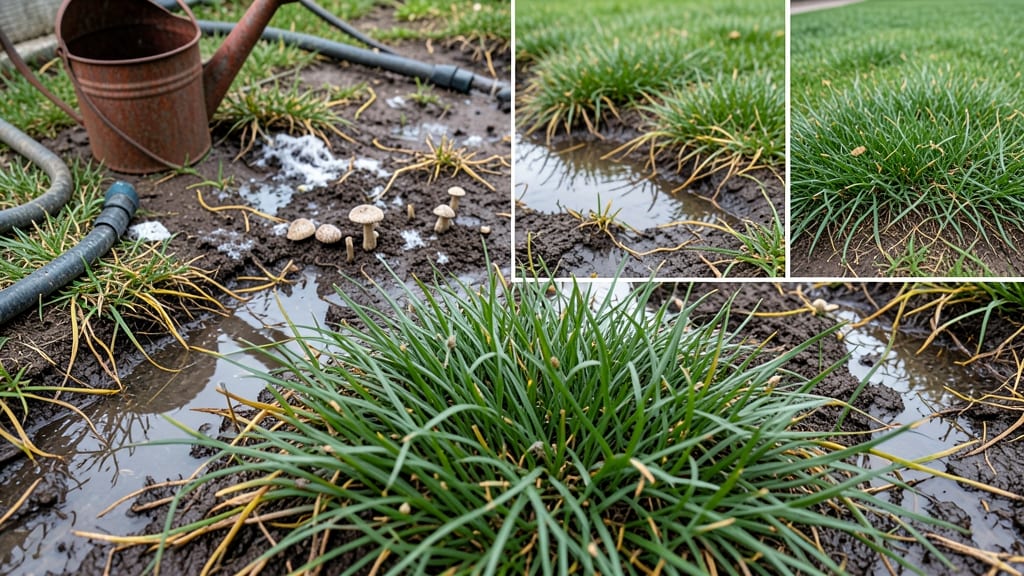
Your lawn isn't drowning—it's suffocating. 🌱 Overwatered grass turns yellow, mushrooms pop up overnight, and that spongy feel underfoot means your soil can't breathe. The good news? With the right drainage fix, you can revive your lawn in 24 hours—no waiting weeks for it to "dry out" naturally.
The first step is shocking (literally). Dig a 1-inch-deep trench around the perimeter of the soggy area to redirect water. Then, aerate the worst spots with a garden fork—just poke holes 6 inches deep, every 6 inches apart.
This lets air and water move freely where your grass roots need them most. You'll see improvement almost immediately as the water starts draining properly. By evening, you'll notice the lawn standing taller, with fewer mushrooms and less thatch buildup.
The real magic happens over the next 48 hours: roots strengthen, fungal growth slows, and the grass turns a vibrant green again. The key is consistency—water deeply 2-3 times per week instead of daily light sprinkles.
This fix works for any lawn, whether you're dealing with clay soil or a low-lying area that always pools water. The secret is making drainage work with your grass, not against it. Let's get that lawn breathing again!
Common Causes Of Soggy Soil
Overwatering your lawn isn’t always an accident—it’s often the result of well-intentioned (but misinformed) habits or overlooked environmental factors. Understanding the root causes helps you adjust your approach and prevent future waterlogging. Let’s break down the most frequent culprits, backed by science and actionable insights.
Grass roots need oxygen and water in balance—too much at once suffocates them. Many homeowners fall into the trap of short, frequent waterings (like daily sprinkler runs) instead of deep, infrequent soakings. Here’s why this backfires:
- Surface evaporation leaves the topsoil damp while deeper layers dry out, creating a moisture gradient that encourages fungal growth (like Rhizoctonia or Fusarium).
- Soil compaction worsens when water isn’t absorbed deeply, crushing root zones and reducing drainage.
- Runoff occurs when soil can’t absorb water fast enough, pooling in low spots or eroding away nutrients.
Pro Tip: 💡 Use the "finger test"—stick your finger 2–3 inches into the soil. If it’s damp, wait before watering again. Aim for 1–1.5 inches per week (including rain), delivered in 2–3 long sessions (e.g., 30–45 minutes each, 2–3x/week).
Not all lawns are created equal—some are naturally prone to waterlogging due to their soil type or layout. Common drainage pitfalls include:
| Issue | Why It Causes Problems | Quick Fix |
|---|---|---|
| Clay-heavy soil | Tiny particles pack tightly, trapping water like a sponge. | Amend with compost or sand (50/50 mix) to improve porosity. |
| Flat or sloped terrain | Water pools in depressions or runs off instead of absorbing. | Create swales (shallow ditches) or install French drains in low spots. |
| Compacted soil | Foot traffic, heavy equipment, or construction crushes soil, reducing air pockets. | Aerate annually with a core aerator (removes ¼-inch plugs for oxygen flow). |
| Blocked drains | Gutters, downspouts, or underground pipes redirecting water into the lawn. | Redirect downspouts away from the lawn or install dry wells. |
Warning: ⚠️ Avoid over-tilling—it can worsen compaction by breaking up soil structure unevenly. Stick to core aeration for long-term relief.
Mother Nature plays a huge role in how quickly your lawn absorbs water. Ignoring these variables leads to chronic sogginess:
- Heavy rainfall + high humidity: Soil stays saturated longer because evaporation slows down. In tropical or rainy climates, grass may need less frequent watering even if it looks dry. - Cool, cloudy days: Grass grows slower, reducing its water uptake rate.
Overwatering in these conditions leads to waste and fungal risks. - Frozen or waterlogged ground: In winter, ice layers can seal soil, preventing drainage until spring thaw. Avoid watering in freezing temps—it’s a waste and can heave roots.
Actionable Tip: ✨ Use a soil moisture sensor ($20–$50) to track real-time hydration levels. Adjust your schedule based on weekly rainfall data (check NOAA’s precipitation maps).
Even the best-laid plans go wrong when sprinklers or hoses aren’t calibrated correctly. Common offenders:
- Overlapping sprinkler heads: Creates wet zones where grass gets double-dosed with water.
- Slow absorption rates: Sprinklers running too long on high-pressure settings blast water into the air instead of soaking soil.
- Broken or misaligned nozzles: Sprays water sideways or at wrong angles, leading to uneven coverage.
Fix It: 🔧 Check sprinkler heads monthly—adjust nozzles to medium spray (30° angle) for even distribution. 🔧 Run a "catch test"—place tuna cans around the lawn and measure water depth. Aim for uniform ½-inch accumulation per zone.
Not all grass loves the same amount of water. Cool-season grasses (like Kentucky bluegrass or fescue) thrive with more frequent light watering, while warm-season grasses (like Bermuda or Zoysia) prefer deep, infrequent drinks. Mixing types or ignoring their needs leads to:
- Shallow root systems (from overwatering) that can’t reach deeper moisture, making grass more dependent on surface water.
- Weed invasion: Moisture-loving weeds (like crabgrass or nutsedge) outcompete thirsty grass.
Solution: 🌱 Match your grass type to your climate and adjust watering accordingly. For example:
- Kentucky Bluegrass: Water lightly daily (¼ inch) in summer.
- Bermuda Grass: Water deeply 2–3x/week (1–1.5 inches total).
Revive your soggy grass today
An overwatered lawn can feel like a soggy mess, but with the right steps, you can turn things around fast. The key is identifying the root cause—whether it’s poor drainage, overzealous watering, or compacted soil—and addressing it directly.
Below, we break down practical fixes for the most common issues, plus tips to keep your lawn healthy long-term.
If puddles linger after rain or watering, your lawn needs better drainage. Here’s how to fix it:
- 🔪 Aerate the Soil Rent a core aerator (or hire a pro) to pull small soil plugs from your lawn. This creates channels for water to escape. Pro Tip: Do this in spring or fall when grass is actively growing.
- 🌱 Level the Low Spots Use a rake or shovel to redistribute soil from low areas to uneven patches. For severe dips, top-dress with a mix of sand and compost.
- 💡 Install a French Drain (For Severe Cases) Dig a trench, line it with gravel and perforated pipe, then cover with soil. This redirects water away from problem areas.
Overwatering is the #1 culprit. Reset your schedule with these tweaks:
- ⏰ Water Less, But Deeper Replace frequent light watering with 1–1.5 inches of water 2–3 times per week (early morning is best). Let the top inch of soil dry between sessions.
- 🌡️ Check Soil Moisture Stick your finger 2–3 inches into the soil. If it’s damp, skip watering. Invest in a moisture meter for precision.
- 🎯 Upgrade Your Sprinklers Misaligned sprinklers waste water. Adjust heads to avoid overspray on sidewalks or driveways, and consider a smart irrigation system for automation.
Heavy foot traffic or clay soil can suffocate roots. Loosen the soil with these steps:
- 🔥 Top-Dress with Sand or Compost Spread a ¼-inch layer of coarse sand or compost over the lawn, then lightly rake it in. This improves aeration and water absorption.
- 🌿 Overseed Bare Patches After loosening compacted areas, sprinkle grass seed and cover with straw. Keep the soil moist until germination (about 10–14 days).
- ✨ Reduce Foot Traffic Designate walkways or use stepping stones to protect high-traffic zones while the soil recovers.
Once your lawn is back in shape, keep it thriving with these habits:
- 📊 Test Your Soil: Know your pH and nutrient levels (a simple kit from a garden center helps).
- 💪 Choose Drought-Tolerant Grass: Varieties like tall fescue or Bermuda handle moisture better.
- 🍎 Mulch Your Beds: Organic mulch retains moisture and reduces evaporation near plant roots.
- 🌡️ Monitor Weather: Skip watering during heavy rain—most lawns need less than you think!
With these fixes, your lawn should show improvement within 24–48 hours (less standing water) and full recovery in 2–4 weeks. The key? Act fast, adjust your habits, and give your grass the space to breathe. 🌱
Frequently asked questions
How can I tell if my lawn is overwatered vs. underwatered?
Overwatered grass feels spongy when you walk on it and often develops mushrooms or yellow patches. Roots may appear grayish or rotten when pulled up. Underwatered grass, meanwhile, feels dry and crispy, with blades turning brown at the tips and pulling up easily. Use the finger test: damp soil 2–3 inches deep means you're overwatering.
Will stopping watering immediately fix an overwatered lawn?
No—just reducing water won't undo root damage or fungal growth. You must improve drainage first (aerate, level low spots) and let the soil dry out completely between waterings. Expect 24–48 hours for visible improvement, but full recovery takes 2–4 weeks with proper care. Patience is key!
Can I use a lawn mower to fix drainage problems?
No, mowing alone won't help—it can actually compact soil further if done on wet grass. Instead, aerate first (rent a core aerator) to create drainage channels, then mow at 3–4 inch height to encourage deeper root growth. Mow when grass is dry to avoid spreading disease.
What’s the best time of day to water an overwatered lawn?
Water early morning (4–8 AM) to allow soil to dry before evening. Avoid watering at night or midday—night watering traps moisture, promoting fungus, while midday evaporation wastes water. If you must water in heat, do it in short bursts to prevent runoff.
How do I know if my soil is too compacted to drain properly?
Compacted soil feels hard as concrete when pressed and resists a screwdriver or garden fork. Dig a 6-inch-deep hole—if water pools instead of draining, your soil needs aeration or sand/compost amendment. Clay-heavy soil is the worst offender. Test with the \"jar test\": Fill a jar with soil and water; if water sits on top for >24 hours, drainage is poor.