
Lawn
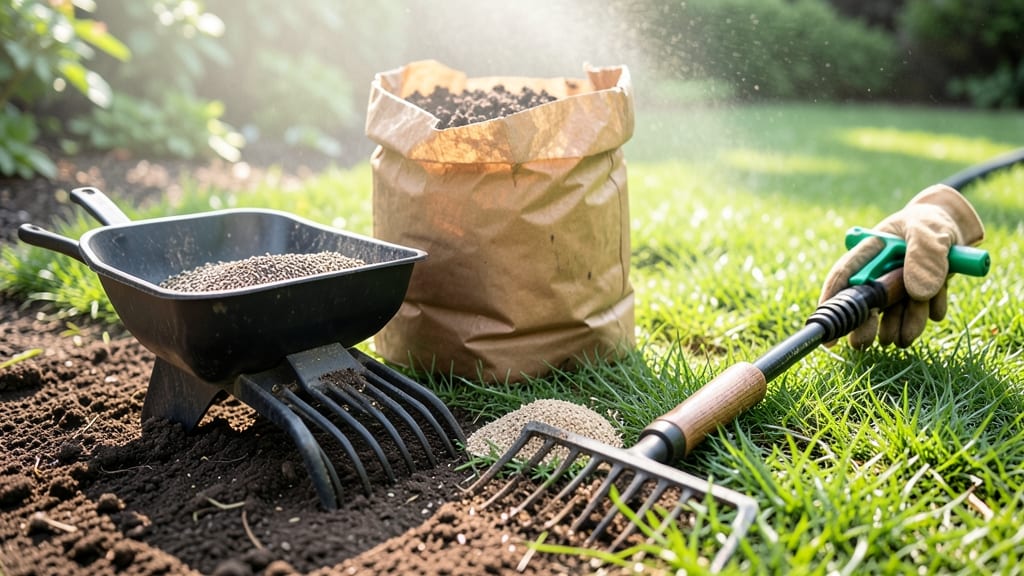
Planting a lawn from scratch starts with soil so rich it makes weeds think twice. 🌱 I’ve learned the hard way that skipping this step means fighting crabgrass battles for years—so we’re doing it right the first time, with a prep routine that sets your grass up for victory from day one.
The secret isn’t just tilling—it’s about feeding the soil first. Add 2-3 inches of compost and a slow-release fertilizer before seeding, then level the ground until it’s smoother than a golf green.
This creates the perfect foundation where grass roots can spread deep instead of struggling to break through compacted soil or weed seeds.
By the time you roll out the seed, you’ll have a blank canvas ready for even coverage—no bare spots, no weed invasions.
The first two weeks are critical: keep the soil consistently moist (like a wrung-out sponge) and shade seedlings from harsh afternoon sun until they’re tall enough to stand on their own.
Works in any climate, from hot Southern summers to cold Northern winters—just adjust watering depth based on your zone. Here’s how to make it happen without the usual headaches.
📚 In This Guide
- What you need
- Instructions
- Tips and common mistakes
- Wrapping up and next steps
What you need
- ● Soil Test Kit – To analyze pH and nutrient levels (critical for weed prevention!).
- ● Topsoil – 3–4 inches of high-quality topsoil (check local suppliers for loamy or sandy-loam blends).
- ● Lawn Seed – 8–12 lbs per 1,000 sq. ft. (choose cool-season or warm-season grass based on climate).
- ● Lawn Fertilizer – Slow-release starter fertilizer (look for high phosphorus for root growth).
- ● Rake – A bow rake (for leveling) and a garden rake (for debris removal).
- ● Lawn Roller – 100–150 lb capacity to compact soil evenly.
- ● Garden Hose & Sprinkler – For deep watering (aim for 1–1.5 inches per week).
- ● Gloves & Knee Pads – Because comfort matters!
- ● Soil Conditioner – Compost or peat moss to improve drainage.
- ● Pre-Emergent Herbicide – Apply before seeding to block weeds.
- ● Seed Spreader – For even coverage (broadcast or drop spreader).
- ● Erosion Control Blanket – If seeding on a slope.
- ● Soil pH Adjusters – Lime (to raise pH) or sulfur (to lower it).
Step-by-Step instructions for planting a lawn from scratch
Here's the foolproof method I use to create a lush, weed-resistant lawn that stays green all season.
🌱 Step 1: Clear and Mark Your Lawn Area
Start by removing all existing vegetation—grass, weeds, or debris. I like to use a sod cutter or sharp spade to dig up and remove sod in strips, then haul it away. Mark your lawn boundaries with wooden stakes and string to visualize the space before you begin. This helps you plan where to place the grass seed evenly and avoid planting too close to sidewalks or driveways.
If you're working with a large area, consider renting a sod cutter for efficiency. For smaller spaces, a sharp shovel works just fine. The key is to expose the soil completely so you can prep it properly. Once cleared, sweep away any remaining debris to ensure a clean planting surface.
🌿 Step 2: Test and Amend the Soil
Before adding grass seed, test your soil's pH and nutrient levels using a home testing kit. Ideal lawn soil has a pH between 6.0 and 7.0. If your soil is too acidic or alkaline, amend it with lime (to raise pH) or sulfur (to lower pH) as needed. I also recommend adding 2-3 inches of compost to improve soil structure and fertility.
Work the compost into the top 6 inches of soil using a garden fork or rototiller. This ensures the roots of your new grass will have plenty of nutrients to establish strong growth. Avoid compacting the soil—lightly rake the surface to create a fine, crumbly texture perfect for seed germination.
💧 Step 3: Spread Fertilizer and Grass Seed Evenly
Apply a starter fertilizer with a high phosphorus content (look for a 5-10-5 or 10-20-10 ratio) to encourage root development. Use a broadcast spreader to distribute the fertilizer evenly across the entire area. Then, spread the grass seed in two perpendicular directions to ensure full coverage—this prevents thin or patchy spots.
For a 4,000-square-foot lawn, you’ll need about 10-12 pounds of seed (check your seed bag for exact rates). Lightly rake the seed into the soil with a stiff-bristled rake, pressing it just enough to ensure good soil contact without burying it. This step is critical—seeds need light to germinate, so don’t cover them too deeply.
☀️ Step 4: Water Gently and Consistently
The first 7-10 days are crucial for germination. Water lightly twice daily—once in the morning and once in the late afternoon—keeping the soil moist but not soggy. Use a sprinkler with a fine mist setting to avoid displacing the seed. You’ll know you’re doing it right when the top ½ inch of soil stays damp but doesn’t pool with water.
Once the grass reaches 2 inches tall, reduce watering to 1 inch per week, including rainfall. Overwatering at this stage can lead to fungal issues, while underwatering causes weak, patchy growth. A simple way to check moisture is to dig a small hole—if the soil feels dry 1 inch down, it’s time to water again.
✂️ Step 5: Maintain and Protect New Growth
After 4-6 weeks, when the grass reaches 3-4 inches tall, mow it for the first time using a sharp blade set to 3 inches high. This encourages deeper root growth and prevents weak, leggy grass. Avoid walking on the new lawn for at least 4-6 weeks to protect the delicate roots from compaction.
Keep an eye out for weeds—pull them by hand when they first appear before they compete with your grass for nutrients. A light application of pre-emergent herbicide (like corn gluten meal) after the first mowing can help prevent weed seeds from germinating without harming your lawn.
Tips & tricks for perfect lawn planting
Here's what I learned the hard way after trying (and failing) to plant three lawns before getting it right.
Soil Prep is Everything: Don't skip the soil test—even if your soil looks fine, hidden issues like compacted subsoil or nutrient deficiencies can sabotage your lawn. I've seen "good" soil fail because it was too dense for roots. After clearing your area in Step 1, rent a core aerator (the kind with hollow tines) to create 3-4 inch deep holes every 2-3 inches. This breaks up compaction and gives roots room to grow deep. Do this right after removing debris but before adding compost in Step 2.
Seed Distribution Hack: When spreading that 10-12 pounds of seed in Step 3, work in small sections (about 10' x 10') to avoid overlapping. Use a push broom to lightly sweep seed into any low spots after your second pass—this ensures even coverage without wasting seed. Pro tip: Sprinkle a tiny bit of seed in your hand first to check the color—darker seed means you're using too much!
Watering Timing Matters: Those twice-daily waterings in Step 4 need to happen at dawn and dusk to prevent evaporation and fungal growth. I set my sprinkler timer for 10 minutes in the morning and 15 minutes in the evening during the critical 7-10 day germination period. The longer evening watering helps seeds absorb moisture overnight. Use a rain gauge to measure—you're aiming for ½ inch total per day during germination, not just "light watering."
Weed Prevention Start: After your first mowing in Step 5, spread corn gluten meal (the pre-emergent herbicide mentioned) using a spreader set for lawns. This isn't just about weeds—it also adds nitrogen as it breaks down. Timing is key: Apply it when soil temps are above 50°F but before weed seeds germinate (usually spring or early fall). The granules will look like coarse sand—don't confuse them with fertilizer!
Pro Tips for Planting A Lawn From Scratch
- Here's what I learned the hard way after trying (and failing) to plant three lawns before getting it right.
- Soil Prep is Everything: Don't skip the soil test—even if your soil looks fine, hidden issues like compacted subsoil or nutrient deficiencies can sabotage your lawn.
- Seed Distribution Hack: When spreading that 10-12 pounds of seed in Step 3, work in small sections (about 10' x 10') to avoid overlapping.
Frequently asked questions
Got questions about planting a lawn from scratch?
You’re not alone! Here are answers to the most common concerns—from timing to troubleshooting—so you can tackle your project with confidence.
When is the best time to plant a new lawn?
The ideal window is early spring or early fall when soil is warm enough for roots to establish but cool enough to prevent drought stress. Avoid planting in extreme heat or frost—grass struggles in those conditions! For cool-season grasses (like fescue or Kentucky bluegrass), aim for March–May or September–November. Warm-season grasses (like Bermuda or Zoysia) thrive when planted in late spring to early summer.
How do I keep weeds from taking over my new lawn?
Prevention starts with proper soil prep—remove existing weeds, till deeply, and apply a pre-emergent herbicide (like corn gluten meal) before seeding. After planting, use a mulching mower to shade soil and suppress weeds. For stubborn weeds, spot-treat with vinegar or post-emergent herbicides after the lawn is fully established (6–8 weeks post-planting).
Is sod or seed cheaper to plant a lawn?
It depends on your budget and timeline! Seed is the budget-friendly option ($0.10–$0.50 per sq. ft.), but it takes 4–6 weeks to establish. Sod costs more ($0.50–$1.50 per sq. ft.) but gives instant results. If you’re on a tight budget, seed wins—but if you need a lawn fast (like for a party or pets), sod is worth the splurge.
How often should I water my new lawn?
Water lightly but frequently—aim for ¼ inch per day (or twice daily for 5–10 minutes) for the first 2 weeks. Once sprouts reach 2–3 inches, reduce to 1–1.5 inches per week, including rainfall. Pro tip: Water early morning to prevent fungal diseases and evaporation. Avoid soaking the soil—grasses need consistent moisture, not puddles!
Can I plant grass over clay or rocky soil?
Yes, but you’ll need to amend the soil first! For clay, mix in compost or sand (50/50 ratio) to improve drainage. For rocky soil, remove large rocks and add topsoil (4–6 inches deep). If your soil is extremely compacted, consider renting a rototiller to loosen it. Test your soil’s pH too—aim for 6.0–7.0 for most grasses.
What do I do if my new lawn has brown patches?
Brown patches often mean uneven watering, poor soil contact, or pests. First, check for thatch buildup—if it’s over ½ inch thick, dethatch. If the issue persists, test for grubs or fungal diseases (like brown patch). Adjust watering habits and ensure even seed-to-soil contact during planting. For severe cases, reseed the affected area with high-quality grass seed.
Wrapping up and next steps
Planting a lawn from scratch is a rewarding project that transforms your outdoor space into a lush, green paradise—and you’ve got all the soil prep secrets to make it thrive! 🌱 With the right tools, techniques, and a little patience, you’ll enjoy a weed-free, vibrant lawn that’s the envy of the neighborhood.
Now that you’re armed with knowledge, it’s time to roll up your sleeves and make it happen.
🚀 Your Next Step: Planting Day!
Ready to see your hard work pay off? Start by scheduling your seed or sod installation for the perfect growing conditions—early morning or late afternoon on a cool, cloudy day. Then, grab your gloves, pour yourself a cold drink, and dive in! You’ve got this!