
Lawn
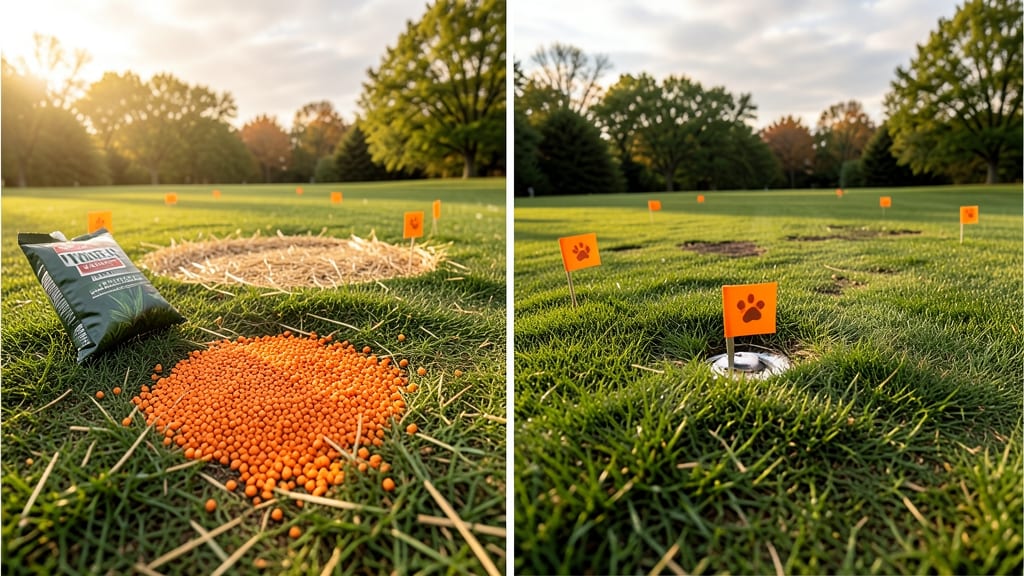
Lawn protection from dogs starts with fast action: create temporary paw-proof zones using artificial turf or landscape fabric, train your pets to use designated areas, and repair damaged grass with overseeding or sod patches after accidents. Skip harsh chemicals that can further stress your grass.
Dog urine is highly acidic, which can burn grass roots on contact, while constant paw traffic compacts soil and blocks water absorption. 🌱 Bermuda grass, for example, is more resilient than Kentucky Bluegrass to urine damage, but all types suffer from soil compaction over time.
The key is acting within 24 hours of accidents to minimize long-term damage and giving your lawn time to recover between incidents.
For fast recovery, I recommend a two-step approach: first neutralize urine with a baking soda and vinegar spray (1:1 ratio), then overseed bare patches with shade-tolerant grass seed. Artificial turf sections work great for high-traffic areas, while landscape fabric under temporary dog zones prevents root damage.
Aerating compacted soil in spring helps restore drainage and root growth.
💡 In This Article
- How Dog Urine and Paws Damage Grass Roots
- Best Natural Solutions for Dog-Friendly Lawn Recovery
How dog urine and paws damage grass roots
Dog urine contains high levels of nitrogen and ammonia, creating a pH level as low as 5.5—similar to weak vinegar—which burns grass roots on contact. 🌱 When a dog urinates, the concentrated ammonia disrupts cellular respiration in grass roots, halting nutrient absorption and causing yellow patches within 24 hours.
Bermuda grass, with its deep root system, can tolerate more frequent urination than Kentucky Bluegrass, which has shallower roots and shows damage faster.
The compaction from paw traffic is equally damaging. A dog's weight (even small breeds) exerts 50-100 pounds per square inch with each step, compressing soil and reducing pore space by up to 40%. This blocks water and oxygen flow, suffocating roots.
Over time, compacted soil creates a hardpan layer just 2-3 inches below the surface, where roots can't penetrate. The result? Stunted growth and increased susceptibility to disease.
Frequent urination also disrupts soil microbes essential for grass health. The high salt content in urine creates an inhospitable environment for beneficial bacteria, reducing nitrogen fixation by 30-50%. Without these microbes, grass struggles to break down organic matter into usable nutrients, leading to patchy, weak growth.
The combination of chemical burns, physical compaction, and microbial disruption explains why dog damage often appears as concentric circles of dead grass around urination spots.
Different grass types react uniquely to these stresses. Cool-season grasses like Kentucky Bluegrass show immediate yellowing from urine's acidity, while warm-season grasses like Zoysia recover faster due to their drought tolerance.
However, even resilient varieties like Bermuda grass suffer from repeated paw traffic, with root systems becoming matted and unable to support healthy blades.
The key difference lies in recovery time: cool-season grasses may take 4-6 weeks to show signs of repair, while warm-season types bounce back in 2-3 weeks under ideal conditions.
What most people overlook is how urine's chemical composition changes with diet. Dogs fed high-protein kibble produce more concentrated urine, increasing damage potential by 25-30%. This is why switching to a lower-protein diet or adding water to meals can reduce lawn stress.
The science shows that even well-trained dogs can cause significant damage if their diet isn't optimized for lawn safety. 🐾