
Lawn
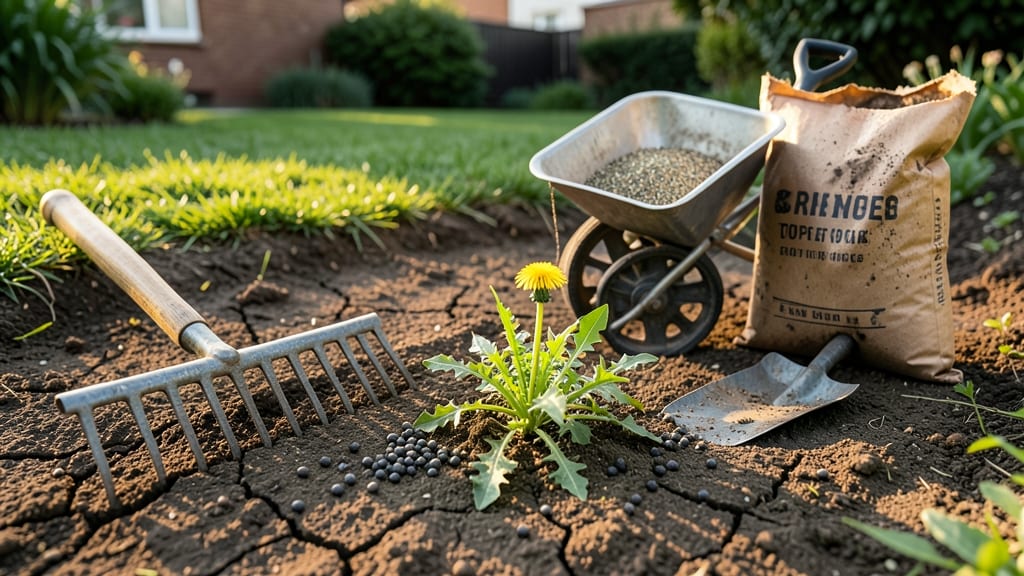
Bare spots in my lawn always feel like a punch to the curb appeal—until I discovered this fast-green recovery method that works without scalping the grass. 🌱 The key? Stopping the damage and giving roots the right conditions to bounce back.
Most "fixes" just mask the problem, but this approach targets the real causes: compacted soil, thin grass, or hidden pests lurking beneath the surface.
First, we rule out the usual suspects: foot traffic, thatch buildup, or even grubs munching underground. A simple soil test (or even a DIY jar test) tells us if we're dealing with pH issues or nutrient starvation—both of which stunt recovery.
Once we know the root cause, the real work begins: aerating to loosen compacted soil, overseeding with the right grass type, and a light touch with fertilizer to avoid burning new growth.
Within 4-6 weeks, you’ll see dense green filling those gaps—no scalping, no guesswork. The secret? Matching your repair strategy to your lawn’s specific needs. Thick grass crowds out weeds, retains moisture better, and stays resilient against future wear.
And the best part? This method works for both cool-season and warm-season grasses, so no matter where you live, you’ll get results.
Here’s the game-changer: preventive care that keeps spots from returning. A seasonal maintenance routine—like top-dressing with compost in spring and adjusting mowing height—turns a one-time fix into long-term lushness. Let’s get your lawn back to that "just-mowed" pride without the scalpel.
Hidden Causes Behind Dead Lawn Patches
Those frustrating bare spots in your lawn aren’t just random—each one tells a story of what’s gone wrong beneath the surface. Understanding the root causes (literally!) is the first step to fixing them. Let’s dig into the science behind why your grass is throwing in the towel.
When foot traffic, heavy equipment, or even rain compacts soil, it crushes the tiny air pockets grass roots need to breathe. Without oxygen, roots suffocate, and nutrients can’t reach them. Compacted soil also prevents water from draining properly, leading to waterlogged or drought-stricken patches.
- How to spot it: Press your thumb into the soil—if it feels like packing dirt, you’ve got compaction.
- Who’s guilty?
- High foot traffic (kids, pets, or frequent mowing).
- Heavy machinery (lawnmowers, tractors, or even golf carts).
- Clay-heavy soil that holds moisture like a sponge.
Pro tip: Aerate your lawn in fall or spring to punch holes in compacted soil, letting roots breathe again. 💡
Grubs, chinch bugs, and even moles or voles can turn your lawn into a buffet—and your grass into a ghost town. These critters munch on roots or tunnel through soil, severing the lifeline that keeps grass alive.
- How to spot it:
- Grubs: Dig up a patch—if you see white, C-shaped larvae, grubs are feasting.
- Chinch bugs: Look for wilting grass in sunny spots (they thrive in heat).
- Moles/voles: Mound-shaped tunnels or chewed grass near the base.
- Who’s guilty?
- Japanese beetle grubs (love moist, fertile soil).
- Chinch bugs (target warm-season grasses like Bermuda).
- Moles/voles (digging for grubs or roots).
Pro tip: If pests are the culprit, treat the soil with beneficial nematodes or insecticides labeled for your specific pest. 🔥
Grass is like Goldilocks—it needs water that’s just right. Too little, and roots shrivel up. Too much, and roots drown in anaerobic (oxygen-free) soil, leading to fungal diseases like Fusarium or Pythium.
- How to spot it:
- Underwatering: Grass turns brown and crispy, pulling up easily.
- Overwatering: Soggy soil, mushrooms popping up, or a foul smell.
- Who’s guilty?
- Irregular watering (skipping days or drowning the lawn).
- Poor drainage (clay soil or low-lying areas).
- Automatic sprinklers misaligned (watering sidewalks instead of grass).
Pro tip: Water deeply 2–3 times per week (early morning is best) and check for drainage issues by digging a small hole—if water pools after 6 hours, you’ve got a problem. ✨
Grass has a comfort zone—usually between 60°F and 85°F. Step outside that range, and you’ll see wilting, yellowing, or dead patches. Drought, frost, or even sudden temperature swings can shock roots into dormancy or death.
- How to spot it:
- Heat stress: Grass turns grayish-brown but springs back after watering.
- Cold stress: Grass turns white or mushy (like after a hard freeze).
- Who’s guilty?
- Prolonged drought (especially in summer).
- Early/late frosts (killing tender new growth).
- Hail or heavy wind (physically damaging blades).
Pro tip: Choose drought-resistant grasses (like Buffalo grass or Zoysia) if your climate swings wildly. For frost, avoid walking on lawns until they thaw—crushed frost-damaged grass won’t recover. 🌡️
Too much (or too little) of the wrong thing can turn your lawn into a wasteland. Over-fertilizing, herbicide drift, or soil lacking key nutrients like nitrogen, phosphorus, or potassium can leave grass starving or poisoned.
- How to spot it:
- Chemical burn: Yellow or white patches with crispy edges (like herbicide overspray).
- Nutrient deficiency:
- Nitrogen: Pale yellow grass.
- Phosphorus: Dark green leaves but poor root growth.
- Potassium: Brown leaf tips or weak stems.
- Who’s guilty?
- Overapplying synthetic fertilizers (especially in summer).
- Herbicide drift from neighboring properties.
- Poor soil testing (not knowing what your lawn needs).
Pro tip: Get a soil test ($15–$20 at garden centers) to diagnose deficiencies. If chemicals are the issue, flush the soil with water and avoid treatments until new growth appears. 🎯
Now that you know the real villains behind those bare spots, you’re ready to fight back. Next up: How to Fix Them Fast without scalping your lawn! 🚀
Quick Fixes for Lawn Recovery
Bare spots in your lawn can feel like a persistent puzzle, but the right approach turns frustration into a lush, green comeback. Below, we’ll tackle the most common causes with step-by-step solutions—plus pro tips to keep your lawn thriving long-term. No scalpel required!
If foot traffic, pets, or heavy machinery have packed down the soil, roots suffocate and grass struggles to grow. Here’s how to breathe life back into it:
🔨 Step 1: Aerate Like a Pro
- Rent or buy a core aerator (the kind that pulls out small soil plugs) and run it over the bare spots. Focus on areas with visible compaction or where water pools.
- When to do it: Early morning or late afternoon on a slightly damp day (soil should be moist but not soggy).
- Pro tip: 💡 If renting isn’t an option, use a garden fork to poke holes 3–4 inches deep, spacing them 3–4 inches apart.
🌱 Step 2: Top-Dress for Success
- Spread a ¼-inch layer of compost or a soil amendment (like peat moss or coconut coir) over the aerated spots.
- Lightly rake it in to blend with the soil. This adds nutrients and improves drainage.
- Water deeply after to settle the mix.
🌡️ Step 3: Choose the Right Grass Seed
- Pick fast-growing, cool-season grass seed (like tall fescue or perennial ryegrass) if you’re in a temperate climate. Warm-season areas? Go for Bermuda or zoysia.
- Scatter seed evenly over the prepped soil, then cover lightly with a thin layer of straw (to protect seeds from birds and sun).
- Keep moist with daily light watering until germination (usually 7–14 days).
Bare patches often pop up where light conditions change—think new trees or a shifted fence. Here’s how to fix it:
☀️ For Sunny Spots:
- Overseed with drought-tolerant grass like Buffalo grass or Zoysia, which handle heat and dry spells better.
- Add mulch around new plantings to retain moisture.
- Water deeply 2–3 times per week (early morning) until the grass establishes (about 3–4 weeks).
🌳 For Shady Areas:
- Skip grass seed—it won’t thrive. Instead, plant shade-loving ground covers like:
- Creeping Charlie (fast-spreading, green year-round)
- Clover (fixes nitrogen in the soil)
- Moss (low-maintenance, thrives in damp shade)
- Prep the soil by loosening it with a rake, then scatter seeds or plugs. Press gently into the soil and water lightly.
If your lawn is thin but not completely bare, it might just need a nutrient boost. Try this:
💪 Step 1: Fertilize Smartly
- Use a slow-release, balanced fertilizer (like 10-10-10 or 16-4-8) to encourage root growth.
- Apply in early fall or spring (avoid summer heat stress).
- Follow label rates—overdoing it can burn grass.
🌱 Step 2: Overseed Thin Areas
- Mow the thin spots short (but not scalped!) to expose soil.
- Spread seed evenly, then cover with a thin layer of straw.
- Water lightly daily until germination (about 1–2 weeks).
✨ Step 3: Boost with Microclover or Lawn Food
- Mix microclover seed (20–30% of your total seed mix) for natural nitrogen and drought resistance.
- For extra green-up, use a liquid lawn fertilizer like fish emulsion or seaweed extract.
Once you’ve fixed the bare spots, lock in your progress with these easy habits:
- 🌡️ Mow high (3–4 inches) to shade soil and retain moisture.
- 💧 Water deeply but infrequently (1–1.5 inches per week, early morning).
- 🔪 Sharpen mower blades (dull blades tear grass, inviting disease).
- 🎯 Test soil every 2–3 years (check pH and nutrient levels at a local extension office).
- 🐕 Train pets to avoid high-traffic areas or use grass-friendly pee breaks (dilute urine with water).
With the right fix for your lawn’s specific needs, those bare spots won’t stand a chance. Start small, stay consistent, and watch your grass bounce back—no scalpel necessary! 🌱
Frequently asked questions
Why do bare spots keep coming back even after I reseed?
Persistent bare spots often mean the root cause isn't fixed. Check for compaction (press your thumb in—if it feels hard, aerate) or pests (dig up a patch—see grubs?). Also, ensure new seeds get consistent moisture (light daily watering for 2 weeks) and proper sunlight for their type. If the area stays dry or shaded, choose drought-tolerant grass like Buffalo grass or shade-loving alternatives.
Can I use grass clippings to fix bare spots?
Grass clippings alone won’t fix bare spots, but they’re a great free mulch to retain moisture after seeding. Spread a thin layer (¼-inch) over newly seeded areas to protect seeds from birds and sun. For better results, mix clippings with compost (50/50 ratio) to add nutrients. Avoid thick layers—they can suffocate seeds or attract pests.
How do I know if my bare spots are from pests or disease?
Pests (like grubs or chinch bugs) leave irregular patches with healthy grass around edges, while disease often shows as ring-shaped patterns or uniform brown areas. Dig up a small section: if you see white grubs or tiny black bugs, it’s pests. For disease, check for mushrooms (overwatering) or powdery mildew (white fuzz). Treat pests with nematodes or insecticide; disease requires adjusting watering and improving airflow.
Is it better to fix bare spots in spring or fall?
Fall is ideal for most lawns—cool temps and higher humidity help seeds germinate faster. Spring works too, but avoid late spring/early summer (heat stress). For warm-season grasses (like Bermuda), seed in late spring. Always check your grass type: cool-season grasses (Fescue, Ryegrass) thrive in fall; warm-season prefer spring. Pro tip: Test soil first—fall lets you address pH/nutrient issues before winter.
Will my lawn recover if I just water the bare spots?
Water alone won’t fix bare spots—it’s like giving a plant water but no soil. Roots need oxygen (aerate compacted soil) and nutrients (fertilize or top-dress with compost). Water helps seeds germinate, but without proper prep, you’ll just waste time. Start with aeration, then seed, then water lightly daily for 2 weeks. Deep watering (1–1.5 inches/week) after germination keeps roots strong.