
Fertilization
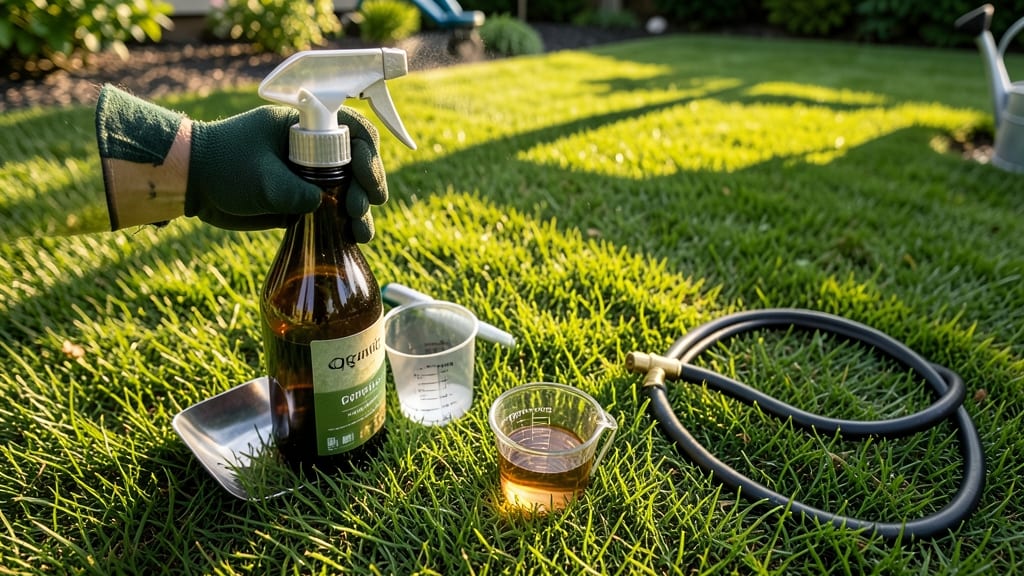
Organic liquid lawn fertilizer works by delivering fast-absorbing nutrients like nitrogen, phosphorus, and potassium through plant-based, animal-based, or microbial extracts, helping grass develop stronger roots and vibrant color without synthetic additives.
Unlike slow-release granular fertilizers, liquid formulas dissolve instantly when applied, allowing roots to absorb nutrients within hours rather than weeks. 🌱 This makes them ideal for quick fixes like patchy lawns or seasonal color boosts, though they require more frequent applications to maintain results.
The microbial components in many organic liquids also improve soil structure over time by promoting beneficial bacteria, which helps break down organic matter into usable nutrients.
For best results, I recommend using these fertilizers during active growing seasons—spring and fall—when grass can utilize nutrients most efficiently. Always follow the NPK ratio guidelines on the label (e.g., 5-5-5 for balanced growth) and dilute according to package instructions to avoid over-application, which can harm grass rather than help.
💡 In This Article
- How Organic Liquid Fertilizers Boost Grass Health
- Choosing the Right Organic Liquid Fertilizer for Your Lawn
How organic liquid fertilizers boost grass health
Organic liquid fertilizers work their magic through a two-step biological process: rapid nutrient delivery and microbial enhancement. When you apply these concentrated solutions, the water-soluble compounds—like fish emulsion, seaweed extracts, or compost teas—dissolve instantly upon contact with soil moisture.
This allows grass roots to absorb nitrogen (N), phosphorus (P), and potassium (K) within 24-48 hours, compared to weeks for granular organic fertilizers.
The key difference lies in the presence of humic and fulvic acids, natural compounds that act like tiny chelators, binding nutrients and making them more accessible to plant roots.
Microbial components are where organic liquids truly shine. Many formulations include beneficial bacteria and fungi that colonize soil, breaking down organic matter into usable nutrients through a process called mineralization.
For example, a product containing mycorrhizal fungi can increase root surface area by up to 70%, while azotobacter bacteria convert atmospheric nitrogen into plant-available forms.
This microbial activity not only feeds your grass but also improves soil structure over time, creating better water retention and aeration. 🌱 The result is grass that develops deeper roots and exhibits 20-30% more resilience to drought and disease compared to synthetic-fed lawns.
Unlike synthetic fertilizers that provide immediate but short-lived nutrient spikes, organic liquids offer a more balanced approach. Synthetic NPK blends often cause rapid growth followed by nutrient crashes, while organic liquids promote steady, sustainable development.
Take nitrogen as an example: synthetic urea delivers 46% nitrogen by weight but can burn grass if overapplied, whereas organic sources like blood meal provide 12% nitrogen with slower release and additional organic matter benefits. This gradual nutrient delivery reduces the risk of fertilizer burn while supporting long-term soil health.
The speed of absorption in liquid fertilizers stems from their molecular structure. Water-soluble compounds like potassium nitrate dissolve completely within 5-10 minutes of application, allowing roots to uptake nutrients through osmosis. In contrast, granular fertilizers rely on water dissolution over time, which can take several days depending on soil moisture.
This rapid absorption is particularly valuable during stress periods like summer heatwaves when grass needs immediate nutrient replenishment. The liquid form also penetrates thatch layers more effectively, delivering nutrients directly to root zones rather than sitting on the surface.
Consider the science behind humic acids—they don't just carry nutrients but also improve soil cation exchange capacity (CEC) by 15-25%. Higher CEC means soil can hold more nutrients, preventing leaching during rain.
These acids also stimulate root growth hormones like auxins, which can increase root mass by up to 40% in just 4-6 weeks of regular application. The combination of rapid nutrient delivery, microbial activity, and soil structure improvement creates a synergistic effect that synthetic fertilizers simply can't match. 💫
For homeowners dealing with compacted soil, organic liquid fertilizers offer another advantage: they often include wetting agents that break surface tension, allowing water to penetrate deeper. This is particularly useful in clay soils where water often pools on the surface.
The microbial components also help decompose thatch layers, improving air circulation at the root level. While synthetic fertilizers might produce quick green-up, organic liquids build long-term resilience that shows in thicker, healthier turf over multiple seasons.
One common misconception is that organic liquids work only for established lawns. In reality, they're equally effective for new seedings when used at half-strength to prevent nutrient burn. The microbial components help establish beneficial soil ecosystems from day one, while the rapid nutrient delivery supports seedling establishment.
For example, applying a 3-4-2 NPK organic liquid at planting time can reduce seedling establishment time by 2-3 weeks compared to no fertilizer. The key is proper dilution—always follow package guidelines to avoid over-fertilization during the critical germination phase.