
Mower
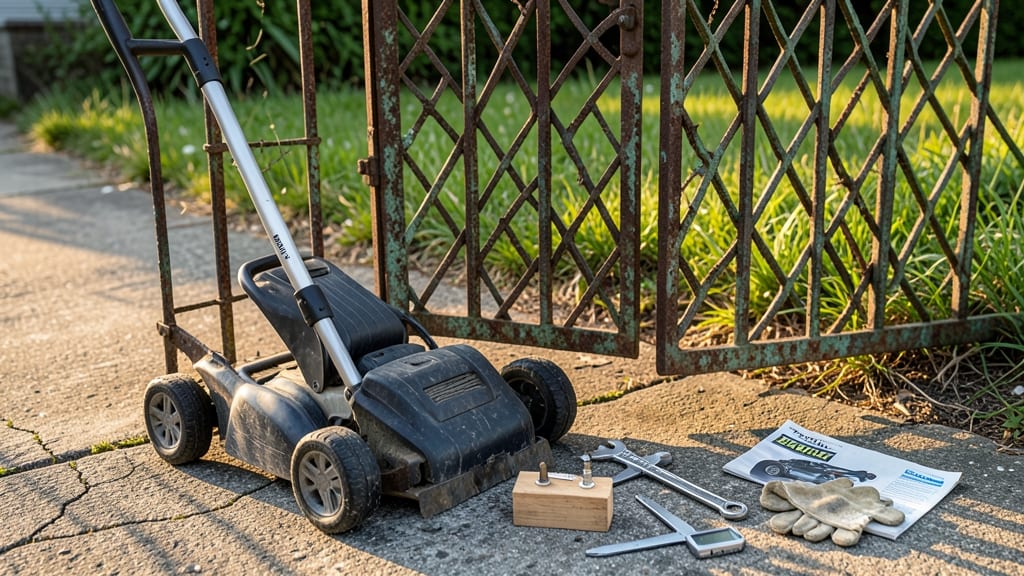
To set the proper lawn mower spark plug gap, measure 0.025 to 0.035 inches (0.64 to 0.89 mm) for most small engines. Use a spark plug gap tool to adjust the gap precisely, widening or narrowing it with a flathead screwdriver as needed, then verify with a feeler gauge.
Getting the spark plug gap right is crucial because it directly impacts how well your lawn mower's engine ignites fuel. 🔥 Too small a gap can cause misfires and poor performance, while too large a gap leads to weaker sparks and potential starting issues.
Most modern small engines—like those from Honda, Briggs & Stratton, or Toro—specify this range for optimal combustion. I always double-check my measurements with a feeler gauge after adjusting, as even a slight misalignment can create problems down the line.
If you're working on an older model or a different brand, consult your owner's manual for the exact specifications. Many manufacturers include a small sticker on the spark plug itself with the recommended gap.
For example, a 0.030-inch gap is common for many mid-sized engines, while smaller engines might need just 0.025 inches. Always work in a well-ventilated area and let the spark plug cool completely before measuring or adjusting.
💡 In This Article
- How Spark Plug Gaps Affect Lawn Mower Performance
- Step-by-Step Guide to Measuring and Adjusting Spark Plug Gaps
How spark plug gaps affect lawn mower performance
The spark plug gap acts like a tiny bridge for electricity, creating the spark that ignites the air-fuel mixture in your engine. When this gap is too narrow—say, below 0.025 inches—the spark struggles to jump across, leading to weak or inconsistent combustion.
This causes misfires, rough idling, and a noticeable loss of power, especially under load like when mowing thick grass. Think of it like trying to strike a match with your fingers too close together—the spark just won't ignite properly.
Conversely, a gap that's too wide—above 0.035 inches—creates a stronger spark, but at a cost. The increased resistance makes the spark less consistent, especially in humid conditions or when the engine is cold.
This can result in hard starting, poor acceleration, and even engine damage over time as unburned fuel builds up. For example, Honda small engines often specify a 0.030-inch gap, while Briggs & Stratton might recommend 0.025 inches for their lighter-duty models.
Always check your owner's manual—even a 0.005-inch difference can make a measurable impact on performance.
The ideal gap ensures optimal fuel efficiency and power output. A properly gapped spark plug (like the 0.030-inch standard for many Toro models) allows the spark to travel just the right distance, creating a strong, reliable ignition every time.
This translates to smoother operation, better fuel economy, and fewer carbon deposits on the plug electrodes. Over time, incorrect gaps can lead to fouling—where unburned fuel coats the plug—or excessive wear on the ignition system components.
Real-world consequences become obvious when you compare performance. A mower with a 0.020-inch gap might struggle to cut through dense grass, while one with a 0.040-inch gap could sputter and overheat on hot days. The sweet spot balances spark strength with consistency, ensuring your engine runs at peak efficiency.
This is why manufacturers test extensively to recommend their specific gaps—what works for a 4.5 HP Honda engine won't necessarily suit a 6.5 HP Briggs & Stratton.
Even small variations matter. For instance, a 0.035-inch gap might work fine in dry conditions but fail to ignite properly when humidity rises above 70%. The air density changes, altering how electricity travels through the gap.
That's why premium spark plugs often include fine-tuned electrode designs to compensate for these environmental factors, but the gap itself remains the foundation of proper ignition.
What most people don't realize is how quickly these gaps can change. Vibrations from normal mower operation can slightly alter the gap over time, while carbon buildup from old fuel or oil can effectively narrow it.
That's why regular maintenance—checking and adjusting the gap every 25 hours of use—is critical for keeping your engine running smoothly. A well-maintained spark plug gap ensures your mower starts reliably, runs cleanly, and delivers consistent power throughout the cutting season.