
Lawn
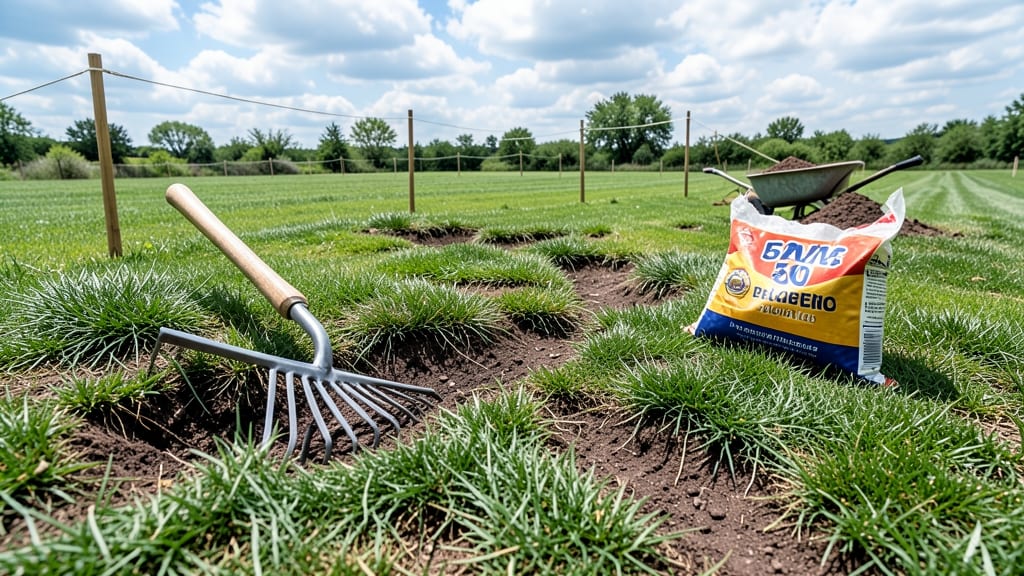
Selecting the right lawn levelling tool depends on your yard's size and terrain: manual rakes are ideal for small, flat lawns, while walk-behind power levellers excel on large, uneven areas with slopes. Pay attention to material durability and tool weight for better control.
Your lawn's terrain and size directly influence which levelling tool will work best. 🌱 For smaller yards, a sturdy metal rake gives you full control over soil distribution, while power levellers save time on larger properties by automatically smoothing out uneven patches.
The right tool not only improves drainage but also promotes healthier root growth by creating a stable base. I always recommend testing a tool on a small section first to see how it handles your specific soil type.
Budget plays a key role too—manual tools start under $30 and require more elbow grease, while motorized options can exceed $200 but handle heavy-duty work with minimal effort.
Many homeowners find that investing in a mid-range power leveller pays off within a few seasons by eliminating the need for repeated manual adjustments.
💡 In This Article
- How Lawn Levelling Tools Work to Create Even Grass
- Best Lawn Levelling Tools by Yard Type and Budget
How lawn levelling tools work to create even grass
Lawn levelling tools function by redistributing soil and filling depressions to create a uniform surface. Manual rakes, like the bow rake, work by dragging soil from high spots to low ones through their curved tines, which can handle 1-2 inch variations in elevation.
The key is the angle—holding the rake at a 45-degree creates a natural slope for water drainage, while a flat angle smooths out minor bumps. For steeper slopes, a heavy-duty rake with wider tines (up to 12 inches) provides better leverage and control.
Power levellers, on the other hand, use a rotating drum or vibrating plate to aggressively level soil. These machines, like the walk-behind models, can process 100-200 square feet per minute and are designed to handle 3-6 inch elevation changes by compacting soil as they move.
The drum’s weight (typically 50-100 pounds) creates downward pressure, while the spinning action redistributes soil more evenly than manual tools. This method is ideal for large lawns where time and precision matter, but it can over-compact clay soil if not used carefully.
Drag harrows, another type of levelling tool, work by pulling soil behind them to smooth out rough patches. Their flat, weighted plates (often 24-36 inches wide) glide over the ground, breaking up clumps and evening out the surface.
Unlike rakes, harrows don’t lift soil—they rely on their weight and drag to create a level plane. This makes them perfect for finishing touches after using a rake or power leveller, especially on sandy or loose soils that are prone to shifting. The trade-off?
They require more physical effort to maneuver, especially on uneven terrain.
Drainage and root growth are directly tied to how well a tool levels your lawn. Proper levelling ensures water flows away from your home’s foundation and prevents puddles that can suffocate grass roots.
Manual tools give you precise control over drainage slopes, while power levellers excel at covering large areas quickly. However, overuse of motorized tools can create a hardpan layer, restricting water and air penetration.
To avoid this, aerate after levelling if you notice compacted soil—this opens up the ground for better root development and moisture absorption.
Soil type also influences tool effectiveness. Clay soils, which expand when wet and shrink when dry, benefit from tools that break up clumps without over-compacting, like a heavy-duty rake.
Sandy soils, which drain too quickly, need tools that can hold soil in place temporarily, such as a drag harrow with weighted edges. Always test a small area first to see how your soil reacts—some tools may leave ruts or create uneven patches if not used correctly.
For best results, combine tools based on your lawn’s needs. Start with a rake for low spots, follow up with a power leveller for large areas, and finish with a harrow for a smooth surface.
This layered approach ensures your lawn isn’t just level but also stable and ready for seeding or sod. 💫