
Lawn
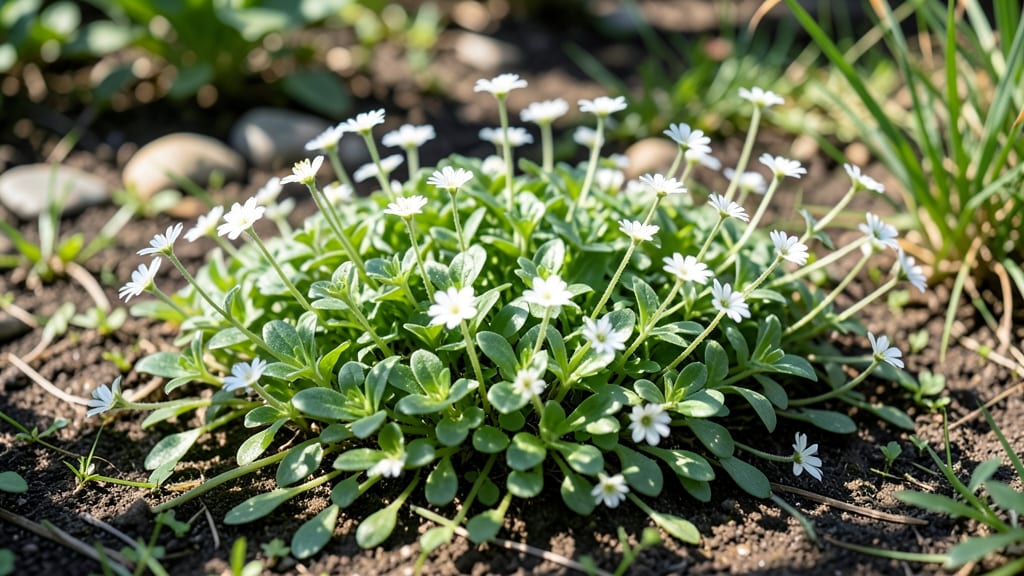
The identification of lawn chickweed starts with knowing its sneaky little traits. 🌱 This common weed has smooth, oval leaves with jagged edges and a slightly fuzzy stem that sprawls across grass—unlike your neat, upright lawn plants. The real giveaway?
Its delicate white flowers that pop up in spring, forming star-shaped clusters along the stems. The problem isn’t just its messy look—chickweed steals nutrients from grass, leaving thin patches where it thrives.
I’ve seen lawns go from lush green to patchy brown in just a few weeks when this weed takes over. Worse, it spreads fast through seeds and creeping stems, making it harder to control than you’d think.
Pulling it by hand works for small patches, but for bigger lawns, you’ll need a mix of digging and natural herbicides like vinegar or corn gluten. The key is acting fast—once it flowers, it’s already seeding for next year’s takeover.
Don’t confuse it with clover (which has three leaflets) or moss (which stays low and spongy). Chickweed’s sprawling habit and fuzzy stems are dead giveaways. Here’s how to tackle it before it ruins your lawn’s clean look.
Root Causes of Chickweed Spread
Chickweed may seem like an innocent weed, but its persistence in lawns often stems from specific environmental and biological triggers. Understanding these causes is key to preventing its takeover. Let’s break down the science behind why this plant thrives where it shouldn’t.
Chickweed loves moisture—too much of it, in fact. When lawns receive excessive watering, especially during cooler months, they create the perfect breeding ground for this weed. Here’s why:
- Poor Drainage: Overwatering saturates the soil, reducing oxygen levels and weakening grass roots. Chickweed, a shallow-rooted annual, thrives in these damp conditions, outcompeting grass for nutrients.
- Thatch Buildup: Compacted or waterlogged soil prevents grass roots from accessing water and air, leading to bare patches. Chickweed seeds germinate quickly in these gaps, filling the void.
- Seasonal Factor: Spring and fall are peak times for chickweed growth because soil stays moist longer, and temperatures are mild—ideal for its rapid reproduction.
Actionable Fix: Aerate your lawn in early fall to improve drainage and reduce compaction. Water deeply but infrequently (1–1.5 inches per week) to encourage grass roots to grow deeper and outcompete weeds.
Chickweed doesn’t just fill empty spaces—it exploits weak spots in your lawn. When grass is under stress, it leaves openings for chickweed to move in aggressively. Common stressors include:
- Nutrient Deficiencies: Lawns lacking nitrogen, phosphorus, or potassium struggle to grow thickly. Chickweed, a fast-growing opportunist, fills these nutrient-poor gaps.
- Disease or Pest Damage: Fungal infections (like brown patch) or insect damage (e.g., grubs) create thin patches. Chickweed seeds, which can lie dormant for years, germinate when sunlight hits bare soil.
- Improper Mowing: Cutting grass too short (below 2–3 inches) weakens roots and invites weeds. Chickweed’s low-growing habit makes it a perfect invader in these conditions.
Actionable Fix: Conduct a soil test to address deficiencies and fertilize accordingly. Mow at the correct height for your grass type and treat pest/disease issues promptly to restore lawn density.
Chickweed’s resilience lies in its reproductive strategy. Unlike some weeds, it doesn’t rely on runners or underground rhizomes—it spreads through tiny seeds that are everywhere. Here’s how:
- Wind and Wildlife: Chickweed produces thousands of seeds per plant, which are easily carried by wind or animals (like birds and rodents). A single plant can seed-bomb your lawn in a season.
- Dormant Seed Bank: Seeds can remain viable in the soil for years, waiting for the right conditions (moisture, sunlight) to germinate. Disturbing soil through tilling or foot traffic can trigger a sudden chickweed outbreak.
- Human Activity: Tools, shoes, and even pet paws can transport seeds from infested areas to your lawn. If you’ve had chickweed before, it’s likely lurking in your soil, ready to return.
Actionable Fix: Remove chickweed before it seeds (pull by hand or use a hoe). Sanitize tools after use, and avoid over-tilling, which stirs up dormant seeds. Consider a pre-emergent herbicide in early spring to block new seedlings.
Chickweed isn’t picky—it adapts to a wide range of climates, but it prefers certain conditions:
- Cool, Wet Seasons: Chickweed germinates best in temperatures between 50–70°F (10–21°C). Regions with mild winters or frequent spring rains see explosive chickweed growth.
- Partial Shade Tolerance: While it can grow in full sun, chickweed often invades lawn edges, under trees, or shaded areas where grass struggles. Its ability to photosynthesize efficiently in low light gives it an edge.
- Sudden Weather Shifts: Freeze-thaw cycles or heavy rainfall can shock grass into dormancy, creating temporary weak spots that chickweed exploits within days.
Actionable Fix: In regions prone to chickweed, apply a selective herbicide in early spring or fall to target seedlings before they spread. Overseed bare patches with shade-tolerant grass varieties to crowd out weeds.
Chickweed may seem unstoppable, but by addressing these root causes—soil moisture, grass health, seed dispersal, and seasonal conditions—you can disrupt its lifecycle and reclaim your lawn naturally.
How to Fix Lawn Weeds Naturally
Now that you’ve identified chickweed in your lawn, it’s time to tackle it—without relying on harsh chemicals. Chickweed thrives in moist, compacted soil and weak grass, so the best approach combines manual removal, cultural fixes, and natural treatments to starve it out and strengthen your lawn’s defenses.
Below are practical, step-by-step solutions tailored to the root causes of your chickweed problem, plus prevention tips to keep it from returning.
Cause: Chickweed spreads rapidly via seeds and runners, so waiting too long lets it dominate. Fix:
- Best time to act: Pull chickweed when the soil is moist but not soggy (early morning or after rain). Dry soil makes plants brittle and easier to remove.
- How to pull:
- Hand-pulling (small patches): Grasp the chickweed at the base and twist gently to dislodge the entire root. Use a weed puller or gloved hands for stubborn clumps.
- For dense areas: Use a hula hoe or stirrup hoe to slice through the soil just below the surface. This severs roots and prevents regrowth.
- Pro tip: 🌱 Bag and dispose of pulled weeds immediately—do not compost them, as chickweed seeds can survive and reinfest your lawn.
Cause: Thin, weak grass leaves gaps for chickweed to invade. Fix:
- Reseed bare spots: Overseed with tall fescue or Kentucky bluegrass (both outcompete chickweed). Choose slow-release, high-quality seed and follow package instructions for depth and timing.
- Improve soil health:
- Aerate compacted soil in fall or early spring to boost root growth and reduce chickweed’s favorite moist conditions.
- Top-dress with compost (¼ inch layer) to improve drainage and fertility.
- Adjust watering: Chickweed loves frequent, shallow watering. Switch to deep, infrequent watering (1–1.5 inches per week) to encourage deep grass roots and stress out weeds.
Cause: Chickweed’s shallow roots make it vulnerable to vinegar-based or salt-free herbicides. Fix:
- Homemade vinegar spray (for small areas):
- Mix 1 gallon white vinegar (5% acetic acid) + 1 oz dish soap + 2 tbsp salt.
- Spray directly on chickweed on a sunny, wind-free day (avoid spraying grass).
- Reapply every 3–5 days until weeds die (may take 1–2 weeks).
- ⚠️ Caution: Vinegar can harm surrounding plants, so use a shield or spot-treat.
- Corn gluten meal (pre-emergent):
- Apply 20 lbs per 1,000 sq ft in early spring to prevent chickweed seeds from germinating.
- Bonus: It also fertilizes your lawn naturally!
Cause: Chickweed thrives in low-light, disturbed soil. Fix:
- Cardboard or newspaper method:
- Cover the infested area with 2–3 layers of wet cardboard or newspaper, then top with 2–3 inches of mulch or wood chips.
- This blocks sunlight and smothers chickweed in 4–6 weeks. Once dead, reseed the area.
- Heavy mulch (for garden edges):
- Apply 3+ inches of mulch (straw or shredded leaves) around garden borders to prevent chickweed from creeping in.
Cause: Chickweed returns if conditions (moisture, shade, weak grass) persist. Fix:
- 💡 Mow high: Keep grass at 3–4 inches to shade out weeds.
- 🌡️ Monitor soil moisture: Fix drainage issues (e.g., install French drains) to reduce soggy spots.
- ✨ Regular lawn care: Fertilize 2–3 times per year with a balanced, slow-release formula (e.g., 10-10-10) to keep grass lush.
- 🎯 Stay vigilant: Inspect your lawn weekly in spring/fall (chickweed’s peak seasons) and pull new sprouts immediately.
Final Note: Chickweed may seem relentless, but with consistent effort, you can reclaim your lawn naturally. Start with removal + grass strengthening, then layer in preventive measures to keep it chickweed-free for good! 🌿
Frequently asked questions
How do I tell chickweed apart from clover?
Chickweed has single, oval leaves with jagged edges growing in pairs along the stem, while clover has three leaflets per leaf arranged in a trifoliate pattern. Chickweed also sprawls low to the ground with fuzzy stems, whereas clover grows in dense mats with white or pink flower clusters.
Is chickweed harmful to my lawn?
Yes, chickweed steals nutrients and water from grass, creating thin, patchy areas that weaken your lawn. Its rapid spread can also choke out desirable plants if left unchecked. The good news? It’s easy to remove before it sets seed, preventing next year’s infestation.
Why does chickweed keep coming back after I pull it?
Chickweed seeds can lie dormant in soil for years, and even small pieces of root left behind will regrow. To stop regrowth, pull weeds when soil is moist and remove all roots. Avoid tilling, which stirs up dormant seeds—focus on improving lawn health to crowd out new sprouts.
Can I use vinegar to kill chickweed?
Yes, but carefully! Mix 1 gallon white vinegar (5% acid) + 1 oz dish soap and spray directly on chickweed on a sunny day. Reapply every 3–5 days until dead. Avoid spraying grass—vinegar can damage it. For large areas, consider corn gluten meal as a pre-emergent instead.
What’s the best time of year to remove chickweed?
Spring and fall are ideal—when chickweed is actively growing but before it sets seed. Pull weeds when soil is moist (after rain) for easiest removal. In summer, chickweed often goes dormant, making it harder to eradicate. Act early to prevent seed spread!