
Lawn
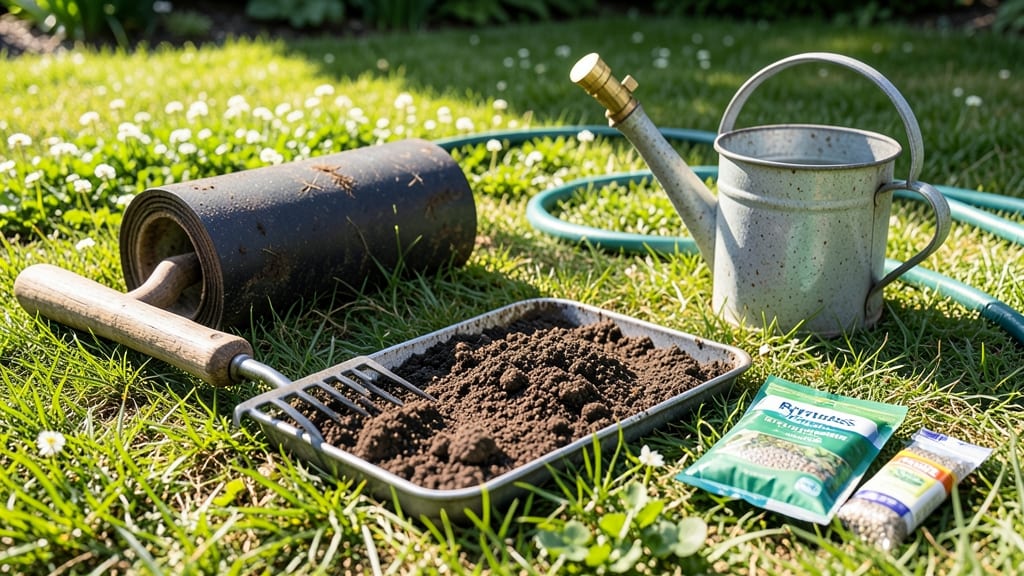
Fixing bare spots in my lawn starts with understanding why they appeared—whether from foot traffic, pests, or poor soil. 🌱 The good news? You can turn those empty patches into lush green again with the right approach.
I’ve rescued my own lawn from multiple bare spots using a simple 3-step method that works even for beginners. The key is addressing the root cause first: compacted soil, thatch buildup, or missing nutrients.
A quick soil test reveals what’s missing, and a simple rake or aerator opens up the ground so new grass can take hold. Once the soil’s ready, overseeding with the right grass type for your climate ensures fast, even growth.
Within 2-3 weeks, you’ll see green shoots filling in those gaps, and with proper watering, the patch will blend seamlessly into your lawn. The best part? This method works year-round—just adjust timing for your local frost dates.
For long-term results, top-dress with compost or a slow-release fertilizer to strengthen the roots. Prevent future bare spots by walking on paths instead of the lawn and mowing at the right height. Let’s get that grass growing back!
Root Causes Of Lawn Thinning
Bare spots in your lawn aren’t just random patches—they’re often the result of specific stressors or environmental factors that disrupt grass growth. Understanding the why behind these problems is the first step to fixing them.
Below, we break down the most common culprits, backed by science, so you can address the real issue and restore your lawn’s lushness.
Healthy grass needs nutrient-rich, well-draining soil to thrive. When soil is depleted or compacted, grass struggles to establish strong roots, leading to thin or bare patches.
- Nutrient Deficiencies 📊 Grass requires nitrogen (N), phosphorus (P), and potassium (K) for growth. If your soil lacks these, grass weakens and dies off in patches. A soil test can reveal deficiencies—common in lawns that haven’t been fertilized in years or where heavy foot traffic has leached nutrients.
- Compacted Soil 🪨 Heavy machinery, pets, or frequent walking can compress soil, reducing oxygen and water penetration. Compacted soil suffocates roots, causing grass to yellow or disappear in high-traffic areas.
- pH Imbalances 🧪 Grass prefers a pH of 6.0–7.0. Soil that’s too acidic (low pH) or alkaline (high pH) locks out essential nutrients. For example, acidic soil (pH < 5.5) can cause iron deficiency, turning grass yellow, while alkaline soil (pH > 7.5) may limit phosphorus uptake, stunting growth.
Actionable Fix: Test your soil (DIY kits or lab tests) and amend with compost, lime (for acidity), or sulfur (for alkalinity) as needed.
Grass is 80% water—too little or too much can create bare spots. Watering issues are a top cause of lawn thinning, especially in drought-prone or overwatered areas.
- Underwatering 💧❌ Grass roots need 1–1.5 inches of water per week (including rainfall). Less than this causes dormancy or death, leaving brown patches that don’t recover. Shallow watering (e.g., light daily sprinkling) encourages weak, shallow roots that dry out quickly.
- Overwatering 💦🚫 Excess water drowns roots, deprives them of oxygen, and promotes fungal diseases like brown patch or dollar spot. Poor drainage (common in clay soils) worsens this, creating soggy, dead zones.
- Irregular Watering ⏰ Uneven watering (e.g., skipping midday heat) stresses grass. Early morning (4–8 AM) is ideal—it reduces evaporation and fungal risk.
Actionable Fix: Water deeply 2–3 times per week (vs. daily light watering) and check soil moisture 2–3 inches down with a screwdriver.
Hidden invaders can silently destroy your lawn. Pests and pathogens target weak grass, creating bare spots that spread if untreated.
- Grubs & Insects 🐜 White grubs (larvae of beetles) and chinch bugs feed on grass roots, causing patches to pull up easily. Signs include yellowing grass that lifts like a carpet when tugged.
- Fungal Infections 🍄 Dollar spot, brown patch, or snow mold thrive in humid, overwatered conditions. Fungi attack grass blades and roots, leaving circular bare spots with a bleached or straw-like appearance.
- Weed Competition 🌿🚫 Weeds like crabgrass or clover outcompete grass for water, nutrients, and sunlight. Their deep roots also disrupt soil structure, creating thin areas.
Actionable Fix:
- Grubs: Apply beneficial nematodes or grub-specific insecticides in late summer.
- Fungus: Improve airflow, reduce watering, and use fungicides (e.g., propiconazole) if needed.
- Weeds: Hand-pull or spot-treat with vinegar-based herbicides (for organic lawns) or pre-emergent herbicides in spring.
Skipping basic lawn care can create weak spots that invite bare patches. Mowing too short, using dull blades, or neglecting dethatching all contribute.
- Cutting Grass Too Short ⚠️ Grass needs 2–4 inches of height to develop deep roots and shade out weeds. Mowing below 1.5 inches stresses the plant, making it vulnerable to heat, drought, and disease.
- Dull Mower Blades ⚡ A sharp blade makes clean cuts, preventing ragged edges that invite disease. Dull blades tear grass, creating entry points for pathogens.
- Thatched Buildup 🌾 Thatch (a layer of dead grass and roots) thicker than ½ inch blocks water, air, and nutrients from reaching the soil. It’s common in cool-season grasses like fescue.
Actionable Fix:
- Mow at one-third height (never remove >⅓ at once).
- Sharpen blades every 10–15 hours of use.
- Dethatch in early spring with a vertical mower or rake if thatch exceeds ½ inch.
Extreme weather, shade changes, or construction can shock your lawn into dormancy or death.
- Drought or Heat Stress 🔥 Prolonged high temperatures (>90°F) with little rain causes grass to go dormant (turning brown). Tall fescue and Bermuda grass handle heat better than Kentucky bluegrass.
- Shade Changes 🌳 New trees, buildings, or fences can suddenly block sunlight, weakening grass adapted to full sun. Shadows >6 hours/day often kill sun-loving grasses like Zoysia.
- Construction or Soil Disturbance 🏗️ Digging, aeration, or even pet digging can expose roots to air, causing grass to die back. Compacted soil from heavy equipment also smothers roots.
Actionable Fix:
- Drought: Water deeply before grass wilts; consider drought-resistant grasses like Buffalo grass.
- Shade: Plant shade-tolerant grasses (e.g., Fine fescue) or ground covers like clover.
- Construction: Reseed or sod disturbed areas immediately with fast-germinating seed (e.g., perennial ryegrass).
Fix Your Lawn’s Bald Patches
Now that you know why those pesky bare spots appeared, let’s roll up your sleeves and restore your lawn to its lush glory! The right approach depends on the cause, but the good news is that most fixes are simple, cost-effective, and surprisingly satisfying to complete.
Below, we’ll match your lawn’s problem to the perfect solution—plus tips to keep those spots from creeping back.
Problem: Heavy foot traffic, clay soil, or overwatering can smother grass roots, leaving patches thin or dead.
How to Fix It: 🔥 Aerate First (Spring or Fall) Use a manual aerator (for small lawns) or rent a core aerator (for larger areas) to pull out small soil plugs. This breaks up compaction and lets air, water, and nutrients reach the roots. 👨🍳 Top-Dress with Compost or Sand Spread a ¼-inch layer of compost or coarse sand over the aerated spots. This improves drainage and adds nutrients. Rake lightly to blend it in. 🥘 Reseed Immediately Sprinkle grass seed (match it to your lawn type) over the bare areas, then cover with a thin layer of peat moss or straw to protect seeds. Water gently but consistently for 10–14 days. ⏰ Water Deeply 2x Weekly Avoid light, frequent watering—deep soakings encourage strong root growth.
Prevent Future Spots: ✨ Walk on pathways instead of compacting the whole lawn. 🌡️ Test your soil every 2–3 years to adjust pH or nutrients. 🎯 Aerate annually if your lawn sees heavy use.
Problem: Thin grass in sunny, dry spots often struggles with heat or drought.
How to Fix It: 🔥 Choose Drought-Tolerant Grass If your lawn is mostly shade-loving types (like fine fescue), switch to heat-resistant varieties like tall fescue or zoysia for sun-baked areas. 🍳 Mulch New Seedings After seeding, apply a straw mulch (not hay—it can introduce weeds) to retain moisture and block weeds. 👨🍳 Water Early Morning Water deeply before 10 AM to reduce evaporation. Aim for 1–1.5 inches per week, including rainfall. 🔪 Trim Nearby Trees Carefully If overhanging branches are blocking sunlight, prune them to let grass grow thicker—or plant clover or creeping thyme as a low-maintenance alternative.
Prevent Future Spots: 💡 Group plants by sun needs—keep sun-loving grass in sunny patches. 🌿 Add mulch around trees to protect roots and retain moisture.
Problem: Grubs, fungi, or weeds are chowing down on your lawn.
How to Fix It: 🔥 Identify the Culprit First
- Grubs? Dig up a sod square—if you see white larvae, treat with beneficial nematodes or milky spore powder.
- Fungus? Look for circular patches with mushrooms or spongy grass. Apply a fungicide (like propiconazole) and improve airflow by mowing higher.
- Weeds? Pull them by hand (for small patches) or spot-treat with vinegar-based herbicide (for organic lawns) or glyphosate (for tough weeds).
🍳 Overseed After Treatment Once the threat is gone, reseeding will fill gaps. For fungal issues, use disease-resistant grass seed. 👨🍳 Adjust Watering Fungi love dampness—water early in the day and avoid overhead sprinklers. ⏰ Fertilize Lightly Use a slow-release, balanced fertilizer (like 10-10-10) to strengthen recovery.
Prevent Future Spots: 🔥 Encourage beneficial insects (like ladybugs) to control pests naturally. 🌡️ Keep mower blades sharp—dull blades tear grass, inviting disease. 🎯 Test soil pH—most fungi thrive in acidic soil (aim for 6.0–7.0).
Problem: Urine burns or pawed-up soil leave patchy, crunchy areas.
How to Fix It: 🔥 Flush & Dilute If urine damage is fresh, water the spot immediately to dilute the ammonia. For older spots, overseed without fertilizing first (fertilizer burns new grass). 🍳 Use a Soil Conditioner Mix gypsum (for clay soil) or compost into the damaged area to improve texture. 👨🍳 Train Your Pets
- Dilute urine by training dogs to drink more water.
- Create a potty zone (like a gravel area) to protect grass.
- Rinse paws after walks to remove salt/chemicals.
Prevent Future Spots: ✨ Test soil pH—high acidity worsens urine damage (aim for 6.5–7.0). 💡 Water lawns deeply to help dilute urine naturally.
No matter the issue, these quick fixes speed up recovery:
- Mow high (3–4 inches) to shade soil and retain moisture.
- Rake out debris (leaves, thatch) to prevent smothering.
- Use a starter fertilizer (high in phosphorus) when reseeding.
- Avoid foot traffic for 4–6 weeks after overseeding.
Pro Tip: 🔥 For stubborn bare spots, try a sod patch—it’s instant gratification! Just lay sod over the area, water daily for 2 weeks, and mow when established.
With the right fix, your lawn will bounce back faster than you think. Now grab your tools and watch those bare spots disappear! 🚀
Frequently asked questions
How do I know if my bare spots are caused by pests or just poor soil?
Look for these clues: If the grass pulls up easily like carpet when tugged, you likely have grubs or chinch bugs. For poor soil, check for yellowing patches that stay soft even when dry—this often means compacted or nutrient-deficient soil. A simple test is to dig a small hole: if roots are sparse or soil feels hard, it’s soil-related.
Can I fix bare spots in my lawn during summer?
Summer is tricky because heat and drought stress new grass. If you must act, choose fast-germinating seed like perennial ryegrass and water twice daily (early morning + late evening) for the first 2 weeks. For best results, wait until spring or fall when temperatures are cooler and moisture is more reliable.
What’s the fastest way to cover bare spots?
For instant results, use sod patches—they establish in 2 weeks if watered daily. For a budget-friendly option, try a seed-and-straw mix (like Scotts Turf Builder), which shows visible growth in 7–10 days with proper watering. Just avoid fertilizing new seed for 4–6 weeks.
Why does my lawn keep getting bare spots even after fixing them?
This usually means the root cause isn’t addressed. Common repeat offenders include:
- Compacted soil (solution: aerate annually)
- Pet urine (solution: dilute with water or use a designated potty area)
- Fungal diseases (solution: improve drainage and use fungicide) Test your soil and adjust care routines—consistency is key!
Can I use regular garden soil to fill bare spots?
No—regular garden soil is too dense and can suffocate grass roots. Instead, use a topsoil mix designed for lawns (look for "lawn topsoil" or "seed starter mix") or blend your own with 50% topsoil + 50% compost. This improves drainage while providing nutrients for new growth.