
Lawn
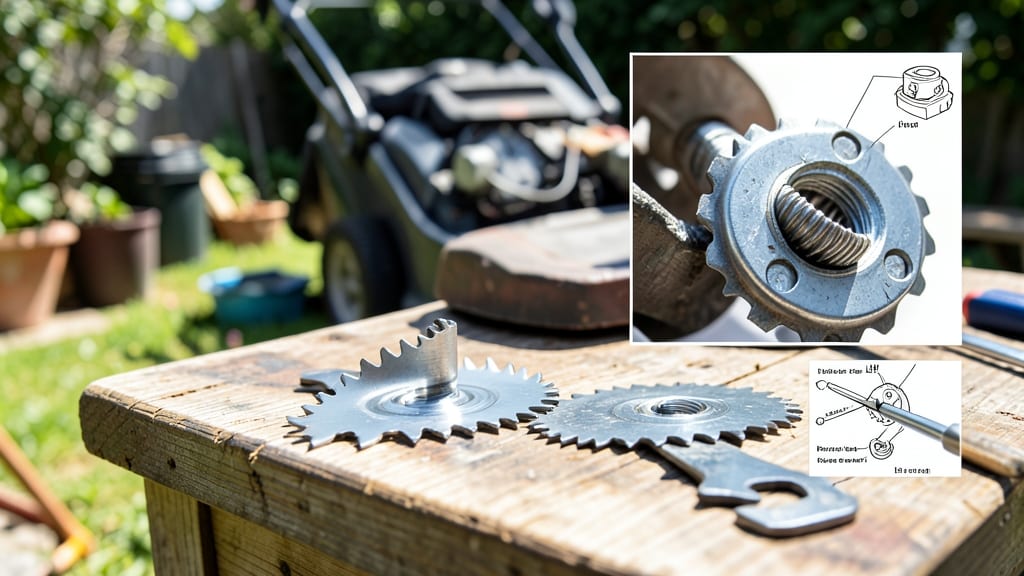
Lawn mower blades are not reverse thread—they use standard right-hand threads for safety and compatibility with most mower models. Left-hand threads (reverse) are rare and typically found only on specialized or older equipment requiring clockwise rotation during operation.
Most lawn mower blades use right-hand threads because this design prevents them from loosening when the blade spins counterclockwise during mowing. 🔧 This standardization also makes blade replacement easier, as standard sockets and wrenches work without modification.
The only exceptions are older models or specialized equipment where clockwise rotation is needed for operation.
If you ever encounter a reverse-threaded blade, you'll notice it tightens when turned clockwise instead of counterclockwise. Always use the correct socket—standard or reverse—and apply steady pressure to avoid stripping threads. I've found that a penetrating oil spray helps when bolts feel seized, but patience is key to avoiding damage.
💡 In This Article
- Why Standard Right-Hand Threads Dominate Lawn Mower Blades
- Identifying and Handling Reverse-Threaded Lawn Mower Blades
Why standard right-hand threads dominate lawn mower blades
Lawn mower blades rotate counterclockwise when viewed from above, which creates a centrifugal force that naturally tries to unscrew right-hand threads. 🔧 The engineering behind this design is simple but brilliant: standard right-hand threads tighten when turned counterclockwise, counteracting the rotational force.
This prevents blades from loosening mid-operation—a critical safety feature, especially at the high speeds (typically 2,800-3,400 RPM) where blades spin during mowing.
The industry adopted this standardization decades ago to ensure consistency across models. Most residential mowers, from 16-inch push mowers to 48-inch commercial models, use the same right-hand threading. This uniformity means mechanics and homeowners can use standard 1/2-inch or 5/8-inch sockets without needing specialized tools.
The only exceptions are older models or specialized equipment where clockwise rotation is required—like some zero-turn radius mowers with reverse-threaded blades for specific blade configurations.
Safety isn't the only factor—practicality plays a huge role. Standard threads allow for easier blade replacement and maintenance. When you remove a blade, you can simply turn it counterclockwise with a standard socket, whereas reverse threads would require an extra step to flip the socket or use a specialized tool.
This design choice also reduces the risk of accidental damage during installation, as most people instinctively turn counterclockwise to loosen a bolt—something that would tighten a reverse-threaded blade instead.
Consider the physics: a 16-inch blade spinning at 3,200 RPM generates about 1,200 foot-pounds of force at the tip. If the blade were reverse-threaded and loosened during operation, the centrifugal force could throw it off with devastating consequences.
The right-hand threading system eliminates this risk entirely, making it the gold standard for lawn equipment safety and reliability.
Even in professional settings, this standardization matters. Dealerships stock standard sockets, and repair manuals assume right-hand threads unless specified otherwise. If you're working on a fleet of mowers, having to switch between thread types would double your tool inventory and slow down maintenance.
The consistency saves time, reduces errors, and keeps operations running smoothly—whether you're servicing a 5-acre commercial lawn or just your backyard.
What most people don't realize is how this design extends to other lawn equipment. String trimmers, edgers, and even some snow throwers use right-hand threads for the same reasons. The principle is universal: when rotation and thread direction align, you get a system that's both safe and user-friendly.
It's a perfect example of how engineering solutions can prevent accidents before they happen.