
Mower
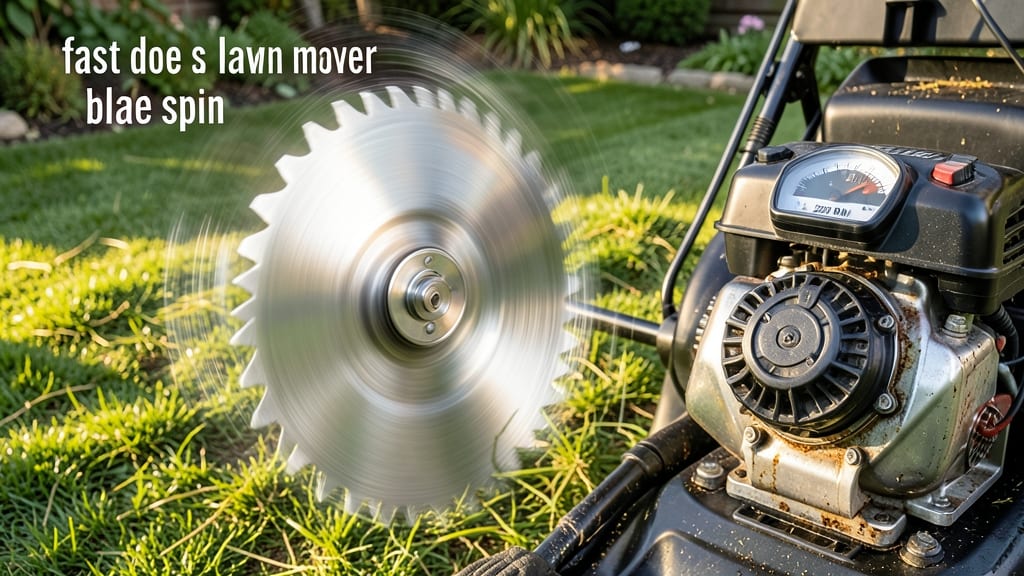
Lawn mower blades spin how fast does a lawn mower blade spin at speeds ranging from 2,900 to 3,500 RPM for residential models, with commercial-grade mowers reaching 3,500–4,000 RPM. Smaller engines (under 15 HP) typically run at the lower end, while high-performance or zero-turn mowers hit the upper range for efficiency and precision cutting.
Understanding these speeds helps you choose the right mower for your yard. 🌱 For example, a smaller residential mower with a 10-12 HP engine will spin at 2,900-3,200 RPM, ideal for flat lawns with fine grass.
Meanwhile, zero-turn mowers use 4,000 RPM blades to make tight turns and handle thick grass effortlessly. The higher the RPM, the faster you can mow large areas—but also the more wear on the engine over time.
Blade speed isn't just about power; it's about precision. Faster blades create cleaner cuts, which means less stress on your grass and a healthier lawn. That's why commercial mowers push those higher RPMs—they're designed for durability and performance over years of heavy use.
For homeowners, finding the right balance between speed and maintenance is key to keeping your lawn looking sharp without breaking the bank.
💡 In This Article
- RPM Ranges Explained: Engine Power vs Blade Speed
- Choosing the Right Mower Blade Speed for Your Lawn Type
RPM ranges explained: engine power vs blade speed
Lawn mower blade speed is directly tied to the engine's horsepower (HP) through a mechanical system involving pulleys and gear ratios. A 10 HP engine typically spins blades at 2,900-3,200 RPM because smaller engines rely on lower gear ratios to generate enough torque for cutting grass.
These mowers are designed for residential use where precision isn't as critical as durability. The relationship between HP and RPM follows a predictable pattern: every 5 HP increase generally adds 300-500 RPM to the blade speed.
Commercial-grade mowers, like zero-turn or riding models, use 18-25 HP engines that push blades to 3,500-4,000 RPM. The key difference lies in their drive systems—commercial mowers employ direct-drive or hydrostatic transmissions that maintain consistent RPM under load, unlike residential mowers that often use belt-driven pulley systems.
This higher speed allows for cleaner cuts and better mulching performance, but it also demands stronger materials to handle the increased centrifugal force on the blades. 🔥
The physics behind this involves centrifugal force: at 3,500 RPM, a blade tip travels at roughly 110 miles per hour, generating enough force to slice through grass cleanly.
Residential mowers with 2,900 RPM blades create 90 MPH tip speeds, sufficient for most home lawns but less effective on thick or coarse grasses. The trade-off? Higher RPM blades wear out faster due to increased stress on bearings and the deck's structural integrity.
Gear ratios play a crucial role too. A 1:1 gear ratio (common in residential mowers) means the blade spins at nearly the same speed as the engine's crankshaft. In contrast, commercial mowers often use 1.5:1 or higher ratios, multiplying the engine's RPM for the blade.
This explains why a 20 HP commercial mower might spin blades at 3,800 RPM while a 20 HP residential mower stays around 3,200 RPM—the difference lies in the transmission design.
Another factor is blade diameter. Larger blades (up to 24 inches in commercial mowers) require higher RPM to maintain cutting efficiency across the entire width.
A 16-inch residential blade at 3,000 RPM covers 1,500 square feet per minute, while a 24-inch commercial blade at 3,800 RPM covers 2,800 square feet per minute. This efficiency gain is why professional landscapers prefer high-RPM mowers for large properties. ✨
What most people don't realize is how blade speed affects mulching. Faster blades (3,500 RPM+) chop grass finer and more evenly, creating smaller particles that decompose quickly—ideal for mulching.
Slower blades (2,900 RPM) produce larger clippings that may not break down as effectively, potentially leading to thatch buildup. This is why commercial mowers excel at mulching: their high RPMs ensure consistent particle size regardless of grass type or thickness.