
Lawn
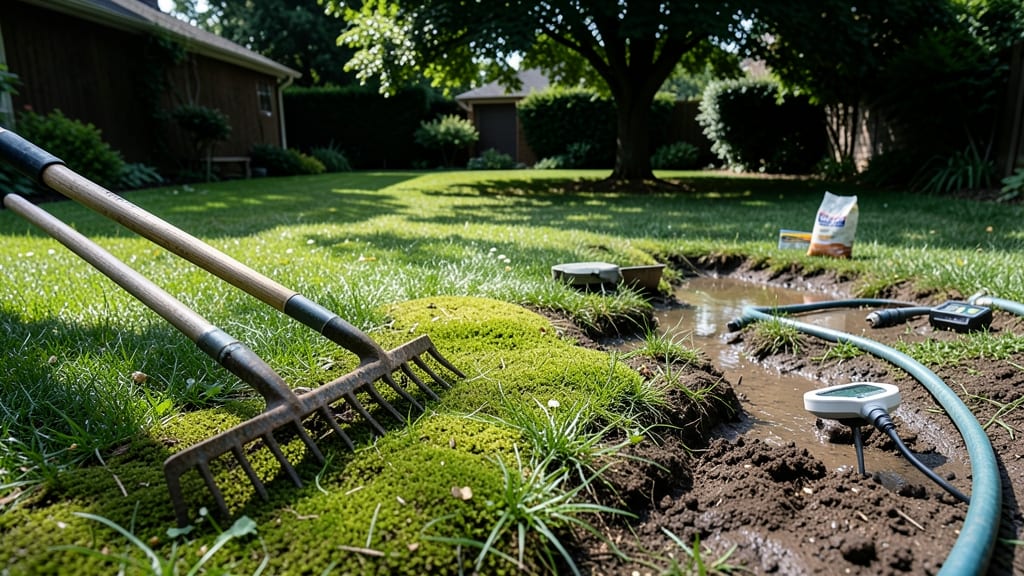
Your lawn’s moss problem isn’t just about shade—it’s a silent signal your soil’s too acidic and compacted. 🌱 I’ve spent years watching moss creep into my yard, only to realize it thrives where grass struggles, turning my lawn into a patchwork of green and brown.
The real fix starts with understanding why moss moves in when grass moves out—and how to kick it out for good.
Moss loves damp, acidic soil with poor drainage, while grass needs sunlight, airflow, and a slightly alkaline pH. If your lawn stays soggy after rain or feels like walking on a sponge, that’s moss’ perfect real estate.
The good news? Aerating, overseeding with the right grass, and adjusting pH can turn the tide in just a few months—no chemicals needed.
By the end of this, you’ll have a lawn that crowds out moss naturally, with thick grass that stays green even in shady spots. The secret is simple: give grass what it craves—sunlight, proper drainage, and a soil pH that keeps moss on the run.
Let’s get your lawn back to looking like a carpet, not a forest floor.
Works for any yard, whether you’ve got full sun or dappled shade. The fixes scale from quick weekend projects to seasonal maintenance—all designed to keep moss from making a comeback. Ready to reclaim your lawn?
The Hidden Causes Behind Lawn Moss
Moss in your lawn isn’t just an unsightly green carpet—it’s a symptom of deeper issues, often tied to soil conditions, sunlight, and even how you care for your grass.
Understanding the root causes (literally!) is the first step to reclaiming a lush, moss-free yard. Let’s break down the science behind why moss takes over when grass struggles.
Moss thrives in acidic soil (pH below 6.0) because it requires less sunlight and fewer nutrients than grass. Here’s why your soil might be too acidic:
- Natural Decomposition: Organic matter like fallen leaves, pine needles, or compost breaks down into humic acids, lowering pH over time. 🌿🔽
- Poor Drainage: Waterlogged soil (common in clay-heavy areas) traps carbon dioxide, which reacts with water to form carbonic acid, further acidifying the ground.
- Over-Fertilization with Sulfur/Nitrogen: Some lawn fertilizers (especially slow-release or "acid-loving plant" blends) can drop pH levels if overapplied.
- Lack of Lime: If your soil hasn’t been tested or amended in years, calcium carbonate (lime)—which neutralizes acidity—may be missing.
💡 Pro Tip: Test your soil’s pH with a home kit (under $10). If it’s below 6.5, apply pelletized lime in early fall or spring to raise the pH gradually.
Moss doesn’t need sunlight to survive—grass does. When your lawn has:
- Dense tree canopies blocking 50%+ sunlight
- North-facing slopes (in the Northern Hemisphere) that stay in shade all day
- Structures or fences casting permanent shadows
Grass weakens, while moss spores (always present in soil) germinate and spread. Moss doesn’t just fill gaps—it outcompetes grass in low-light conditions.
✨ Fix It: If shade is unavoidable, plant shade-tolerant grasses like fine fescue or creeping red fescue. For extreme shade, consider clover or moss alternatives (like Sedum ground covers).
Moss loves consistent moisture—whether from:
- Poor drainage (clay soil, compacted layers, or low-lying areas)
- Overwatering (daily light watering keeps soil damp longer than deep, infrequent watering)
- Rain shadow effects (areas where water pools after storms)
Grass needs dry periods between waterings to develop deep roots. Moss, however, stays green in soggy conditions and spreads via rhizoids (root-like structures) that anchor it to damp soil.
🔥 Solution: Improve drainage with sand top-dressing or gypsum (for clay soil). Water deeply 2–3 times per week (early morning) and avoid walking on wet grass to prevent compaction.
When grass is stressed, diseased, or dead, moss moves in.
Common triggers: - Fungal diseases (like brown patch or dollar spot) killing grass patches - Grubs or pests (e.g., chinch bugs) weakening roots - Improper mowing (cutting too short, leaving clippings to smother grass) - Nutrient deficiencies (yellowing grass signals nitrogen or iron lack)
Moss doesn’t just fill empty spaces—it releases enzymes that break down organic matter, creating a self-perpetuating cycle.
🎯 Action Plan:
- Aerate compacted soil to help grass recover.
- Apply a fungicide if disease is visible (look for black/brown patches).
- Overseed bare spots with moss-resistant grass seed (like tall fescue).
Some lawn treatments accidentally encourage moss:
- Herbicides killing broadleaf weeds (like clover) remove competition, leaving moss unchecked.
- Salt buildup (from de-icing or hard water) can stress grass while moss remains resilient.
- Overuse of peat moss in soil amendments (peat is naturally acidic).
🔪 Fix: If you’ve used herbicides, reseeding with a dense grass mix can outcompete moss. For salt damage, flush soil with fresh water and apply gypsum to restore balance.
Moss spores are everywhere—in air, soil, and even on your shoes. They lie dormant until conditions are right. Once a few patches take hold, they spread via wind and water, creating a feedback loop: 1.
Moss shades out grass → grass dies → more moss. 2. Moss holds moisture → grass roots suffocate → more moss.
💡 Key Insight: Moss isn’t the cause—it’s the result of poor growing conditions for grass. Fix the soil, and moss loses its advantage.
📊 Quick Diagnosis Table Need a fast way to identify your moss triggers? Check these signs:
| Symptom | Likely Cause | Fix It With |
|---|---|---|
| Moss in one shady corner | Low sunlight | Shade-tolerant grass or mulch |
| Moss across entire lawn | Acidic soil | Lime application |
| Moss in low spots | Poor drainage | Sand or gypsum top-dressing |
| Moss after herbicide use | Grass competition removed | Overseeding + fertilizer |
| Moss with yellow grass | Nutrient deficiency | Soil test + balanced fertilizer |
How to Fix Your Mossy Lawn
Moss in your lawn isn’t just an eyesore—it’s a sign that something’s off with your soil or growing conditions. But don’t worry! With the right approach, you can replace moss with lush, healthy grass while keeping it from coming back.
Below, we’ve mapped out practical fixes for the most common causes, plus prevention tips to keep your lawn thriving.
Cause: Moss thrives in soggy, poorly drained soil. Solution: Redirect water, aerate, and level the ground.
- 🔥 Step 1: Identify Problem Spots Walk your lawn after rain—mossy patches in low-lying areas or near downspouts are red flags. Use a garden hose to test drainage: If water pools for more than 15 minutes, you’ve got poor drainage.
- 🍳 Step 2: Level the Ground (If Needed) For minor dips, use a rake or shovel to redistribute soil. For deeper issues, consider topdressing with a mix of sand and compost (1:1 ratio) to improve structure.
- 👨🍳 Step 3: Install French Drains or Swales For severe waterlogging:
- French drain: Bury a perforated pipe in a trench filled with gravel to redirect water.
- Swales: Dig shallow, curved trenches to slow and absorb water naturally.
- 🥘 Step 4: Aerate & Overseed Rent a core aerator to pull out soil plugs (1–2 inches deep), then overseed with fast-growing grass (like ryegrass) to outcompete moss.
💡 Pro Tip: If your lawn has clay soil, mix in gypsum or sand to break up compaction. Test soil drainage first—if water disappears in <15 mins, you’re good!
Cause: Moss loves acidic soil (pH <6.0), while grass prefers neutral (6.0–7.5). Solution: Test your soil and amend it with lime.
- 🔥 Step 1: Get a Soil Test Buy a DIY pH test kit (or send a sample to a local extension office) to confirm acidity. Most moss issues stem from pH below 5.5.
- 🍳 Step 2: Apply Lime (The Right Way)
- Quick fix: Sprinkle pelletized dolomitic lime (½ lb per 100 sq ft) and water it in.
- Slow release: Use calcium carbonate lime for long-term balance.
- For severe cases: Apply lime in two applications, 6–8 weeks apart.
- 👨🍳 Step 3: Re-test After 3 Months Wait for rain to activate the lime, then test pH again. Aim for 6.0–6.5—this range chokes out moss while keeping grass happy.
- 🥘 Step 4: Fertilize with Grass-Friendly Nutrients Use a balanced fertilizer (10-10-10 or 16-4-8) to give grass the upper hand. Avoid high-nitrogen lawn foods, which can acidify soil further.
💡 Pro Tip: If your soil is sandy, lime may wash away quickly—top with a thin layer of compost to hold it in place.
Cause: Moss spreads in shady, damp spots where grass struggles. Solution: Outcompete it with shade-tolerant grass or physical barriers.
- 🔥 Step 1: Overseed with Shade-Resistant Grass Plant fine fescue, creeping red fescue, or zoysia grass, which handle low light better than Kentucky bluegrass.
- 🍳 Step 2: Thin Moss with a Rake or Scraper In early spring, rake out moss (don’t bury it—it’ll regrow!). For stubborn patches, use a plastic lawn scraper to remove the top layer.
- 👨🍳 Step 3: Apply a Pre-Emergent Herbicide (Optional) If moss keeps returning, use a corn gluten-based pre-emergent (organic) or iron-based moss killer (like iron sulfate) to weaken it before overseeding.
- 🥘 Step 4: Mulch Bare Spots Spread straw or wood chips over bare patches to block sunlight until grass fills in.
💡 Pro Tip: Don’t use vinegar or bleach—these can harm grass roots and disrupt soil microbes. Stick to iron-based or manual removal methods.
Cause: Moss thrives with constant moisture, while grass needs deep, infrequent watering. Solution: Train your lawn to be drought-tolerant.
- ⏰ Step 1: Water Deeply, Less Often
- Morning is best: Water early (6–10 AM) to reduce evaporation and fungal risks.
- Depth matters: Water 1–1.5 inches per week (including rain). Use a rain gauge to track.
- Avoid daily light watering—this keeps moss happy!
- 🍳 Step 2: Improve Soil Retention If your lawn dries out too fast, topdress with compost to help soil hold moisture. For sandy soil, add peat moss or coconut coir.
- 👨🍳 Step 3: Fix Irrigation Issues
- Check sprinklers: Adjust heads to avoid overspray on sidewalks (wasted water = moss fuel).
- Repair leaks: A dripping sprinkler keeps soil soggy in one spot.
💡 Pro Tip: Let grass go dormant in summer—it’s more resilient than you think! Water only when soil is bone-dry 3–4 inches down.
Once you’ve banished moss, lock in your progress with these habits:
- Mow high (3–4 inches)—taller grass shades out moss.
- Leave grass clippings—they return nutrients and improve soil.
- Aerate annually—prevents compaction, which moss loves.
- Test soil every 2–3 years—pH and nutrients change over time.
- Plant ground covers in heavily shaded areas (like clover) to outcompete moss naturally.
Final Thought: Moss is a symptom, not a permanent problem. By fixing drainage, pH, sunlight, and watering, you’ll create a lawn that’s too tough for moss—and too inviting for grass.
Start with one fix at a time, and soon you’ll have a green, vibrant lawn without the fuzzy invader! 🌱💚
Frequently asked questions about lawn moss
Why does moss grow faster in shady areas?
Moss thrives in shade because it requires far less sunlight than grass. When trees or structures block 50%+ of sunlight, grass weakens while moss spores—always present in soil—germinate and spread. Try planting shade-tolerant grasses like fine fescue or creeping red fescue to outcompete moss naturally.
Can I just pull out moss and forget about it?
No—pulling moss alone won’t stop regrowth. The real fix is addressing the underlying issues: acidic soil (pH <6.0), poor drainage, or compacted ground. Rake out moss in spring, then apply lime, aerate, and overseed with grass to create conditions where moss can’t survive.
Will lime kill moss permanently?
Lime won’t kill moss directly, but it creates hostile conditions by raising soil pH to 6.0–6.5, which grass prefers while moss struggles. For faster results, combine lime with iron sulfate (a moss-specific treatment) or overseeding with dense grass varieties like tall fescue.
How often should I aerate to prevent moss?
Aerate once per year (spring or fall) to relieve soil compaction, which moss loves. For high-traffic lawns or clay-heavy soil, aerate twice yearly. After aerating, top-dress with a thin layer of compost to improve drainage and nutrient retention.
Is moss harmful to my lawn?
Moss itself isn’t harmful, but it’s a sign of unhealthy soil conditions. While it doesn’t damage grass roots, its spread indicates acidic pH, poor drainage, or compacted soil—all of which weaken grass over time. Left unchecked, moss can outcompete grass entirely, turning your lawn into a moss carpet.