
Fertilization
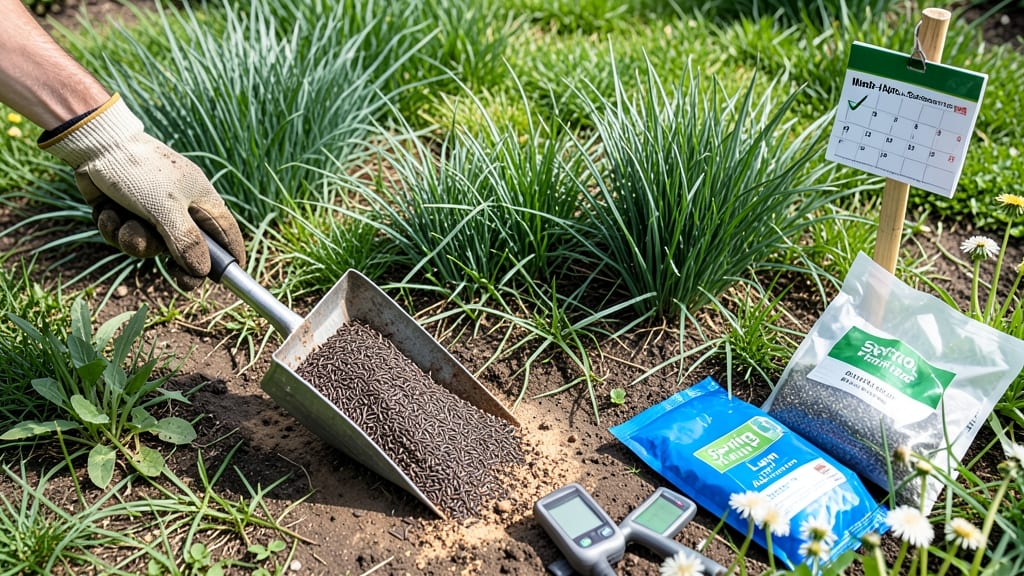
To seed and fertilize lawn in spring, timing depends on your grass type and climate: cool-season grasses (like fescue or ryegrass) should be seeded in early spring (March–April) or fall, while warm-season grasses (like Bermuda or Zoysia) need late spring (May–June) planting. Fertilize cool-season lawns in early spring and warm-season lawns in late spring, always checking local frost dates for best results.
Spring lawn care timing isn't one-size-fits-all—it's all about matching your grass type to your region's frost patterns. 🌱 Cool-season grasses like Kentucky bluegrass or tall fescue need that early spring window because they establish roots before summer heat arrives, while warm-season varieties like centipede or St. Augustine grass wait until soil temperatures consistently stay above 65°F.
I've seen homeowners in Texas seed too early only to watch their new grass bake in the sun before it could take root—always check your local USDA hardiness zone for precise guidance.
The fertilizer timing ties directly to these seeding windows. For cool-season lawns, that early spring feeding jumpstarts growth when days get longer, while warm-season lawns benefit from late spring fertilization as they begin their active growing phase.
Pro tip: test your soil first—many lawns need a phosphorus boost for seed germination, but too much nitrogen too soon can burn tender new shoots.
💡 In This Article
- Ideal Spring Lawn Seeding and Fertilizing Timing by Grass Type
- Step-by-Step Spring Lawn Prep Checklist for Healthy Growth
Ideal spring lawn seeding and fertilizing timing by grass type
Cool-season grasses like Kentucky bluegrass or tall fescue enter their active growth phase when soil temperatures rise above 50°F—typically in early spring (March-April) or fall. This timing aligns with their natural dormancy cycle, allowing roots to establish before summer heat stress.
Warm-season grasses, such as Bermuda or Zoysia, only germinate when soil temperatures exceed 65°F, making late spring (May-June) their optimal window. The difference comes down to their biological hardiness: cool-season varieties can tolerate cooler temperatures, while warm-season types need consistent warmth to thrive.
Your local frost dates are the ultimate guide—cool-season grasses should be seeded 4-6 weeks before your last expected frost, giving them time to develop a strong root system before summer dormancy. Warm-season grasses, however, need to wait until after your last frost date, when soil stays reliably warm.
For example, in Zone 5 (northern climates), early April seeding works for cool-season grasses, while Zone 9 (southern climates) may see ideal warm-season seeding in late May. Always check your USDA hardiness zone for precision.
Fertilizer timing mirrors these seeding schedules. Cool-season lawns benefit from a high-phosphorus starter fertilizer (like 5-10-10) at planting to encourage root development, followed by a balanced nitrogen feed (10-10-10) 6-8 weeks later.
Warm-season grasses, however, need a low-phosphorus, high-nitrogen fertilizer (like 16-4-8) applied just as they begin active growth in late spring. Over-fertilizing too early can lead to rapid top growth at the expense of root strength, leaving lawns vulnerable to heat or drought.
Here’s what happens when timing goes wrong: seeding cool-season grass too late means roots won’t establish before summer dormancy, while seeding warm-season grass too early risks seed rot in cold soil. Fertilizing at the wrong time can burn tender shoots or promote weak growth.
The key is matching your grass type to your climate’s natural rhythms—cool-season grasses grow best in cooler months, while warm-season types need heat to activate their growth hormones.
Consider these regional adjustments: in the Pacific Northwest, early April seeding works for cool-season grasses, while the Deep South may see ideal warm-season planting in June. Soil temperature gauges (available at garden centers) help track readiness—cool-season grasses need soil at 50-60°F, while warm-season types require 65-75°F.
Pro tip: if your soil is still cold, wait—rushing leads to poor germination and wasted seed. 🌱
For best results, combine seeding with a light top-dressing of compost to improve soil structure and moisture retention. Cool-season grasses also benefit from a fall seeding (August-September) to take advantage of cooler temperatures and consistent rainfall.
Warm-season grasses, meanwhile, often spread via stolons or rhizomes rather than seed, so spring fertilization becomes even more critical for establishing new growth. The science is clear: timing aligns with grass biology, not just calendar months.