
Lawn
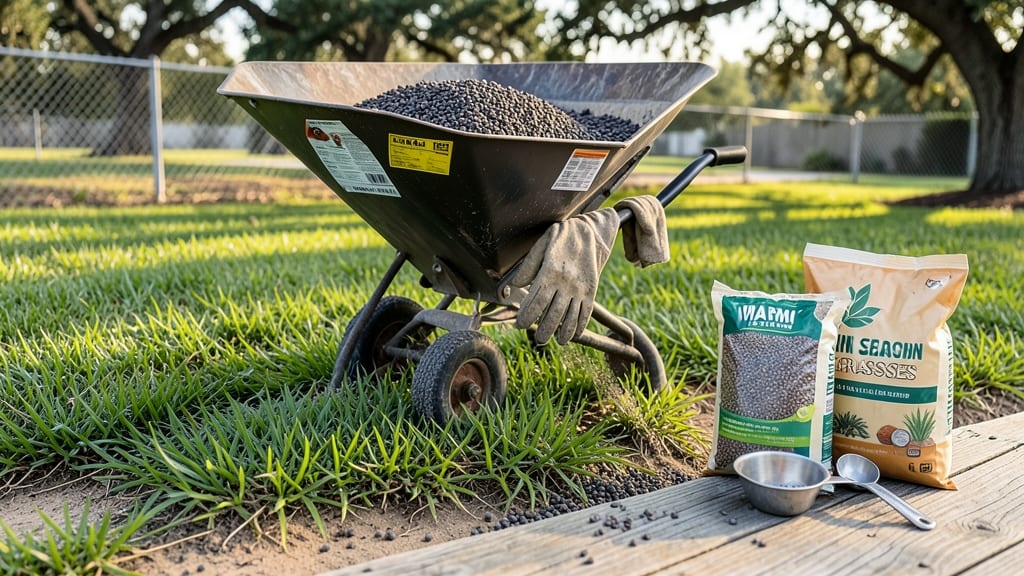
To fertilize lawns in Texas, time applications based on grass type and weather: use pre-emergent in late winter (February) for cool-season grasses, then switch to slow-release fertilizer in early spring (March-April) before peak growth. Warm-season grasses like Bermuda require feeding in late spring (May) after soil reaches 65°F+ and before summer droughts begin.
Texas lawns thrive when you match fertilization to their natural growth cycles.
Cool-season grasses like ryegrass wake up in winter, so pre-emergent in February prevents weeds before they sprout. 🌱 Warm-season grasses like Bermuda lie dormant until spring, so waiting until May ensures nutrients are absorbed when roots are actively growing.
The key is avoiding drought stress—West Texas lawns need lighter applications during dry months, while East Texas can handle more frequent feeding due to higher rainfall.
For best results, test your soil first to determine pH and nutrient needs. Most Texas lawns benefit from a 2-1-2 nitrogen-phosphorus-potassium ratio in spring, but adjust based on your grass type. Organic options like compost tea work well for slow-release nutrition, while synthetic fertilizers provide quicker results for visible greening.
💡 In This Article
- Texas Soil Temperature and Seasonal Fertilizer Timing
- Best Fertilizer Types for Texas Lawn Grasses
Texas soil temperature and seasonal fertilizer timing
Soil temperature acts as the primary trigger for fertilizer effectiveness in Texas lawns. Cool-season grasses like Tall Fescue and Ryegrass begin active growth when soil temperatures drop below 60°F in late winter, which is why February is ideal for pre-emergent herbicides.
These grasses enter dormancy when temperatures rise above 85°F, making summer fertilization unnecessary. The key mechanism here is root activity—when soil temps are 55-65°F, roots absorb nutrients 30-50% more efficiently than in heat.
Warm-season grasses like Bermuda and Zoysia require a different approach because they only thrive when soil temperatures exceed 65°F.
This typically happens in May across most of Texas, but timing varies by region—East Texas may reach this threshold 2-3 weeks earlier than West Texas due to differences in rainfall patterns.
The 65°F threshold isn't arbitrary: below this temperature, microbial activity in soil slows dramatically, reducing nutrient availability by up to 40%. Fertilizing too early risks wasting nutrients that won't be absorbed.
Rainfall patterns create another critical factor in Texas fertilization timing. The state's 18-inch annual rainfall gradient (over 40 inches in East Texas to under 10 inches in West Texas) directly affects nutrient retention.
Heavy spring rains in East Texas can leach 30-40% of applied nitrogen within 48 hours, while West Texas lawns benefit from slow-release fertilizers that minimize runoff during dry periods.
This is why March-April works for East Texas but May-June is better for West Texas—aligning fertilization with natural moisture cycles prevents waste and maximizes root uptake.
What most homeowners miss is how soil moisture content interacts with temperature. Even if soil is 65°F+, dry conditions can create a hardpan layer that blocks nutrient penetration.
In Dallas-Fort Worth, for example, May applications should include 0.5-1 inch of irrigation immediately after fertilizing to activate microbial breakdown of nutrients. Without proper moisture, fertilizer granules may sit on the surface for weeks without being utilized, leading to yellowing grass rather than the desired green growth.
Consider these regional variations when planning your schedule:
- East Texas (Houston, Tyler): Apply pre-emergent in February, then slow-release fertilizer in March-April before summer rains begin
- Central Texas (Austin, San Antonio): Shift to May-June feeding for warm-season grasses, with light applications every 6-8 weeks
- West Texas (Lubbock, Midland): Use drought-tolerant fertilizers in late spring (May) and early fall (September) when rainfall is most reliable
The science behind these timing differences lies in photosynthesis rates. Cool-season grasses photosynthesize most actively in 50-70°F ranges, while warm-season varieties peak at 85-95°F. Fertilizing outside these optimal ranges forces the grass to divert energy toward nutrient processing rather than growth, resulting in stunted development.
For example, applying nitrogen to Bermuda grass when soil temps are 75°F can reduce growth by 25% compared to applications made at 85°F+.
Pro tip: Use a soil thermometer to monitor temperatures at 4-inch depth—this is where most grass roots absorb nutrients. Most Texas lawns see their fastest growth period when soil temps are 75-85°F, which typically occurs in late spring to early summer.
This is your golden window for maximum fertilizer impact. 🌱