
Lawn
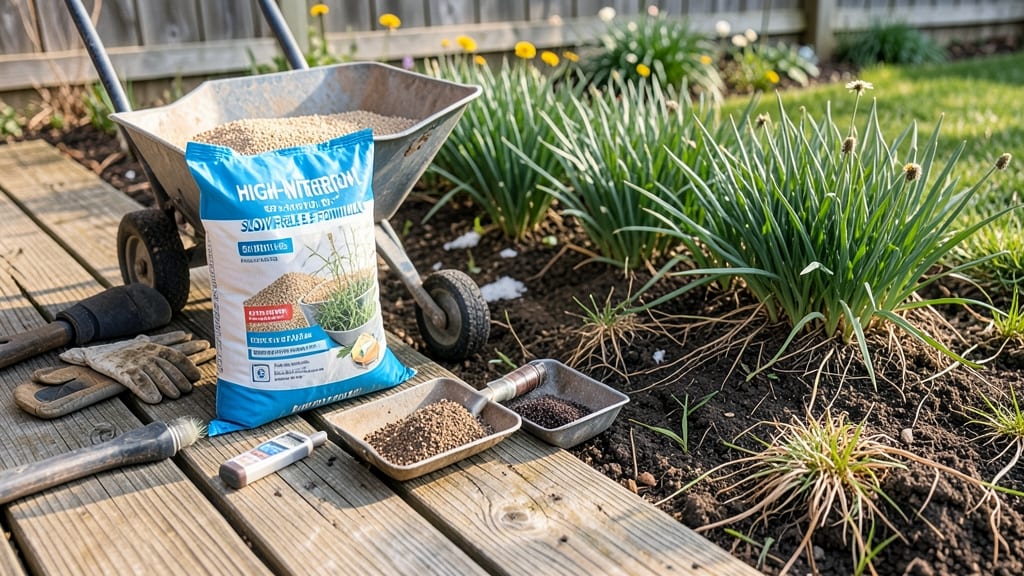
Fertilizing your lawn in spring at the right time is the difference between lush green grass and a patchy, struggling yard.
Spring is the golden opportunity to revive your lawn—but timing your first fertilization wrong can waste money and stunt growth. The secret lies in soil temperature, not just the calendar.
Too early, and you risk burning tender new shoots; too late, and you miss the window for strong root development. Most lawns in Zone 6a need that first feeding when soil hits 40–50°F, usually by early April.
Below, I’ll break down the exact triggers, how to prep your lawn for fertilization, and what mistakes to avoid—so you can set your grass up for a thicker, greener season.

Spring fertilization timing by soil temperature: the exact triggers for root growth
Your lawn’s spring revival starts underground—when soil temperatures hit the right 40°F to 50°F range, grass roots wake up and soak up nutrients. Fertilizing too early wastes money, while waiting too long lets weeds steal the show.
The key? Monitoring soil temps, not just checking the calendar. In northern climates, this typically means late March to early April, while southern regions can start as early as February.
Soil temperature is the real trigger for root growth, not air temperature. Grass roots stay dormant until the ground warms to 40°F—below that, nutrients just sit unused. Use a soil thermometer (or the back of your hand—if it feels cold, roots aren’t ready).
In Zone 5 or colder, aim for 50°F soil temps before fertilizing, while Zone 7+ lawns may be ready by 45°F.
Here’s your exact fertilization timeline based on soil temperature and region:
| Soil Temp Range | Climate Zone | Best Fertilization Time | Grass Type Readiness | Action Steps |
|---|---|---|---|---|
| 40°F–45°F | Zones 7–10 (Southern) | Late Feb–Early March | Bermuda, Zoysia, Centipede | Test soil pH, apply starter fertilizer |
| 45°F–50°F | Zones 5–6 (Midwest/Northeast) | Mid–Late March | Kentucky Bluegrass, Fescue | Aerate compacted soil, apply slow-release N |
| 50°F+ | Zones 3–4 (Northern) | Late March–Early April | Perennial Ryegrass, Tall Fescue | Wait for consistent 50°F+ for 5+ days |
| Critical Note | Avoid fertilizing if frost is forecast within 48 hours—roots can’t absorb nutrients in cold soil. | |||
For cool-season grasses (like Kentucky Bluegrass), the 45°F–50°F window is ideal—this is when roots break dormancy and start growing aggressively. Warm-season grasses (like Bermuda) need 60°F+ soil temps, but their first feeding can happen earlier to jumpstart growth.
Pro tip: If your lawn is still brown in spring, wait—fertilizing dormant grass burns roots instead of feeding them.
Regional adjustments matter. In Pacific Northwest (Zone 7–8), soil may stay 40°F until April, while Deep South lawns (Zone 9+) can fertilize by February. Check your last frost date and add 2–3 weeks to estimate soil warming.
For example, if your last frost is April 15, aim to fertilize by May 1 in most northern zones.
Don’t skip the soil test before fertilizing—even if temps are perfect. A pH below 6.0 or above 7.5 blocks nutrient uptake. Adjust with lime (to raise pH) or sulfur (to lower it) 4–6 weeks before your planned fertilization.
This gives soil microbes time to break down amendments and prepare for nutrient absorption.
Once soil hits the right temperature, choose a slow-release fertilizer with 24-0-5 N-P-K ratio for spring. The high nitrogen (N) fuels leaf growth, while low phosphorus (P) prevents waste.
Apply in early morning when dew is present—this helps nutrients stick to grass blades and reduces runoff. Water lightly afterward to activate the fertilizer without leaching it away.
Watch for green-up signs after fertilizing: within 7–10 days, grass should show new growth at the base of blades. If you see yellow patches instead, you may have over-applied nitrogen or fertilized too early. In this case, water deeply to dilute excess salts and wait 4–6 weeks before reapplying fertilizer.
After the first feeding, plan for 3 more applications every 6–8 weeks through summer. But remember: fall fertilization (late August–September) is more important for root strengthening than spring feedings. Think of spring as the "growth kickstart" and fall as the "strengthening phase."
🌱
Best spring fertilizers for lawn revival: N-P-k ratios and organic vs. synthetic options
Choosing the right spring fertilizer for your lawn can feel overwhelming with so many options. The key is matching your grass type and growth goals to the right N-P-K ratio and fertilizer type.
Cool-season grasses like fescue and ryegrass need a high-nitrogen kick to wake up from dormancy, while warm-season grasses like Bermuda crave phosphorus for root development.
Most gardeners start with a 24-0-5 or 30-0-4 ratio in early spring to boost green-up. The first number (nitrogen) fuels leaf growth, while the second (phosphorus) supports root strength. Synthetic fertilizers release nutrients quickly, but organic options like compost or manure build soil health over time.
Before you buy, check your soil pH—most lawns thrive between 6.0–7.0. If your soil is acidic, a lime application before fertilizing can prevent nutrient lockout. For new lawns, a starter fertilizer with 30% nitrogen helps establish roots faster.
🌱 Spring Fertilizer Options: Pros and Cons
- ✅ Fast results (green-up in 7-14 days)
- ✅ Precise nutrient control (N-P-K ratios)
- ✅ Long shelf life
Best for: Quick revival, high-traffic lawns
- ✅ Improves soil structure long-term
- ✅ Slow-release nutrients prevent burnout
- ✅ Eco-friendly (no synthetic chemicals)
Best for: New lawns, organic gardens
- ✅ Balanced feeding (3-12 weeks)
- ✅ Reduces risk of over-fertilization
- ✅ Convenient (apply once, feed all season)
Best for: Busy homeowners, summer maintenance
For established lawns, I recommend a two-step approach: Start with a high-nitrogen fertilizer (like 30-0-4) in early spring, then switch to a balanced 16-4-8 later in the season. If your lawn has bare spots, add a seed-and-feed product with 10-10-10 ratio to encourage germination.
Organic options like alfalfa meal or fish emulsion are great for building soil health, but they take 4-6 weeks to show results. Mix them into the top 1/4 inch of soil for best absorption. Water deeply after application to activate nutrients.
Remember: Less is more with spring fertilizing. Overdoing it leads to nutrient runoff, which harms local waterways. Always water your lawn 1 inch after fertilizing to help nutrients reach the roots—not just the surface.