
Fertilization
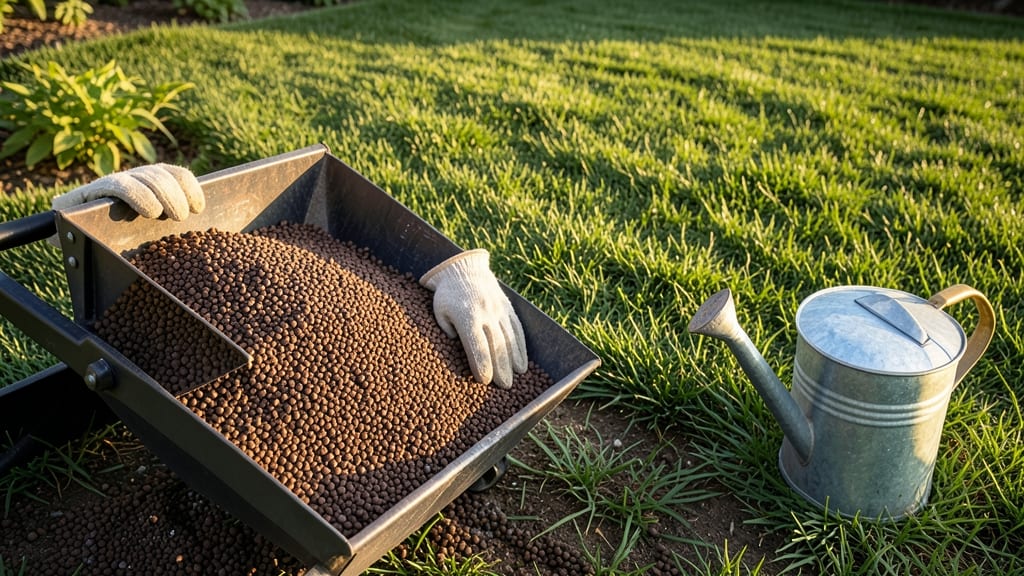
To fertilize lawn in Texas, time it right between early spring and late fall—skipping summer can save your grass from heat stress and wasted money.
Texas lawns face brutal heat, drought, and soil challenges—fertilizing at the wrong time can waste money and harm your grass. Whether you’re in the cooler North or the sweltering South, the wrong timing turns fertilizer into a costly mistake.
This guide breaks down the exact months to fertilize based on your hardiness zone, plus pro tips to avoid common mistakes like over-fertilizing in summer or missing the fall boost.
You’ll learn how to read your lawn’s needs, choose the right fertilizer for your grass type, and apply it for maximum growth without burning your yard.

Texas lawn fertilization schedule by hardiness zones (North vs. south)
Texas lawns thrive—or struggle—based on precise fertilization timing, especially when you factor in the stark differences between North Texas (Zones 7-8) and South Texas (Zones 9-10).
Cool-season grasses like Tall Fescue and Ryegrass in the north need early spring feeds, while warm-season grasses like St. Augustine and Bermuda in the south demand summer nutrition. Missing these windows means wasted fertilizer or stressed grass.
Your hardiness zone dictates when to fertilize, but even within zones, microclimates (like urban heat islands) can shift timing by weeks. For example, Zone 8 in Dallas may align with Zone 9 in San Antonio for summer fertilization.
I’ll break down the exact months for each zone, plus pro tips to avoid over-fertilizing during Texas’ brutal summer droughts.
Here’s the comparison table for when to fertilize in Texas, tailored to your zone and grass type:
| Zone/Grass Type | Early Spring (Feb-Mar) | Late Spring (Apr-May) | Summer (Jun-Aug) | Fall (Sep-Oct) | Winter (Nov-Jan) |
|---|---|---|---|---|---|
| Zone 7 (North TX): Tall Fescue/Ryegrass | ✅ Pre-emergent (Feb) | ✅ Fertilize (Mar-Apr) | ❌ Skip (Dormant) | ✅ Light feed (Sep-Oct) | ❌ Skip (Dormant) |
| Zone 8 (North-Central TX): Bermuda/Tifway 419 | ❌ Skip (Prep for summer) | ✅ Pre-emergent (Apr) | ✅ Fertilize (Jun-Jul) | ✅ Fall transition (Sep) | ❌ Skip |
| Zone 9 (South TX): St. Augustine | ❌ Skip (Too hot) | ✅ Light feed (May) | ✅ Fertilize (Jun-Aug) | ✅ Heavy feed (Sep-Oct) | ❌ Skip |
| Zone 10 (Far South TX): Zoysia/Centipede | ❌ Skip (Year-round growth) | ✅ Light feed (Apr) | ✅ Fertilize (Jun-Jul) | ✅ Light feed (Sep) | ✅ Light feed (Dec) |
✅ = Fertilize | ❌ = Skip | 🌱 = Light feed (half-strength)
Notice how Zone 7 lawns get two major feeds (spring and fall), while Zone 10 grasses like Zoysia grow year-round and need light, frequent feeding. The key is aligning fertilization with your grass’s active growth periods.
For example, St. Augustine in Zone 9 will burn if fertilized in November—it’s already slowing down for winter.
For cool-season grasses in North Texas, March is your peak fertilization window. Apply a high-nitrogen fertilizer (25-0-5) when soil temps hit 55°F—any earlier, and the grass won’t absorb nutrients efficiently.
I recommend a slow-release formula to avoid runoff during spring rains. Pro tip: Test your soil first—Texas clay often lacks phosphorus, so amend with bone meal if needed.
South Texas lawns, however, never stop growing. Bermuda and St. Augustine demand summer fertilization (June-August) to combat heat stress. Use a low-nitrogen, high-potassium (10-10-20) blend to strengthen roots against drought. Never fertilize during extreme heat (above 95°F)—it stresses grass and attracts pests.
Water deeply the night before applying fertilizer to help absorption.
Fall is the golden window for all Texas lawns. Cool-season grasses in the north need a late-September feed to bulk up before winter, while warm-season grasses in the south should get a
3 Critical signs your Texas lawn needs fertilizer (and when to Skip it)
Your Texas lawn sends clear signals when it craves nutrients, but many homeowners mistake heat stress or drought damage for fertilizer needs. Understanding these 3 critical signs will help you decide whether to feed your grass or address environmental factors first.
Warm-season grasses like Bermuda and St. Augustine show different symptoms than cool-season ryegrass, so pay attention to these visual cues.
First, watch for uniform yellowing across large patches. Unlike drought-induced browning (which appears crispy), nutrient-deficient grass stays soft but loses its deep green hue. This often appears in late spring or early summer when growth speeds up but soil nutrients are depleted.
Test your soil first—if the pH is off (below 6.0 or above 7.5), fertilization alone won't help.
Slow recovery after mowing is another red flag. If your lawn takes 3+ days to bounce back from cutting, it’s likely starving for nitrogen. Warm-season grasses need 0.5-1.0 lbs of nitrogen per 1,000 sq ft monthly during peak growth (May-Sept).
But here’s the catch: if your soil is waterlogged or compacted, roots can’t access nutrients even with fertilizer.
Thin, spongy spots where grass pulls up easily signal potassium deficiency, often worsened by fungal stress in Texas' humid summers. Before fertilizing, check for dollar spot fungus (small brown circles) or take-all root rot (yellowing with blackened roots).
Fertilizing a fungal-infected lawn spreads the problem—always treat diseases first with fungicides or baking soda sprays.
- During drought (soil 2+ inches dry): Grass goes dormant to conserve water.
- After fungal outbreaks: Fertilizer feeds pathogens like brown patch.
- Winter months (Nov-Feb): Cool-season grasses slow down; warm-season grasses are dormant.
- Extreme heat waves (>100°F): Stress weakens roots, making them vulnerable to fertilizer burn.
Pro Tip: Always water deeply (1-1.5 inches) 24 hours before and after fertilizing to prevent root burn.
Uneven growth—where some areas grow 2x faster than others—often indicates soil nutrient pockets. Take soil samples from multiple spots to confirm. If your lawn has clay-heavy soil (common in East Texas), consider gypsum to improve drainage before fertilizing.
In West Texas, sandy soils may need slow-release fertilizers to prevent leaching.
Finally, increased weed pressure, especially crabgrass or dandelions, means your grass is weak. Weeds thrive when lawns lack nitrogen or phosphorus. But wait: if weeds appear after fertilizing, you’ve overdone it—this is a classic sign of fertilizer burn.
Always follow the "rule of 1/4": use 1/4 lb of nitrogen per 1,000 sq ft per feeding.
Remember, Texas lawns need seasonal adjustments. Feed warm-season grasses in late spring and early fall, while cool-season grasses thrive with fall and early spring feedings.
When in doubt, test your soil—it’s the only way to know if your lawn truly needs fertilizer or just better water and care. 🌱