
Fertilization
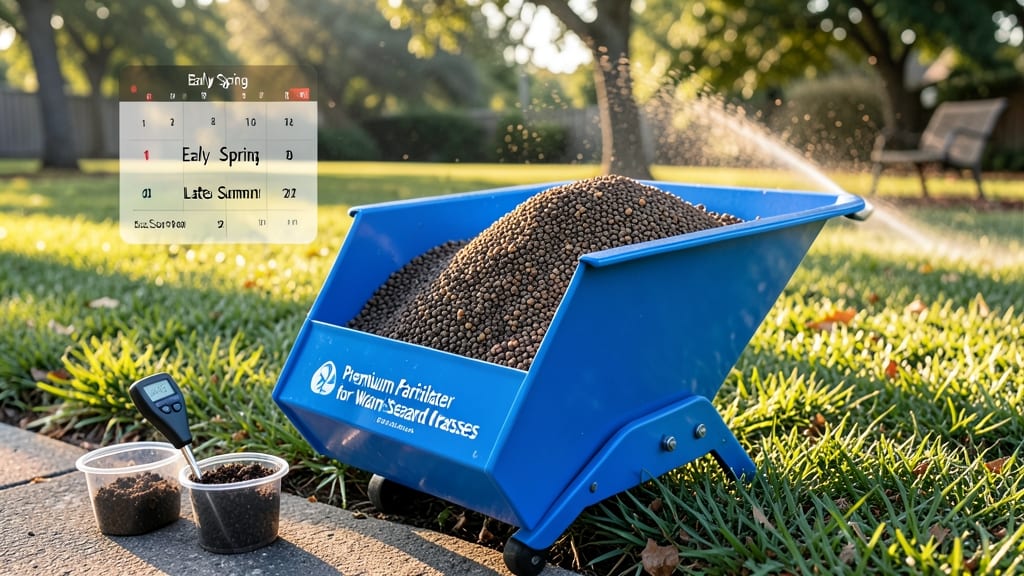
Fertilizing your lawn in Houston, Texas at the right times is the key to a thick, heat-resistant 🌱 carpet that survives the city’s sweltering summers.
Picture this: You’ve just spent $50 on fertilizer, spread it carefully, and two weeks later, your grass looks like it’s wilting under a magnifying glass. Houston’s climate—hot, humid, and unpredictable—means fertilizing at the wrong time can actually harm your lawn instead of helping it.
The difference between a lush green yard and a struggling patch lies in knowing exactly when to feed your grass.
Most homeowners in USDA Zones 8b-9a make the mistake of fertilizing too heavily in summer, which stresses the grass and invites pests. The best approach?
A seasonal schedule that aligns with your lawn’s natural growth cycles—think early spring for a growth boost, late summer for recovery, and fall for root strengthening. Skipping winter fertilization entirely is another Houston secret to long-term success.
In this guide, I’ll break down the exact months to fertilize for Houston’s warm-season grasses, how to choose the right fertilizer type, and pro tips to avoid overdoing it.
By the end, your lawn will be the envy of the neighborhood—and you’ll never waste another dollar on the wrong timing again.

Houston lawn fertilization schedule by season: month-by-month breakdown for optimal growth
Houston’s humid subtropical climate creates unique challenges for lawn care. Unlike cooler regions, warm-season grasses like St. Augustine and Bermuda thrive in heat but need precise fertilization timing to avoid stress.
Over-fertilizing in summer can burn roots, while skipping spring feeds delays growth. My month-by-month schedule aligns with Houston’s rainfall patterns and temperature shifts to maximize nutrient uptake without waste.
First, know your grass type—St. Augustine loves moisture, Bermuda tolerates drought, and Zoysia balances both. Each responds differently to nitrogen-heavy feeds and pre-emergent herbicides.
For example, pre-emergent should be applied in late winter (February) to block weeds before spring germination, but avoid it in summer when grass growth slows. Let’s break it down month by month to keep your lawn green, resilient, and healthy year-round.
In February, kickstart growth with a slow-release fertilizer (16-4-8 NPK ratio). Houston’s warm spells in late winter signal your grass to wake up, but avoid heavy feeds—too much nitrogen now can lead to fungal issues as humidity rises.
I recommend a granular formula spread in early morning to prevent leaf burn from afternoon heat. For St. Augustine, add a mulch layer after fertilizing to retain moisture.
By March, your lawn is hungry for high-nitrogen feeds (20-5-10 NPK). This is the peak growth window before summer’s heat sets in. Apply fertilizer when soil temps reach 65°F+—use a soil thermometer to check.
Water immediately after to activate nutrients, but avoid overwatering, which Houston’s clay soil struggles with. For Bermuda grass, this is also when you can overseed thin areas for denser coverage.
April through July are critical for heat management. Skip heavy fertilizers—your grass is conserving energy to survive Houston’s 90°F+ days. Instead, switch to organic options like compost or fish emulsion, which release nutrients slowly. If your lawn looks yellow or patchy, it’s likely dormant, not dead. Focus on deep watering (1.5 inches weekly) and iron supplements to maintain color. Pro tip: Mow higher (3-4 inches) to shade roots and reduce water loss.
Fall fertilization in September and October is where Houston lawns truly shine. This is the root-building phase, so use a balanced fertilizer (16-4-8 NPK) to prepare for winter. St. Augustine and Zoysia respond best to early fall feeds
Signs your Houston lawn needs fertilizer: how to diagnose nutrient deficiencies before it’s too late
Houston’s clay-heavy soil and humid summers create the perfect storm for nutrient deficiencies. If your lawn looks dull or patchy, it’s likely begging for a nutrient boost. Yellow patches, slow growth, or thin spots are red flags—your grass isn’t just lazy, it’s starving.
Before you reach for that fertilizer bag, let’s decode what your lawn is really telling you.
Start by checking for visual cues like uneven color or brown tips. A healthy Houston lawn should be a vibrant green, not a patchwork of sickly hues. Nitrogen deficiency often shows as pale yellow grass, while potassium deficiency might cause brown edges on blades.
Tactile clues matter too—run your hand over the grass. Sparse, weak blades or spongy spots (a sign of fungal issues from Houston’s humidity) mean it’s time to act.
🚨 INSERT PROS-CONS-BOX ELEMENT 🚨
Houston’s clay soil loves to hold onto nutrients—but it also traps moisture, creating fungal risks if your lawn is overwatered. Test your soil’s pH first; most Houston lawns need a 6.0-7.0 range for optimal nutrient uptake. DIY test kits (like Luster Leaf) are cheap and fast, but lab tests give deeper insights into micronutrient deficiencies like iron or zinc, which show as yellowing between veins.
If your lawn has thin spots, it might be suffering from compaction (common in Houston’s heavy clay) or disease pressure from humidity. Aerate in spring or fall to break up compacted soil, then top-dress with compost or slow-release fertilizer.
For fungal issues, avoid watering at night—Houston’s humidity thrives on damp grass overnight.
Don’t wait until your lawn is a brown wasteland to act. Preventative fertilization in early spring (March) and fall (September) keeps Houston lawns lush. Use a slow-release fertilizer to avoid nutrient spikes that burn grass in our heat.
And remember: less is more—over-fertilizing wastes money and can harm local waterways.
🌱 Start with a soil test, then fertilize based on results. Your Houston lawn will thank you with deep green blades and disease resistance all season long.