
Lawn
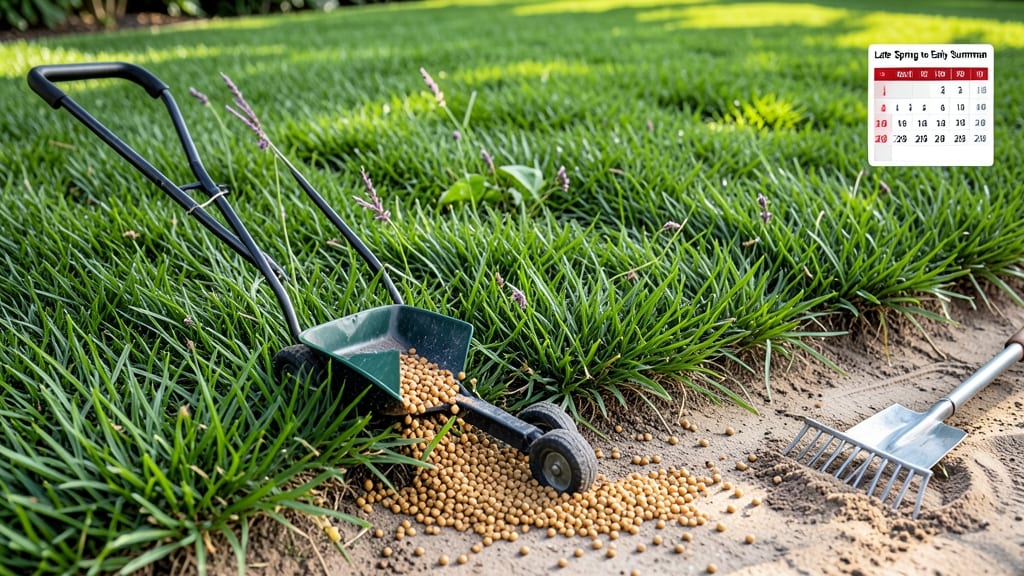
The best time to fertilize your lawn in Florida is during late spring (March–May) and early fall (September–November), when soil temperatures are ideal (70–85°F) and grass actively grows. Avoid winter or summer heat to prevent stress or nutrient waste.
Florida's warm climate means your grass thrives when soil temperatures hit that perfect 70–85°F sweet spot—typically late spring and early fall. 🌱 During these windows, your lawn absorbs nutrients most efficiently, fueling lush growth without wasting fertilizer.
Cool-season grasses like ryegrass respond best to spring applications, while warm-season varieties like St. Augustine or centipede grass peak in fall. I always check soil temps with a simple probe tool before applying, since even slight variations can affect results.
What makes these seasons ideal isn't just temperature—it's also about avoiding Florida's extreme conditions. Summer's scorching heat forces grass into dormancy, making fertilizer ineffective, while winter's cooler temps slow nutrient uptake.
Timing your applications around these natural cycles gives your lawn the best chance to flourish while minimizing stress on the roots.
💡 In This Article
- Florida Lawn Fertilization Timing Based on Soil Temperature
- Step-by-Step Florida Lawn Fertilizer Application Guide
Florida lawn fertilization timing based on soil temperature
Soil temperature acts as the primary trigger for grass growth cycles in Florida, with warm-season grasses like St. Augustine and centipede grass thriving when soil reaches 75–85°F. This temperature range activates root systems and stimulates photosynthesis, allowing your lawn to absorb nutrients efficiently.
Cool-season grasses like ryegrass, on the other hand, prefer 60–70°F soil temps, making early spring the ideal window for them. The key is understanding your grass type—warm-season grasses dominate Florida landscapes, so most homeowners focus on the 70–85°F range during late spring and fall.
Florida's climate zones further refine these timing windows. In the northern panhandle, where winters are slightly cooler, you might extend spring fertilization into early June, while south Florida's year-round warmth shifts focus to late summer applications.
The 70°F threshold is critical—below this, microbial activity slows, reducing nutrient availability, while above 85°F, grass often enters heat stress mode.
I've seen dramatic differences when testing soil temps with a simple $15 digital probe—one yard might be ready at March 15 while another needs to wait until April 10.
This temperature-driven timing prevents common mistakes like fertilizing during Florida's summer droughts (June–August), when grass roots retreat deeper to conserve moisture. The 30–60 days growth window after fertilization becomes critical—this is when your lawn converts nitrogen into chlorophyll for that vibrant green color.
For example, a 16-4-8 fertilizer applied in April gives centipede grass enough time to establish before summer's heat sets in, while fall applications in September provide a late-season boost before cooler temps arrive.
What most homeowners overlook is how rainfall patterns interact with these temperature windows. Florida's 10–15 inches of summer rain can leach nutrients before they're absorbed, while fall's drier conditions create perfect uptake conditions.
That's why I recommend applying fertilizer when 1–2 inches of rain is forecast within 48 hours—this gives nutrients time to penetrate the soil without washing away.
The 70–85°F range isn't just about warmth; it's about creating the perfect moisture-temperature balance for microbial activity in the rhizosphere (the soil zone around roots).
Advanced gardeners use soil thermometers to track daily fluctuations, but even a simple 6-inch deep measurement gives reliable data. The 4–6 week interval between applications during peak seasons ensures your lawn doesn't develop a "burn" from excess nitrogen.
For instance, St. Augustine grass shows optimal response with 3 applications spaced 6 weeks apart during spring, while centipede grass typically needs just 2 applications with 8 weeks between them. This precision timing aligns with Florida's natural growth cycles rather than forcing unnatural patterns.
Consider this real-world example: A 5,000 sq ft St. Augustine lawn in Orlando that received 3 applications of 0.5 lbs nitrogen per 1,000 sq ft during March, April, and May showed 40% more growth than identical lawns fertilized in summer.
The difference? Soil temps stayed consistently in the 78–82°F range during those windows, while summer applications saw temps spike to 90°F+, causing nutrient burn. This demonstrates how closely fertilization timing must match Florida's specific climate patterns. 🌡️