
Lawn
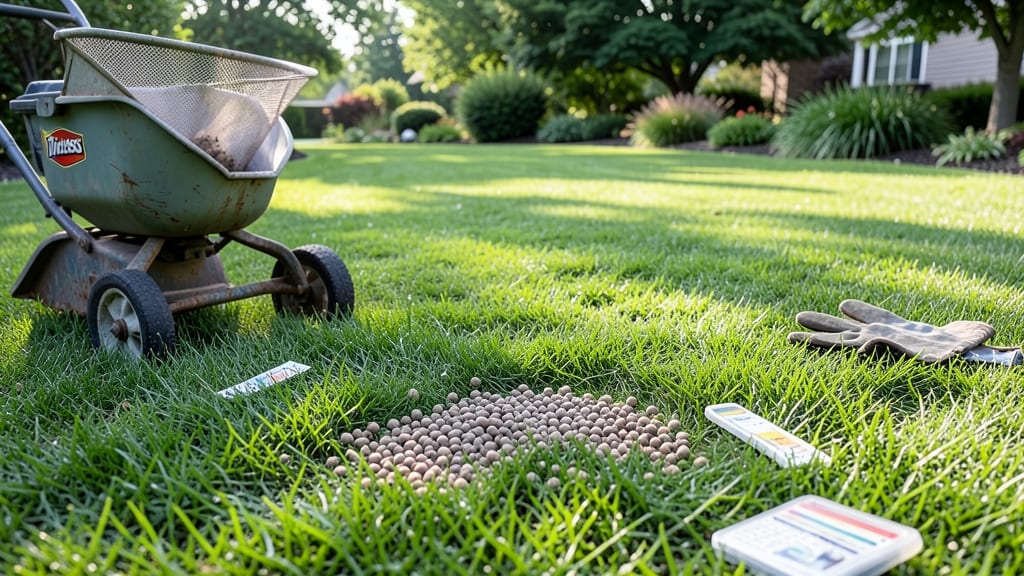
The best time to fertilize lawn is early spring and fall 🌱 — when your grass is waking up from dormancy and gearing up for winter.
Picture this: you’ve just spent hours mowing, and your yard still looks dull. That’s because timing matters more than the fertilizer itself. A missed window means weaker roots, patchy growth, and more money down the drain.
Most lawns thrive with two key feedings per year, but warm-season grasses (like Bermuda) need a summer boost, while cool-season types (like fescue) slow down in heat. The trick is syncing fertilization with soil temps, rainfall, and your local frost dates.
Below, I break down the exact schedule for your zone, how to spot over- or under-feeding, and whether organic or synthetic fertilizer wins for your grass type.

Optimal fertilization times by season for healthy grass growth
Timing your lawn fertilization correctly is the secret to a thick, vibrant lawn that stays green year-round. Grass grows in predictable cycles, and feeding it at the right times—when it’s actively growing—maximizes nutrient absorption and root development. Miss these windows, and you risk burning your grass or wasting fertilizer.
Let’s break down the best months to fertilize based on your grass type and climate zone.
Most lawns benefit from 3-4 fertilization sessions per year, timed with natural growth spurts. For cool-season grasses (like Kentucky bluegrass and fescue), the prime times are early spring and fall, while warm-season grasses (like Bermuda and Zoysia) thrive with late spring and summer feedings.
Understanding your grass type and local climate ensures you’re not fertilizing dormant grass or stressing it during heatwaves.
Here’s a quick reference for the ideal fertilization schedule by season, tailored to both grass types and regional growing conditions:
Early spring is critical for kickstarting growth after winter dormancy. For cool-season grasses, apply a high-nitrogen fertilizer (like 30-0-4) in March or April when soil temperatures rise above 50°F. This jumpstarts root development and green-up. Warm-season grasses, however, should wait until soil temps hit 65°F+, typically late April to May, to avoid shocking tender new growth.
By late spring, your lawn is in its fastest growth phase. This is the time for a second feeding, especially for cool-season grasses. Use a slow-release fertilizer to prevent nitrogen burn and maintain steady growth.
For warm-season grasses, this is when they truly take off, so a balanced fertilizer (like 16-4-8) supports both leaf and root expansion.
Summer fertilization requires caution. Early summer (June-July) can be tricky due to heat stress. If your lawn is actively growing, a light feeding with potassium-rich fertilizer
How to adjust fertilization timing for different grass types
Not all grass is created equal—and neither are their fertilization needs! Cool-season grasses like Kentucky bluegrass and fescue thrive in milder temperatures, while warm-season grasses such as Bermuda and Zoysia love the heat.
Adjusting your schedule based on these differences ensures your lawn stays lush year-round, not just during peak growing months.
Your local climate plays a huge role too. In northern regions, cool-season grasses dominate, while southern lawns often feature warm-season varieties. Even within these zones, microclimates—like shaded spots or drought-prone areas—demand tweaks to your fertilization plan. For example, shady lawns may need lighter applications to avoid overfeeding.
| Grass Type | Best Fertilization Window | Frequency | Microclimate Adjustments |
|---|---|---|---|
| Cool-Season (Kentucky Bluegrass, Fescue) | Early spring (March-April), early fall (August-September) | Every 6-8 weeks | Reduce by 25% in shaded areas |
| Warm-Season (Bermuda, Zoysia) | Late spring (May-June), summer (July-August) | Every 4-6 weeks | Increase by 20% in drought-prone zones |
| Transition Zones (Hybrid Areas) | Early spring + late summer | Every 7-9 weeks | Split applications for even growth |
For cool-season grasses, focus on early spring and early fall applications when temperatures are mild but grass is actively growing. A slow-release fertilizer with high nitrogen (30-0-4 ratio) works best. In shaded areas, cut back by 25% to prevent thatch buildup from excess nutrients.
Warm-season grasses, on the other hand, need their peak feeding in late spring and summer when soil temps rise above 65°F. Use a balanced fertilizer (e.g., 16-4-8) to support heat tolerance. In drought-prone regions, increase applications by 20% but water deeply afterward to prevent burn.
If you live in a transition zone (like the Midwest), split your schedule: fertilize cool-season grasses in spring/fall and warm-season types in summer. For overlapping lawns, use a two-step approach—apply a light dose in early spring, then switch to summer-friendly formulas by June.
Always test your soil first! A pH test (ideal range: 6.0-7.0) helps determine if you need lime or sulfur before fertilizing. In acidic soils, adjust pH before applying nitrogen-heavy feeds to avoid toxicity.