
Lawn
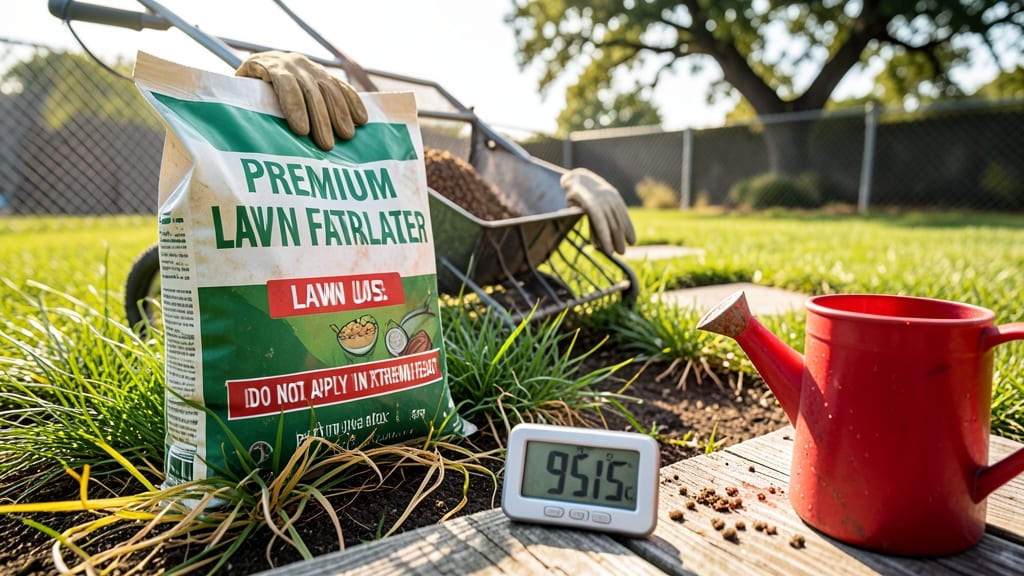
You should avoid fertilizing lawn when it is too hot to fertilize lawn, since extreme heat stresses grass roots and prevents proper nutrient uptake. Aim to apply fertilizer only when daytime temps fall below 80°F (27°C) and soil cools to 75°F (24°C) or lower.
When is it too hot to fertilize lawn? High temperatures don't just make your lawn feel dry—they actually disrupt how grass absorbs nutrients. When soil heats up beyond 85°F (29°C), the fertilizer can burn tender root systems, causing more harm than good. 🌡️ I've seen many homeowners accidentally damage their lawns by fertilizing during summer heatwaves, only to watch their grass turn brown weeks later. The key is patience—waiting for cooler evenings and mornings gives the soil time to recover and ensures your grass can actually use the nutrients you're providing.
Different grass types handle heat differently too. For example, Bermuda grass can tolerate warmer soil better than Kentucky Bluegrass, which starts showing stress at lower temperatures. Always check your local USDA zone for the best timing—coastal areas might have different safe windows than inland regions.
A simple soil thermometer can save you from costly mistakes by giving you exact readings before you apply anything.
💡 In This Article
- How Heat Affects Lawn Fertilizer Absorption and Root Health
- Safe Fertilization Timing by Climate Zone and Grass Type
How heat affects lawn fertilizer absorption and root health
When soil temperatures climb above 85°F (29°C), grass roots enter survival mode. The heat triggers a physiological response called osmotic stress, where water rapidly exits root cells through a process called transpiration.
This dehydration makes roots more vulnerable to fertilizer salts, which act like concentrated saltwater—drawing even more moisture out of the cells. The result? Root tips brown and die back, leaving your lawn weak and prone to disease. 🔥
Heat also disrupts the soil's microbial ecosystem. Beneficial bacteria and fungi that help break down fertilizer into usable nutrients become less active above 80°F (27°C). These microbes thrive in cooler soil (75°F/24°C), where they can efficiently convert nitrogen into forms grass can absorb.
Without them, your fertilizer essentially becomes a waste—sitting in the soil as unused salts that may leach into groundwater or burn roots later when rains return.
The worst offenders are quick-release fertilizers, which contain high concentrations of soluble salts. When applied during heatwaves, these salts can create a fertilizer burn within hours, leaving yellow patches that take weeks to recover.
Even slow-release granules struggle—heat accelerates their breakdown, releasing nutrients too fast for stressed grass to handle. Think of it like trying to drink a gallon of water in one gulp instead of sipping it over time.
Another critical factor is humidity. In dry, hot climates (like the Southwest US), evaporation rates can exceed 0.25 inches per day, pulling moisture from the soil surface and concentrating fertilizer salts. This creates a crust effect where salts accumulate near the surface, further damaging shallow roots.
Even morning dew can't compensate—by 10 AM, surface soil temps may already be 95°F (35°C), making any fertilizer application risky.
What most people don't realize is how grass type changes the threshold. Cool-season grasses (like Fescue or Ryegrass) show stress at 82°F (28°C) soil temps, while warm-season grasses (like Zoysia) can handle up to 90°F (32°C)—but even they suffer when fertilized during peak heat.
The key is matching your grass's heat tolerance to your local climate patterns. A simple soil thermometer ($10 at garden centers) can reveal whether your lawn is ready for fertilizer or needs a cooling break.
For those in USDA Zones 7-10, this often means waiting until late August or September to fertilize, when daytime highs drop to 85°F (29°C) or below. In cooler zones (4-6), late spring (May-June) is ideal—just avoid fertilizing when soil temps exceed 78°F (26°C).
The rule of thumb? If you can't comfortably touch the soil for 10 seconds without burning your hand, it's too hot to fertilize. 💫