
Lawn
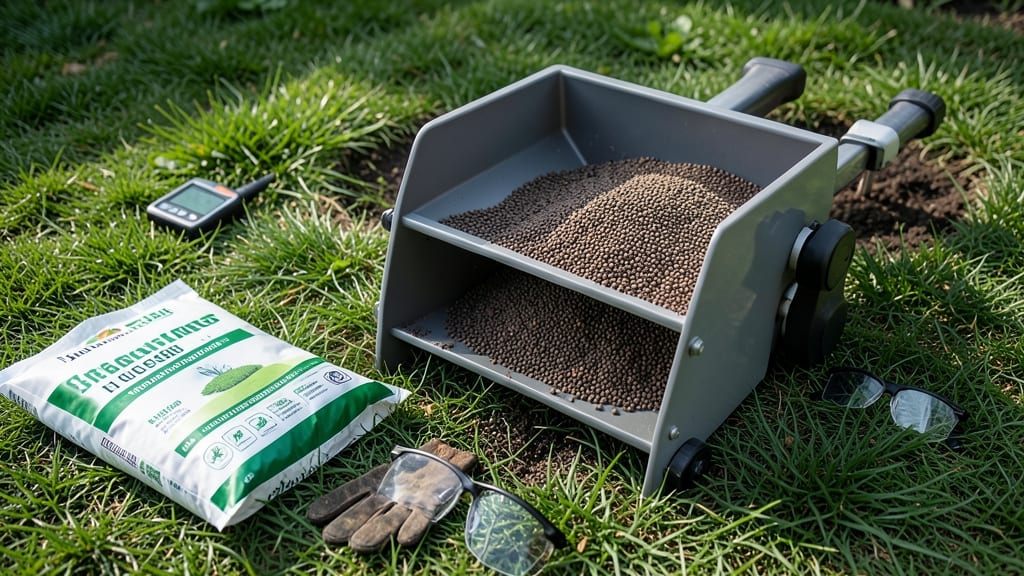
To fertilize your lawn effectively, time applications to early spring and late fall for cool-season grasses, while warm-season grasses benefit most from early spring and summer feedings. Always conduct a soil test first to identify specific nutrient deficiencies.
Timing matters because grass growth cycles align with seasonal temperature shifts.
Cool-season grasses like fescue and bluegrass peak in spring and fall, while warm-season types such as Bermuda and Zoysia grow most actively during summer heat. 🌱 A soil test reveals whether your lawn needs nitrogen, phosphorus, potassium, or micronutrients—this prevents over-fertilizing, which can harm roots or pollute waterways.
I recommend testing every 2-3 years, especially if you notice yellowing patches or slow growth despite regular feeding.
Regional climate plays a huge role too. Northern lawns often get just two feedings per year, while Southern climates may need three due to longer growing seasons.
For example, Kentucky bluegrass in Minnesota thrives with spring and fall applications, while Bermuda grass in Texas benefits from an extra summer feeding to handle heat stress. Always check your local USDA hardiness zone for precise timing adjustments.
💡 In This Article
- How Soil Type and Climate Affect Lawn Fertilization Timing
- Seasonal Fertilizer Schedule for Cool vs Warm-Season Grasses
How soil type and climate affect lawn fertilization timing
Grass growth is fundamentally driven by temperature, and each species has an optimal range where it absorbs nutrients most efficiently. Cool-season grasses like Kentucky bluegrass and tall fescue thrive when soil temperatures stay between 50-75°F, which typically occurs in spring and fall.
Warm-season grasses such as Bermuda and Zoysia, however, prefer 75-95°F soil temperatures, aligning with summer's heat. This is why fertilization timing must match these biological rhythms—applying fertilizer when the grass isn't actively growing wastes nutrients and can even burn roots.
The science gets even more nuanced when you consider USDA hardiness zones. For example, in Zone 5 (north-central U.S.), cool-season grasses might get just two feedings—early May and late September—while Zone 9 (southern California) could support three applications for warm-season grasses: April, June, and August.
Soil pH also plays a critical role: most grasses prefer a 6.0-7.0 pH range, but acidic soils (pH 5.5 or lower) can lock out essential nutrients like phosphorus, making fertilizer applications less effective. A soil test reveals these hidden factors before you even pick up a spreader.
Climate patterns create another layer of complexity. In humid regions, like the Southeast, summer heat can stress cool-season grasses, requiring lighter spring feedings to avoid fertilizer burn (visible as brown patches). Meanwhile, arid climates (e.g., Southwest) may need slow-release fertilizers to prevent nutrients from washing away during sudden rainstorms.
Even rainfall timing matters—applying fertilizer 48 hours before heavy rain risks leaching, while waiting 24-48 hours after rain ensures proper absorption. This is why local extension offices often provide hyper-specific schedules tailored to your region's microclimate.
Soil texture also influences how quickly nutrients become available. Sandy soils drain fast, so fertilizers need to be applied more frequently in smaller doses, while clay soils hold nutrients longer but can become waterlogged, reducing root oxygen.
For instance, a loamy soil (ideal mix of sand, silt, and clay) might retain fertilizer for 4-6 weeks, whereas sandy soil could require reapplication every 3-4 weeks to maintain green growth.
Understanding your soil's composition helps you adjust both timing and product type—granular vs liquid, organic vs synthetic—for maximum efficiency.
What most people overlook is how microclimates within your yard can create inconsistent growth patterns. A south-facing slope heats up faster and may need earlier fertilization than a north-facing area. Shady spots with less than 4 hours of sunlight often grow slower, requiring lighter feedings to avoid overstimulating weak roots.
By mapping these variations, you can create a custom fertilization calendar that accounts for your lawn's unique topography and sunlight exposure. This precision is what separates a mediocre lawn from a lush, healthy one.
Finally, consider the carbon-to-nitrogen (C:N) ratio in your soil. Organic matter like compost adds carbon, while fertilizers contribute nitrogen. A balanced ratio (20:1 or lower) supports microbial activity that breaks down nutrients into forms grass can absorb.
If your soil test shows high carbon but low nitrogen, you’ll need a fertilizer with a higher nitrogen content (e.g., 30-0-5 ratio) to kickstart growth. Conversely, nitrogen-heavy soils may require a low-nitrogen, high-potassium blend (5-10-15) to strengthen root systems.
This is where soil testing becomes your most powerful tool—it turns guesswork into a science.