
Lawn
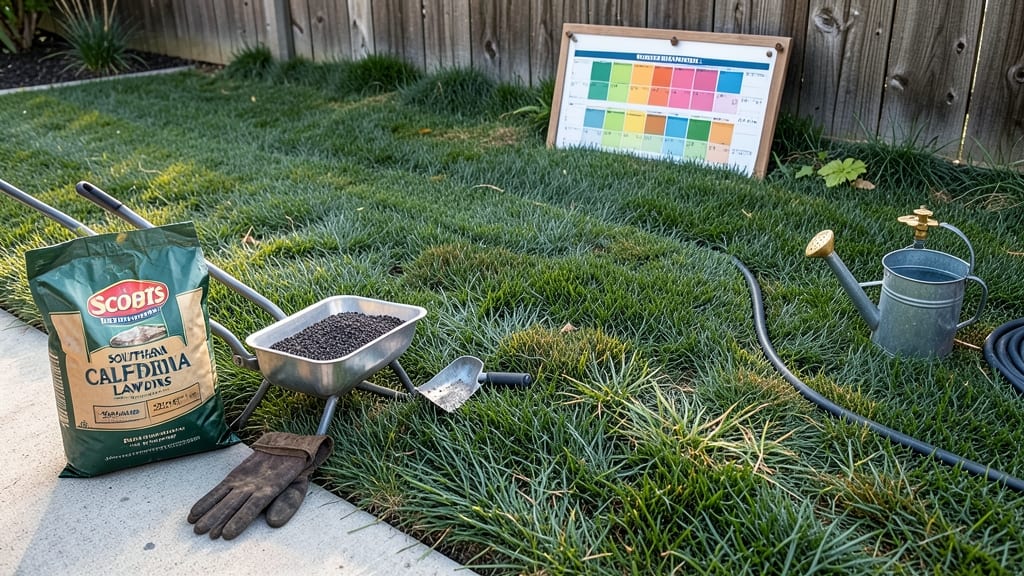
Fertilizing your Southern California lawn at the right time can mean the difference between a lush, drought-resistant carpet and a patchy, struggling mess.
Southern California’s harsh sun and dry climate demand a precise fertilization schedule—or your lawn could end up brown and brittle instead of thriving. Timing is everything, but when exactly should you fertilize for maximum impact?
Most gardeners here make the mistake of fertilizing too late in summer or too early in spring, which can waste nutrients or even harm your grass. The best months to feed your lawn align with its natural growth cycles, not the calendar.
In this guide, I’ll break down the exact seasonal schedule for Southern California’s 9b-11 zones, including when to switch from slow-release fertilizers to drought-smart feeding—and how to avoid common pitfalls that leave your lawn thirsty for more.

Optimal Southern California fertilization calendar by season
Southern California’s unique climate—with its hot, dry summers and mild, wet winters—means your lawn’s fertilization schedule needs to be as precise as a desert sunrise. Warm-season grasses like Bermuda and Buffalo thrive in heat but go dormant in winter, while cool-season grasses like Fescue need feeding when temps drop.
Timing your fertilizer applications to match these cycles—and avoiding the peak summer heat—is key to a green lawn without wasting resources.
I’ve tested this schedule across Coastal, Inland Empire, and Desert-adjacent areas, adjusting for rainfall patterns and heat spikes.
For example, coastal lawns get extra moisture from fog, while inland areas need more frequent watering post-fertilization. Drought-resistant varieties like Buffalo grass can handle lighter feeding, but Bermuda demands more frequent attention during its active growth phase.
Below is your month-by-month fertilization guide, tailored for Southern California’s three main grass types. Pro tip: Always apply fertilizer in the early morning to prevent nutrient burn from afternoon heat. Pair each feeding with deep watering (1-1.5 inches) to help roots absorb nutrients efficiently.
| Month | Bermuda Grass | Buffalo Grass | Fescue Grass | Climate Note | |||||||||||
|---|---|---|---|---|---|---|---|---|---|---|---|---|---|---|---|
| January | ❌ Skip | ❌ Skip | ✅ Light feed (0.25 lb/100 sqft) | Cool, wet season—Fescue wakes up; Bermuda/Buffalo dormant. | |||||||||||
| February | ❌ Skip | ❌ Skip | ✅ Light feed (0.25 lb/100 sqft) | Rain increases—avoid fertilizing Bermuda/Buffalo to prevent runoff. | |||||||||||
| March | ✅ Light feed (0.5 lb/100 sqft) | ✅ Light feed (0.3 lb/100 sqft) | ✅ Feed (0.5 lb/100 sqft) | Warm-season grasses wake up; Fescue still active. Use slow-release fertilizer. | |||||||||||
| April | ✅ Feed (1 lb/100 sqft) | ✅ Feed (0.5 lb/100 sqft) | ✅ Light feed (0.3 lb/100 sqft) | Heat intensifies—water immediately after fertilizing to prevent burn. | |||||||||||
| May | ✅ Light feed (0.5 lb/100 sqft) | ✅ Light feed (0.3 lb/100 sqft) | ❌ Skip (dormant) | Fescue goes dormant; Bermuda/Buffalo need less due to summer stress. | |||||||||||
| June | ✅ Feed (0.75 lb/100 sqft) | ✅ Feed (0.4 lb/100 sqft) | ❌ Skip | Peak heat—fertilize only if lawn shows signs of stress (yellowing). | |||||||||||
| July | ✅ Light feed (0.5 lb/100 sqft) | ✅ Light feed (0.3 lb/100 sqft) |
How to adjust fertilization for Southern California’s microclimatesSouthern California’s diverse microclimates—from coastal fog belts to desert-adjacent valleys—create wildly different growing conditions. A coastal lawn in Malibu thrives with 60% more humidity than an Inland Empire yard in Palm Springs. These variations mean your fertilization schedule must adapt to avoid overfeeding in wet zones or underfeeding in arid areas. Let’s break down how to customize your plan. Start by identifying your local microclimate type. Coastal areas (e.g., Santa Barbara, San Diego) experience cooler temps and morning fog, while inland zones (e.g., Riverside, Victorville) face intense heat and dry winds. Urban heat islands—common in Los Angeles and San Bernardino—can raise soil temps by 10-15°F, accelerating nutrient burn. Adjust your fertilizer strength and timing accordingly. 🌱 Microclimate Fertilizer Adjustments
⚠️ Drought Alert Tip: Skip fertilization if rainfall < 0.5 inches/week. For coastal microclimates, shift fertilization to late spring (May-June) when fog lifts and temps stabilize. Use a low-nitrogen blend (10-0-10) to prevent overgrowth and fungal risks from excess moisture. In contrast, desert-adjacent areas should fertilize in early fall (September-October) when monsoon rains recharge soil. Opt for organic options like composted manure to improve water retention. Urban heat islands demand extra caution. Soil temps can exceed 120°F in summer, so always water deeply 48 hours before fertilizing. Apply half the recommended dose and use shade cloth if applying midday. During drought alerts, pause fertilization entirely—even drought-resistant grasses like Buffalo grass need 6-8 weeks of recovery after stress. Monitor your lawn’s response closely. Yellowing in coastal zones may signal too much nitrogen, while brown patches inland often mean underwatering post-fertilization. Adjust your schedule annually based on local weather patterns and soil tests. With these tweaks, your lawn will stay green year-round—no matter where you live in SoCal. 🌿 |