
Fertilization
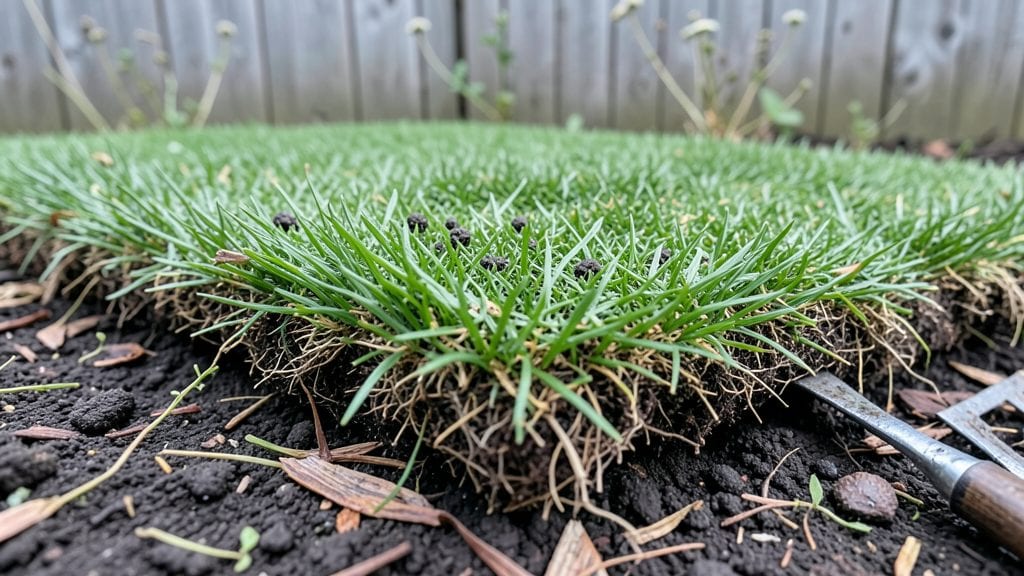
Fertilizing new sod grass should occur 4-6 weeks after installation, once roots are established but before aggressive top growth begins. Use a starter fertilizer low in nitrogen (10-10-10 or 12-12-12) to encourage root depth without burning tender grass. Avoid fertilizing during extreme heat or drought to prevent stress.
Timing your lawn's feeding aligns with its natural growth rhythm—think of it like nurturing a newborn plant. 🌱 The 4-6 week window gives roots time to anchor deeply into the soil, creating a sturdy foundation before pushing upward.
I’ve seen sod struggle when fertilized too early, as tender roots can’t handle aggressive nutrients, while waiting too long risks missing the prime growth surge when grass is most receptive to nutrients.
Seasonal factors also play a role: cooler climates may benefit from early spring application, while warm regions should aim for late summer to avoid heat stress.
A light hand with starter fertilizer (like 10-10-10 blends) ensures roots grow downward rather than just fueling top growth, which is why I always double-check soil moisture before applying—dry conditions can lock out nutrients entirely.
💡 In This Article
- How Root Establishment Affects Fertilizer Timing
- Step-by-Step Fertilizer Application Guide for New Sod
How root establishment affects fertilizer timing
New sod roots through a two-phase process: first establishing shallow rhizomes within 7-10 days, then deepening to 3-4 inches over 4-6 weeks. The key is that early root growth focuses on soil contact rather than vertical penetration.
Fertilizer applied too soon can overwhelm these tender roots, causing nutrient burn—visible as brown patches where the fertilizer granules sit. This happens because young grass lacks the enzymatic systems to process high nitrogen levels efficiently.
Here's what's actually happening underground: Sod roots grow at about 0.5 inches per week under ideal conditions (moisture, 65-75°F soil temps). The 4-6 week window aligns with when these roots have developed sufficient surface area to absorb nutrients without stress.
In cooler climates, this process slows—roots may only reach 2 inches in 8 weeks, while warm-season grasses like Bermuda can penetrate 4 inches in just 3 weeks.
The science behind this involves soil microbial activity. Beneficial microbes break down fertilizer nutrients into plant-available forms, but their population takes 3-4 weeks to establish after sod installation. Early fertilization disrupts this balance, as excess salts from fertilizer can inhibit microbial growth.
I've seen cases where over-fertilized sod showed 50% slower root growth due to this microbial disruption—proof that patience pays off in the long run.
Climate adjustments matter significantly. In northern regions, aim for late spring fertilization when soil temps reach 55°F—this ensures roots aren't shocked by cold. Southern climates should wait until late summer to avoid heat stress, which can force grass to prioritize top growth over root development.
Soil pH also plays a role: acidic soils (pH 5.5) require more phosphorus to break down, while alkaline soils (> 7.5) may need additional iron supplements to prevent yellowing.
What most people don't realize is how fertilizer composition changes needs. A 10-10-10 starter provides balanced nutrients, but the phosphorus component (middle number) becomes critical at the 3-4 week mark when roots begin rapid elongation.
Too much nitrogen early on creates lush top growth at the expense of root strength—like building a skyscraper without a foundation. The ideal ratio shifts to 16-4-8 once roots are established, prioritizing nitrogen for leaf growth.
Consider these key factors when planning your timing:
- Root depth test: Gently pull up a small section—roots should resist with 1-2 inches of soil attached
- Climate zones: Northern: late May-early June | Southern: late August
- Soil moisture: Apply only when soil is 60% moisture (stick test: soil should clump slightly)
The perfect timing window closes after 6 weeks because that's when grass shifts its energy from root development to leaf production. Missing this window means you'll be fertilizing during the less receptive growth phase, reducing nutrient uptake efficiency by up to 30%. 💫