
Lawn
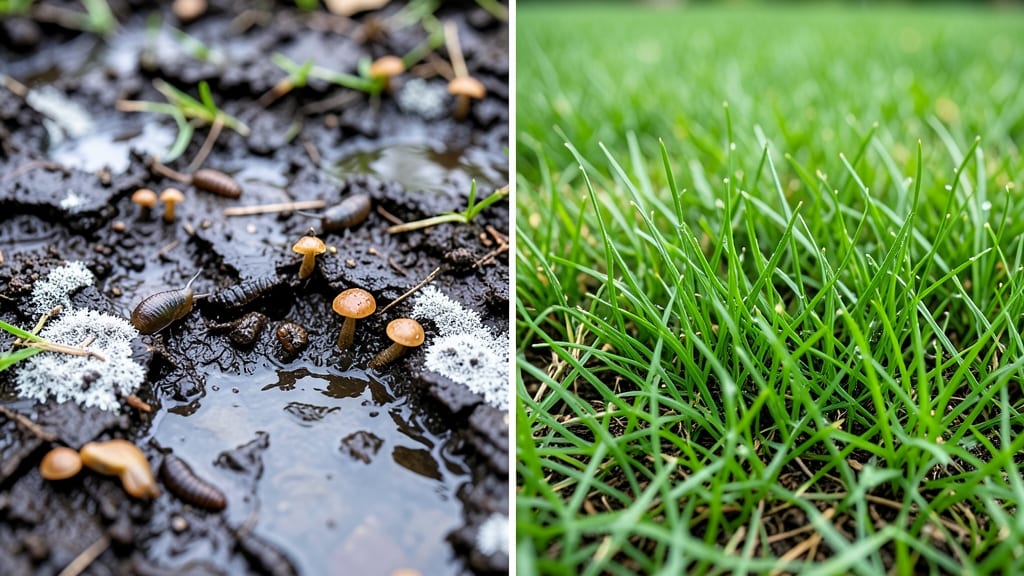
Your lawn isn’t just thirsty—it’s drowning, and the signs are impossible to miss once you know what to look for. 🌱 Overwatered grass turns a sickly yellow, feels spongy underfoot, and sprouts mushrooms like nature’s way of saying "stop."
The soil stays clammy for days, even after watering stops, because roots can’t breathe when submerged in moisture.
Think of it like this: underwatered grass is crispy and brown at the edges, while overwatered grass looks washed out and slimy. Pests love the damp conditions too—slugs, grubs, and even moles move in for the soggy buffet.
The worst part? All that extra water leaches nutrients right out of the soil, leaving your grass weak and struggling to recover.
Fixing it starts with cutting back on water—deep, infrequent soakings instead of daily sprinkles. Aerate compacted soil to help roots breathe, and mow higher to shade the roots.
Within a couple of weeks, you’ll see the yellow fade and that spongy feel disappear. The key is balance: grass needs moisture, but not a swamp.
This isn’t just about saving water—it’s about giving your lawn a fighting chance. Once you correct the overwatering, you’ll notice stronger growth, fewer pests, and a lawn that actually stays green without your constant attention. The turnaround is faster than you’d think.
Root Causes of Overwatering
Overwatering isn’t just about turning on the sprinklers too long—it’s a sneaky problem rooted in soil science, weather patterns, and human habits. When your lawn gets too much water, it’s usually because one (or more) of these factors is out of balance.
Let’s dig into the real reasons behind soggy, waterlogged grass and what’s really going on beneath the surface.
Not all soil drains water like a champion. If your lawn sits on clay-heavy or compacted soil, water pools instead of percolating down. Here’s why:
- Clay soil particles stick together tightly, creating tiny air pockets that fill with water instead of letting it escape. Think of it like a sponge that’s been squeezed—it holds onto moisture for days.
- Compacted soil (from foot traffic, heavy equipment, or construction) crushes soil particles, reducing pore space. Water has nowhere to go but upward or sideways, leading to surface puddles.
- Shallow root zones (common in new lawns or lawns with shallow topsoil) prevent water from seeping deep enough, leaving the upper layer saturated.
Actionable fix: Test your soil’s drainage by digging a 6-inch hole and filling it with water. If it drains in less than 4 hours, you’ve got good drainage. If it takes longer than 6 hours, you’re dealing with poor drainage. Aerate annually to loosen compacted soil and mix in organic matter (compost or sand) to improve structure.
Most homeowners water their lawns too often or for too long, especially if they’re following outdated rules like "water every day for 10 minutes." Here’s the science behind the overkill:
- Short, frequent watering (e.g., 5 minutes daily) trains grass roots to stay shallow because they don’t need to search for moisture deep underground. Shallow roots = less drought resistance and more susceptibility to waterlogging.
- Ignoring weather forecasts leads to watering even when it’s rained recently. A common mistake is watering 1–1.5 inches per week (including rainfall), but many people double or triple that without realizing it.
- Sprinkler inefficiency: Misaligned sprinkler heads can create overlapping zones, soaking some areas while others dry out. Rotary sprinklers often overwater because they spray in a circular pattern, wasting water on sidewalks or driveways.
Actionable fix:
- Use a rain gauge or tuna can to measure water output—aim for 0.5–1 inch per week (adjust for rainfall).
- Water deep and infrequent: 2–3 times per week for 15–20 minutes per session (longer in extreme heat).
- Check sprinkler heads for overlap by placing empty cans in different zones and measuring water collected.
Mother Nature plays a huge role in how much water your lawn can handle. Heavy rain, high humidity, or poor evaporation rates can turn your yard into a swamp overnight. Here’s how:
- Prolonged rain or high humidity reduces evaporation, so soil stays wet longer. If your area gets consistent drizzle or fog, the ground may never dry out between waterings.
- Low-lying areas act like bowls, collecting runoff from higher ground. Even a slight slope can funnel water into one spot, creating a permanent soggy zone.
- Slow evaporation rates in cool or cloudy climates mean water lingers in the soil. Conversely, hot, windy days might trick you into overwatering because the grass looks dry faster than it actually is.
Actionable fix:
- Install a soil moisture sensor ($20–$50) to track when the top 2–3 inches of soil are dry before watering.
- Reseed or sod low-lying areas with wet-tolerant grasses like creeping bentgrass or fine fescue.
- Adjust watering times: Early morning (4–8 AM) is best—it reduces evaporation and fungal growth compared to watering at night.
Not all grass is created equal. Some varieties thrive in moisture, while others drown in it. If your lawn is prone to waterlogging, your grass type might be part of the problem:
- Cool-season grasses (like Kentucky bluegrass or fescue) have deeper roots but can still suffer if water sits too long, leading to anaerobic conditions (lack of oxygen in soil).
- Warm-season grasses (like Bermuda or Zoysia) have shallow roots and struggle in waterlogged soil, making them more prone to fungal diseases like brown patch.
- Thatch buildup (a layer of dead grass and roots) acts like a waterproof barrier, preventing water from draining into the soil. Thatch over 0.5 inches is normal, but anything thicker traps moisture.
Actionable fix:
- If your lawn is frequently waterlogged, consider switching to a wet-tolerant grass mix or overseeding with a drought-resistant variety.
- Dethatch in early spring or fall if the layer exceeds 0.5 inches. Use a vertical mower or rent a dethatching machine.
- Improve soil health with mycorrhizal fungi (available as a powder), which helps roots absorb water and nutrients more efficiently.
Pro tip: 💡 Combine fixes for best results. For example, aerate compacted soil before adjusting your watering schedule, and test drainage after amending the soil. Small changes add up to a drier, healthier lawn!
Fixing Your Soggy, Struggling Lawn
Overwatering can turn your lush green lawn into a soggy, yellow mess—but the good news is, it’s reversible! The key is identifying the root cause (literally and figuratively) and taking targeted action.
Below, we’ll break down practical fixes for each common symptom of overwatering, plus prevention tips to keep your lawn healthy long-term.
If your lawn feels squishy underfoot like a wet sponge, poor drainage is likely the culprit. Here’s how to tackle it:
🔥 Check and Improve Drainage
- Test your soil: Dig a small hole (6–8 inches deep).
If water pools or drains slower than 4–6 hours, your lawn has drainage issues. - Aerate aggressively: Rent a core aerator (or hire a pro) to pull out plugs of soil, creating channels for water to escape.
Do this in spring or fall when grass is actively growing. - Add organic matter: Mix in 2–3 inches of compost or sand (if your soil is clay-heavy) to loosen compacted areas. Rake it in gently.
💡 Pro Tip:
If your yard has low spots, consider grading (slightly sloping soil away from the house) or installing French drains for severe cases. A little effort now saves you from muddy boots later!
Yellow patches or sudden mushroom growth? You’re overdoing it on the H₂O. Reset your watering routine:
👨🍳 Rewrite Your Watering Schedule
- Water deeply but less often: Aim for 1–1.5 inches per week (including rain). Use a rain gauge or tuna can to measure—no guesswork!
- Morning is best: Water early (4–8 AM) to reduce evaporation and fungal risks.
Avoid evening watering, which promotes disease. - Check soil moisture: Stick your finger 2–3 inches deep. If it’s damp, skip watering. If dry, give it a slow soak.
✨ Fungal Foes?
Act Fast - Remove mushrooms at the base (don’t just chop them—they’ll regrow). - Improve airflow: Thin out dense grass with a sharp mower (set blades to 3–4 inches) or overseed bare spots. - Fungicide (if needed): For persistent issues, use a natural fungicide (like neem oil) or a lawn-safe product with myclobutanil.
If your lawn stays damp for days, the issue might be compaction, clay soil, or poor grading. Here’s how to dry it out:
🔪 Break Up Compacted Soil
- Top-dress with sand/compost: Spread a ½-inch layer over the lawn, then lightly rake.
This helps sandy soil drain faster and adds nutrients. - Use gypsum (for clay soil): Mix 10–20 lbs per 100 sq ft into the top 2 inches of soil to improve structure over time.
🌡️ Monitor and Adjust
- Avoid walking on wet grass—it compacts soil further.
- Test soil pH: Overwatering can wash away nutrients. A soil test kit (from a garden center) helps determine if you need lime (to raise pH) or sulfur (to lower it).
Once your lawn recovers, keep it thriving with these low-maintenance habits:
| Problem | Solution | How Often |
|---|---|---|
| Overwatering | Use a smart sprinkler timer | Set to 2–3x per week |
| Compacted soil | Aerate annually | Spring or fall |
| Fungal growth | Mow high (3–4 inches) | Weekly (if grass is tall) |
| Poor drainage | Add compost top-dressing | Every 2–3 years |
Before you call it a day, run through this quick checklist:
- [ ] Drainage tested? (Dig a hole, wait 4–6 hours.)
- [ ] Watering schedule adjusted? (Deep and infrequent.)
- [ ] Mushrooms removed? (No regrowth!)
- [ ] Soil amended? (Compost or sand added if needed.)
- [ ] Mowing height set? (Never below 2 inches.)
Remember: Recovery takes time—3–6 weeks for grass to bounce back after overwatering. Stay patient, and your lawn will thank you with a vibrant, resilient green! 🌿💚
Frequently asked questions
How can I tell if my lawn is overwatered vs. underwatered?
Overwatered grass feels spongy or mushy when you walk on it and often has a dull, yellow-green tint. You’ll also see mushrooms or mold popping up, and the soil stays damp for days after watering. Underwatered grass, on the other hand, feels crispy or dry, turns brown at the tips, and pulls up easily from the roots. Pro tip: Stick your finger 2–3 inches deep—if it’s soggy, you’re overwatering; if dry, you’re underwatering.
Why do mushrooms keep growing after I stop watering?
Mushrooms thrive in consistently damp soil, so they may persist even after you reduce watering because the soil takes time to dry out completely. To eliminate them, remove them at the base (not just the tops) and improve drainage by aerating or adding compost. If they keep returning, your lawn might have poor drainage—consider a soil test or grading adjustments for low spots.
Can overwatering kill my lawn permanently?
Not permanently, but it can cause long-term damage if ignored. Overwatering weakens grass by suffocating roots (cutting off oxygen) and leaching nutrients. However, once you adjust your watering schedule and improve drainage, grass typically recovers in 3–6 weeks. The key is acting fast—yellow patches can turn brown if roots rot, but healthy roots will bounce back with proper care.
Is it better to water my lawn every day for short periods or less often for longer?
Always opt for deep, infrequent watering. Short daily sessions (like 5–10 minutes) encourage shallow roots and fungal growth, while 15–20 minutes every 2–3 days promotes deeper roots and better drought resistance. Aim for 1–1.5 inches of water per week (including rain) and water early morning (4–8 AM) to minimize evaporation and disease risks.
What’s the fastest way to dry out a soggy lawn?
Start by reducing watering immediately and mowing higher (3–4 inches) to shade the soil. Aerate compacted areas to improve drainage, and spread a ½-inch layer of compost to absorb excess moisture. For severe cases, rent a soil decompactor or use a fan to circulate air over wet patches. Avoid walking on soggy grass to prevent further compaction. Within 1–2 weeks, you’ll see a noticeable improvement.