
Lawn
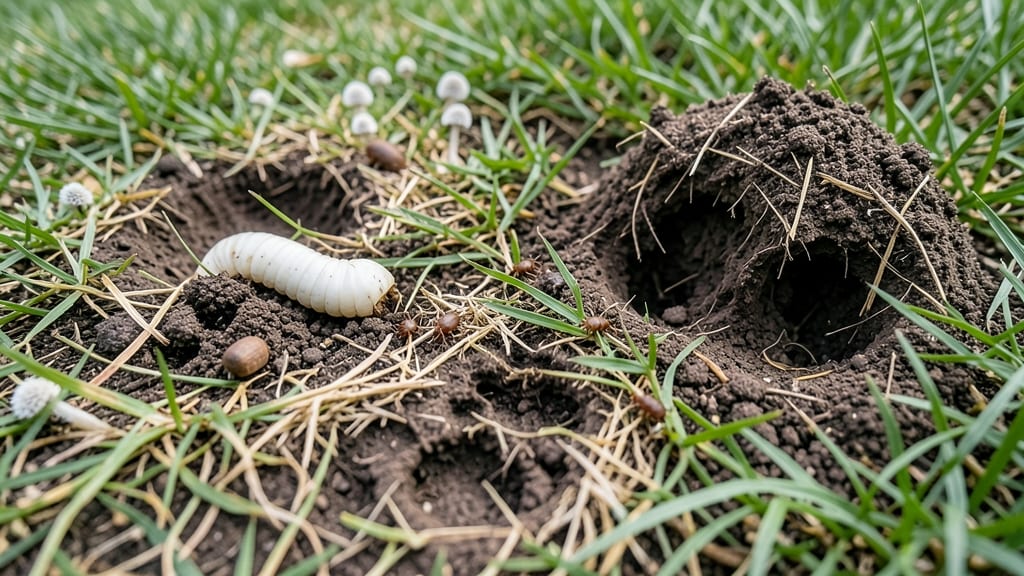
Those mysterious lawn holes aren’t just cosmetic—they’re a cry for help from your grass, and what causes holes in lawn can range from grubs munching roots to soil as hard as concrete. 🌱 Whether it's pests tunneling underground or compacted earth smothering growth, the damage starts small but spreads fast if you ignore it.
The most common culprits? Grubs tunneling underground, moles digging for snacks, or compacted soil that smothers roots. I've seen firsthand how a patchy lawn can turn into a full-blown repair project if you wait too long—don't let that happen to you.
You'll learn to spot the difference between grub damage (irregular holes with chewed grass) and mole tunnels (perfectly round holes with no grass). The fixes are straightforward: organic grub control, aeration for compacted soil, and simple preventive measures that work year-round.
This isn't just about filling holes—it's about restoring a lawn that looks thick, green, and healthy all season long. Let's get your grass back in fighting shape.
Root Causes Of Lawn Holes
If your lawn looks like it’s been through a war—with mysterious craters dotting the green—you’re probably wondering what’s attacking your grass. The truth is, holes in lawns rarely appear out of thin air.
They’re usually the result of hidden biological activity, physical stress, or environmental factors that weaken the soil and roots over time. Below, we break down the most common culprits, why they happen, and what they reveal about your lawn’s health.
Grubs—wiggly, C-shaped larvae of beetles (like Japanese beetles or June bugs)—are one of the most destructive forces behind lawn holes. Here’s how they do it:
- Feeding frenzy: Grubs munch on grass roots, severing the plant’s connection to nutrients and water. Once the roots are too weak to support the grass blades, they plop out, leaving behind a perfect hole.
- Seasonal timing: Peak grub activity happens in late summer to early fall, when soil is warm and moist—ideal for their growth. If you notice holes appearing in these months, grubs are likely the guilty party.
- Tell-tale signs:
- Soft, spongy patches of lawn (easy to lift with your foot).
- Increased bird or animal activity (skunks, raccoons, and crows love digging up grubs!).
- Thin, yellowing grass that pulls up easily like taffy.
Why it’s worse than you think: A single square foot of lawn can host hundreds of grubs. Left unchecked, they’ll turn your lawn into a patchwork of brown circles—fast.
Not all lawn holes are created by tiny insects. Larger critters—from burrowing rodents to curious pets—can turn your yard into a Swiss cheese board. Here’s who’s likely to blame:
🐭 Moles & Voles: The Underground Architects
| Culprit | How They Cause Holes | Clues to Look For |
|---|---|---|
| Moles | Dig shallow tunnels just below the surface to hunt grubs and worms. Their mounds collapse, creating irregular holes. |
|
| Voles | Create shallow, surface-level holes while gnawing grass roots for food. Their tunnels weaken the soil, causing patches to sink. |
|
🐕 Pets & Wildlife: The Accidental (or Intentional) Destructors
Dogs digging, raccoons rooting for grubs, or even deer rubbing antlers can create holes. These are usually:
- Random and scattered (not in patterns).
- Larger and deeper than insect-related holes.
- Often accompanied by trampled grass or disturbed soil.
Heavy foot traffic, machinery, or even natural settling can compress soil so tightly that grass roots struggle to breathe. Here’s how compaction leads to holes:
- Root suffocation: Compacted soil has less oxygen and water available to roots. Grass weakens, and when combined with heavy rain or foot pressure, entire sections can sink or collapse.
- Water pooling: Compacted areas don’t drain well, leading to waterlogged spots. Over time, the soil erodes, creating sinkholes.
- Common triggers:
- Frequent walking or playing on the lawn.
- Heavy equipment (lawnmowers, tractors) driving over the same spots.
- Construction or landscaping activities nearby.
Pro tip: 🌡️ Test for compaction by pushing a screwdriver into the soil. If it won’t go in past 2 inches, your lawn is likely compacted.
Mother Nature doesn’t always play nice. Extreme weather and soil erosion can turn your lawn into a pockmarked battlefield:
💦 Heavy Rain & Flooding
- Soil becomes saturated and unstable, leading to sinkholes or erosion in weak spots.
- Water washes away topsoil and organic matter, leaving hollows behind.
- Solution: Improve drainage with sand or compost and avoid walking on wet grass.
🔥 Drought & Heat Stress
- Prolonged dry spells shrink soil and kill grass roots, making the lawn vulnerable to collapse when water returns.
- Grass blades dry out and break off, leaving behind holes that look like they’ve been punched out.
- Solution: Water deeply 1–2 times per week (not daily shallow watering) to encourage deep root growth.
🌪️ Wind & Foot Traffic
High winds can uproot weak grass, while constant foot traffic (kids, pets, or even delivery trucks) compresses soil unevenly, creating weak spots that erode into holes.
Over-fertilizing or using aggressive herbicides can burn roots, making grass brittle and prone to breaking off. Here’s how it happens:
- Salt buildup: Too much synthetic fertilizer increases soil salinity, which dries out roots and makes them crispy.
- Herbicide overspray: Non-selective herbicides (like glyphosate) can kill grass roots if applied incorrectly, leaving patches that fall out like confetti.
- Solution: Use slow-release, organic fertilizers and always follow label instructions for herbicides.
Fixing Lawn Holes: Step-by-Step Solutions
Now that you know what’s causing those pesky holes in your lawn, it’s time to roll up your sleeves and get to work! 🌱 The good news? Most fixes are straightforward and can be done with basic tools and a little elbow grease.
Below, we’ve matched each cause with a practical solution—plus tips to keep your lawn lush and hole-free for good.
If grubs, moles, or other critters are to blame, your first priority is to eliminate the invaders and then restore the damaged areas.
🔥 Step 1: Apply a Grub Killer or Insecticide
- Choose the right treatment: Use a grub-specific insecticide (like imidacloprid or carbaryl) or a broad-spectrum lawn pest control product.
- Follow label instructions: Apply in early evening when bees and beneficial insects are less active.
- Water lightly after application to help the treatment penetrate the soil.
🍳 Step 2: Fill the Holes with Topsoil
- Remove dead grass from the holes with a trowel or small shovel.
- Mix in compost (about 20-30%) to improve soil health and drainage.
- Fill the holes with a topsoil-compost blend, tamping lightly to settle it in.
👨🍳 Step 3: Reseed or Sod the Damaged Spots
- For small holes: Sprinkle grass seed directly over the area and cover lightly with soil.
- For larger patches: Lay down sod (a pre-grown grass patch) for instant coverage.
- Water gently to keep the soil moist until new grass sprouts (about 7-14 days).
🌱 Step 4: Prevent Future Infestations
- Encourage natural predators: Birds, toads, and nematodes eat grubs—leave some leaf litter or plant native flowers to attract them.
- Avoid overwatering: Grubs thrive in soggy soil—water deeply but infrequently.
- Apply preventive treatments in early summer (when grubs are most active).
If your lawn is suffering from compacted soil, the roots can’t breathe, leading to weak grass and holes over time.
🔪 Step 1: Aerate the Lawn
- Rent or buy a core aerator (the kind that pulls out small soil plugs).
- Run it over the entire lawn, focusing on high-traffic areas.
- Leave the soil cores on the lawn—they’ll break down and return nutrients to the soil.
⏰ Step 2: Top-Dress with Organic Matter
- Spread a ¼-inch layer of compost over the lawn.
- Lightly rake it in to mix it into the top layer of soil.
- Water thoroughly to help it settle.
💡 Pro Tip: Overseed After Aerating
- Scatter grass seed over the aerated areas.
- Cover lightly with peat moss or straw to protect seeds from drying out.
- Keep soil moist (not soggy) until new grass grows in (about 2-3 weeks).
🌡️ Step 3: Reduce Foot Traffic
- Walk on paths or boards instead of compacting the lawn further.
- Limit heavy equipment use (like lawnmowers) to necessary times.
- Plant ground covers in high-traffic areas to protect the soil.
If water isn’t draining properly or wind/rain is washing away soil, your lawn will develop holes and bare spots.
🔧 Step 1: Improve Drainage
- Test your soil’s drainage: Dig a 12-inch hole, fill it with water, and time how long it takes to drain.
If it takes more than 6 hours, you’ve got poor drainage. - Add sand or compost to heavy clay soils to improve drainage. - Create a French drain (a buried perforated pipe with gravel) if water pools in low spots.
🌊 Step 2: Stabilize Eroding Areas
- Install edging around garden beds or walkways to prevent soil from washing away.
- Plant deep-rooted grasses (like tall fescue or Kentucky bluegrass) to hold soil in place.
- Use erosion control blankets on steep slopes until grass establishes.
🎯 Step 3: Level the Lawn (If Needed)
- For minor dips: Fill low spots with a topsoil-sand mix and level with a rake.
- For major unevenness: Rent a landscaping rake or hire a pro to grade the lawn properly.
No matter the cause, a strong, well-maintained lawn is the best defense against holes.
📊 Mow High (3-4 Inches)
- Taller grass shades out weeds, retains moisture, and develops deeper roots.
💪 Fertilize Regularly
- Use a slow-release, balanced fertilizer (like 16-4-8) in spring and fall.
- Avoid over-fertilizing—it can burn grass and attract pests.
🥗 Water Deeply, Infrequently
- Water 1-1.5 inches per week (including rain).
- Water early in the morning to reduce evaporation and fungal growth.
✨ Overseed Thin Spots
- Fall is the best time to overseed—cool weather helps grass establish.
- Use a high-quality seed mix matched to your climate.
Final Thought: 🌿 With the right approach, your lawn can bounce back stronger than ever. Start with the fixes that match your problem, then stick to a consistent care routine to keep holes from returning. Happy repairing!
Frequently asked questions
How can I tell if grubs are causing my lawn holes?
Look for soft, spongy patches that lift easily when stepped on, plus yellowing grass that pulls up like taffy. If you see birds or animals digging (like skunks or crows), grubs are likely the culprit—especially if holes appear in late summer to early fall.
Are mole holes different from grub damage?
Yes! Mole holes create volcano-shaped mounds and appear in straight lines or zigzags, while grub damage leaves irregular, sunken patches with no mounds. Moles dig for food (like grubs), but their tunnels collapse, creating holes—unlike grubs, which weaken roots from below.
What’s the fastest way to fix soil compaction?
Rent a core aerator to pull out soil plugs, then top-dress with compost and overseed. For quick fixes, walk on boards or paths to avoid compacting further, and water deeply but infrequently to encourage root growth.
Can I use over-the-counter products for moles?
Yes, but choose humane traps (like scissor traps) or repellents with castor oil. Avoid poison baits—they can harm pets and wildlife. For severe infestations, hire a professional to relocate moles safely.
Why do holes keep appearing even after I fix them?
If holes return, check for ongoing damage—like pets digging, poor drainage, or unresolved pest issues. Test soil drainage, reduce foot traffic, and apply preventive treatments (like grub control in early summer) to break the cycle.