
Pruning
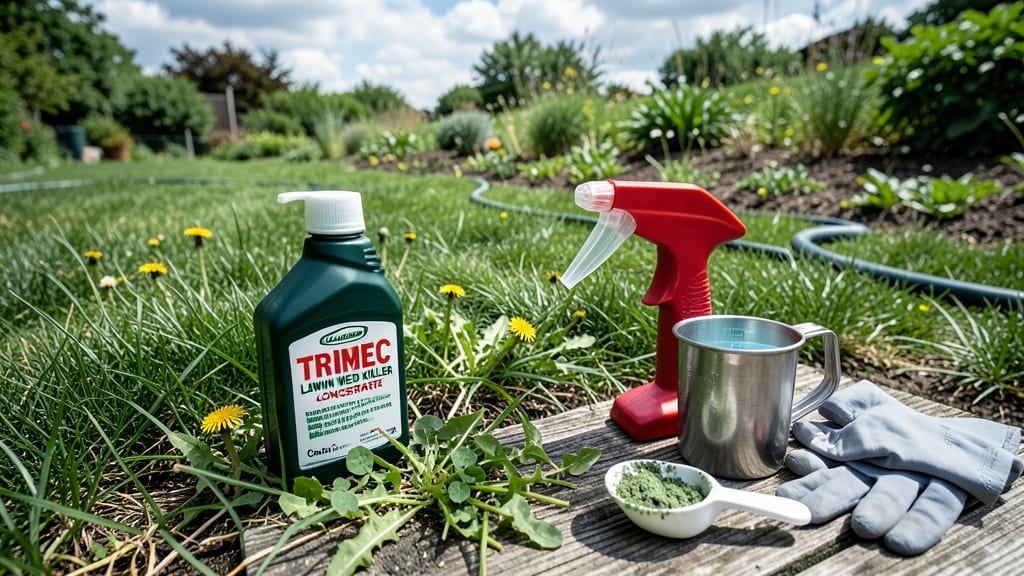
The Trimec lawn weed killer mix ratio is 1.5 oz per gallon of water for broadleaf weeds and 3 oz per gallon for tougher weeds like clover. Always use a pump sprayer for even coverage and apply when grass is dry for best results.
Getting the Trimec mix ratio right is all about matching the weed type to the strength of the herbicide.
The 1.5 oz per gallon concentration targets common broadleaf weeds like dandelions and chickweed, while the 3 oz per gallon formula tackles stubborn perennial weeds such as clover and nutsedge. 🌱 The difference comes from Trimec's active ingredients—2,4-D, dicamba, and mecoprop—working together to penetrate different weed structures.
I always recommend mixing in a clean spray tank first to avoid cross-contamination, then applying on calm days when temperatures are between 60-85°F for maximum effectiveness.
For best results, I use a pump sprayer with a fan nozzle to ensure even distribution, and I never skip the safety gear—gloves, long sleeves, and eye protection.
The key is patience: let the solution sit for 24-48 hours before watering, as this gives the herbicide time to fully absorb into the weeds' systems. If you're dealing with thick weed patches, consider splitting the application into two lighter doses a week apart for better control.
💡 In This Article
- How Trimec’s Active Ingredients Affect Mix Ratios
- Step-by-Step Guide to Mixing Trimec Precisely
How Trimec’s active ingredients affect mix ratios
Trimec’s effectiveness comes from its three active ingredients: 2,4-D, dicamba, and mecoprop.
Each targets different weed types through distinct chemical mechanisms. 2,4-D disrupts plant growth hormones in broadleaf weeds, causing uncontrolled cell division that stunts their development. Dicamba penetrates deeper into plant tissues, making it especially effective against tough perennials like clover, while mecoprop enhances absorption through leaf surfaces. 🌱 The higher concentration (3 oz per gallon) increases these effects by delivering more active ingredients to combat weeds with thicker stems or deeper root systems.
The mix ratio adjusts based on weed resilience because tougher species require higher herbicide concentrations to overcome their natural defenses. For example, clover’s waxy leaf coating repels water-based solutions, so the 3 oz per gallon ratio ensures enough chemical penetrates.
In contrast, dandelions—with thinner leaves—only need 1.5 oz per gallon because their systems are less protected. Soil moisture also plays a role: dry conditions dilute the herbicide less, so mixing ratios stay consistent, while wet soil may require slight adjustments to prevent runoff.
Weather conditions further influence how these chemicals work. Ideal application temperatures range between 60-85°F, as cooler temps slow herbicide absorption while excessive heat can cause evaporation before weeds absorb the treatment.
Humidity matters too—high humidity helps the solution stick to leaves, while dry air may require a surfactant to improve adhesion. This is why early morning applications often yield better results, as dew provides natural moisture to aid absorption. 💧
Another critical factor is the weed’s growth stage. Young weeds absorb herbicides more efficiently than mature ones, which is why early treatment is key. For instance, a 2-inch-tall dandelion will respond better to 1.5 oz per gallon than a fully bloomed one.
The same principle applies to clover: applying the 3 oz per gallon mix when clover is actively growing (spring or fall) maximizes root uptake, whereas treating dormant clover may require multiple applications.
Soil type also affects dilution. Sandy soils drain quickly, so the herbicide may need to be applied more frequently to maintain effectiveness. In contrast, clay soils hold moisture longer, which can extend the active period of the treatment.
Always test a small area first to observe how your specific soil reacts—this helps fine-tune the mix ratio for optimal results without overapplying chemicals. 🌿
Finally, understanding these chemical interactions helps avoid common mistakes. For example, mixing Trimec with other herbicides can alter its effectiveness or create harmful reactions. Always follow the label instructions and avoid combining it with oils or other solvents, which can damage plant tissues or reduce the herbicide’s potency.
The key is precision: the right ratio ensures weeds die while keeping your grass healthy and vibrant. 🌱