
Lawn
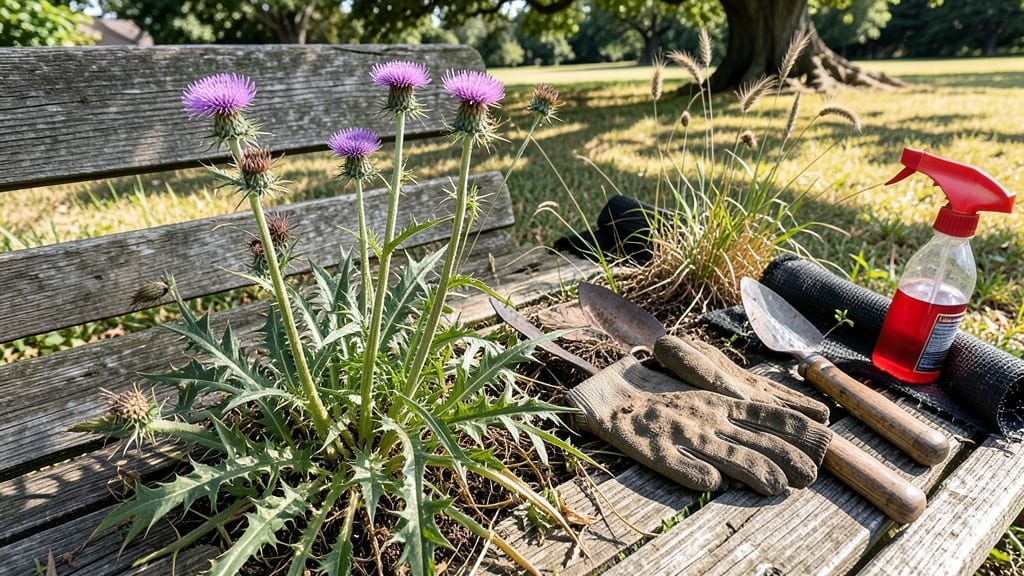
Boiling water kills spiky weeds like nutgrass and crabgrass in minutes—no digging, no chemicals. 🌱 I’ve used this trick for years after pulling weeds by hand left my hands raw and my lawn patchy.
The secret lies in timing: apply when weeds are actively growing (spring or fall) and the soil is moist. You’ll need a large pot of water (at least 2 gallons), a kettle or stovetop, and a sunny day.
Pour the boiling water directly onto the weed’s base, avoiding your grass. The heat kills the root system instantly, and you’ll see results within 24 hours—no more spiky intruders ruining your mow. What you’ll end up with is a smooth lawn patch where weeds once dominated.
The grass recovers faster than you’d expect, and the method works on stubborn thistles too. Just avoid treating broadleaf weeds this way—they’ll spread seeds when they die. This spot treatment works best in small areas or along walkways.
For large lawns, combine it with prevention: overseed bare spots and keep grass healthy. Here’s how to do it right!
Root Causes of Unwanted Lawn Invaders
Seeing spiky weeds pop up in your lawn isn’t just an eyesore—it’s a sign your turf is sending out distress signals. Understanding why these intruders take root helps you tackle them at the source.
Let’s break down the science behind their persistence and how your lawn’s health (or lack thereof) invites them in.
Weeds thrive where grass struggles. When your lawn has bare spots, thin patches, or slow-growing turf, sunlight hits the soil directly—giving weed seeds the perfect conditions to germinate. Why does this happen?
- Poor soil health: Compacted, nutrient-poor, or overly dry soil stunts grass growth, leaving gaps for weeds. Test your soil’s pH and organic matter—ideal lawn soil should be slightly acidic (pH 6.0–7.0) and rich in nitrogen, phosphorus, and potassium.
- Improper watering: Overwatering suffocates roots, while underwatering stresses grass. Deep, infrequent watering (1–1.5 inches per week) encourages strong roots that outcompete weeds.
- Disease or pests: Fungal infections (like brown patch) or grubs munching on roots create weak spots. Inspect for wilting, discolored patches, or mole tunnels—these are red flags.
- Wrong grass type: Cool-season grasses (like Kentucky bluegrass) may struggle in hot climates, while warm-season grasses (like Bermuda) can’t handle frost. Match your grass to your climate zone for resilience.
Actionable fix: Overseed bare areas with the same grass type and apply a slow-release fertilizer to boost density. Later, we’ll cover how boiling water can seal the deal on stubborn weeds.
Weeds like crabgrass and nutsedge love sunlight—so much that they’ll outgrow your grass if given the chance. But why does your lawn suddenly get more sun?
- New construction or tree removal: Clearing trees or buildings exposes soil to direct sunlight, triggering weed seeds to sprout. Pre-emergent herbicides applied in early spring can block germination before weeds take hold.
- Thinning trees/shrubs: Even partial shade loss (e.g., trimming overhanging branches) can shift your lawn’s microclimate. Monitor sunlight patterns—if spots now get >6 hours of sun, they’re high-risk for weeds.
- Grass shade-out: Some weeds (like clover) actually thrive in partial shade while grass weakens. Thin out dense shrubs gradually to restore balance.
Actionable fix: If sunlight exposure is new, mulch bare soil with straw or wood chips to block light until you reseed. For established weeds, boiling water’s high heat denatures their cells instantly—no sunlight needed.
Weeds like nutsedge (a sedge, not a grass) and marsh grass love moisture—so much that soggy lawns become their playground. But why does water become a problem?
| Cause | How It Helps Weeds | Fix It |
|---|---|---|
| Clay soil | Traps water, creating anaerobic (low-oxygen) zones where grass roots suffocate but weeds like nutsedge thrive. | Amend with compost or gypsum to improve drainage. Aerate twice a year to break up compaction. |
| Slope issues | Low spots pool water, while high spots dry out—both stress grass and invite weeds. | Reseed slopes with tall fescue or creeping red fescue (drought-tolerant varieties). Install swales or French drains if needed. |
| Irrigation overspray | Sidewalks or driveways reflect water back onto the lawn, over-saturating soil. | Adjust sprinkler heads to avoid overspray. Water early morning (4–8 AM) to reduce evaporation. |
Actionable fix: Test your soil’s drainage by digging a 12-inch hole—if water doesn’t drain in 4+ hours, you’ve got a problem. For weeds in wet areas, boiling water’s scalding effect works even in saturated soil.
Weeds don’t just appear magically—they hitchhike into your lawn via wind, animals, or even your tools. Common entry points:
- Windborne seeds: Crabgrass and dandelions spread via lightweight seeds carried by breezes. Mow high (3–4 inches) to shade soil and reduce seed dispersal.
- Animal activity: Birds drop weed seeds in droppings, while pets or wildlife (like raccoons) dig up soil, burying seeds deeper where they germinate later.
- Contaminated soil/tools: Topsoil from garden centers, compost piles, or even shovels can carry dormant weed seeds. Solarize soil (cover with clear plastic for 4–6 weeks) to kill seeds before planting.
- Human error: Over-seeding with cheap mixes containing weed seeds (e.g., annual ryegrass can harbor crabgrass). Buy certified “noxious weed-free” seed.
Actionable fix: Clean tools with bleach between uses, and remove weeds before they go to seed (pull dandelions when flower stalks are still green). For existing weeds, boiling water kills seeds on contact—no waiting for germination.
💡 Pro Tip: Most weeds appear in spring and fall—their peak growth periods. Apply pre-emergent herbicides in early spring to block seeds, then retreat after mowing to catch new sprouts. Combine this with spot treatments for stubborn clusters.
Quick Fixes for Stubborn Lawn Invaders
Spiky weeds in your lawn aren’t just an eyesore—they can make mowing a painful chore and turn your yard into a prickly playground for pets and kids. The good news? You don’t need harsh chemicals or expensive tools to tackle them.
Below, we’ve mapped out practical, cause-specific solutions to banish these unwanted guests for good, plus prevention tips to keep them from staging a comeback.
Cause: Lawns with bare patches, weak grass, or poor soil let weeds like crabgrass, nutsedge, or chickweed take root. Fix:
- 🌱 Reseed Bare Spots – Fill thin areas with high-quality grass seed (choose a blend suited to your climate). Water lightly daily for 2–3 weeks to help seeds germinate.
- 💧 Deep Watering – Water deeply 2–3 times per week (early morning is best) to encourage grass roots to outcompete weeds.
- ✂️ Mow High – Set your mower to 3–4 inches. Taller grass shades the soil, preventing weed seeds from sprouting.
💡 Pro Tip: Aerate compacted soil in spring or fall to improve water and nutrient absorption—this gives your grass the upper hand.
Cause: Heavy foot traffic, pets, or clay soil create compacted areas where weeds thrive. Fix:
- 👨🍳 Core Aeration – Rent a core aerator or hire a pro to punch holes in the lawn (spring or fall is ideal). This lets air, water, and nutrients reach grass roots.
- 🌡️ Top-Dress with Compost – Spread a thin layer (¼ inch) of compost over aerated areas. This improves soil structure and feeds grass naturally.
- 🔪 Manual Removal – Pull weeds by hand (use gloves!) when the soil is moist. For deep-rooted weeds like dandelions, dig out the entire root.
✨ Prevention Hack: Walk on wooden boards or paths to reduce soil compaction in high-traffic areas.
Cause: Poor soil health (lack of nitrogen, phosphorus, or potassium) weakens grass, making it vulnerable to weeds. Fix:
- 📊 Soil Test First – Grab a DIY test kit (or send a sample to a local extension office) to identify deficiencies. Adjust with:
- Nitrogen (for green-up): Use organic options like compost tea or slow-release granules.
- Phosphorus (for root growth): Bone meal or rock phosphate can help.
- Potassium (for resilience): Wood ash or greensand boosts strength.
- 🌿 Fertilize Smartly – Apply a balanced fertilizer (like 10-10-10) in early spring and fall. Avoid over-fertilizing, which can burn grass.
- 🍎 Mulch Grass Clippings – Leave clippings after mowing—they decompose into natural fertilizer.
🎯 Long-Term Tip: Add organic matter (like leaf mold or peat moss) to clay-heavy soils to improve drainage and nutrient retention.
Cause: Weeds already dominate, and you need fast results (hello, boiling water!). Fix:
- 🔥 Boiling Water Treatment – For stubborn weeds like clover or chickweed:
- Boil 1–2 gallons of water.
- Carefully pour directly over the weed (avoid grass). The heat kills the plant instantly.
- Repeat for deep-rooted weeds like thistles.
- 🔪 Vinegar + Soap Spray – Mix 1 gallon of white vinegar, 1 cup dish soap, and 1 cup salt. Spray on weeds (test a small area first—it can kill grass too!).
- 🌿 Smothering Method – Cover weed-heavy areas with thick cardboard or newspaper, then top with mulch. Weeds die from lack of sunlight (great for large patches).
⚠️ Caution: Avoid herbicides unless necessary—they can harm pets, kids, and beneficial insects. Opt for natural methods first.
- 🌱 Plant a Dense Lawn – Choose fast-growing grass seed (like perennial ryegrass or tall fescue) to crowd out weeds.
- 🕰️ Stay Ahead of Seeds – Weeds spread via wind and soil. Rake up fallen leaves and debris regularly.
- 🌡️ Adjust Your Mowing – Alternate mowing patterns to prevent soil compaction and encourage grass growth.
- 🍂 Fall Maintenance – Overseed in early fall and apply a winterizer fertilizer to strengthen grass before weeds sprout in spring.
Final Thought: Spiky weeds don’t stand a chance when your lawn is healthy, thick, and well-cared-for. Start with one or two fixes this weekend, and watch your yard transform from prickly to picture-perfect! 🌿✂️
Frequently asked questions
Why does boiling water work better than pulling weeds by hand?
Boiling water kills weeds at the root instantly by denaturing their cells—no regrowth! Pulling often leaves fragments behind that sprout new plants. For spiky weeds like nutgrass, the heat also sterilizes the soil around the roots, preventing future growth. Just be careful to avoid your grass!
Can I use boiling water on all types of spiky weeds?
This method works best on annual weeds like crabgrass or chickweed, but may need multiple treatments for deep-rooted perennials like thistles. For broadleaf weeds (e.g., dandelions), use vinegar instead—boiling water can spread their seeds when they die back. Always test a small area first.
Will boiling water harm my grass or other plants?
Only if you're not careful! The key is precision—direct the water stream onto the weed's base, not surrounding grass. For safety, use a long spout or pour from a height. If you accidentally hit grass, it may yellow temporarily but should recover. Avoid treating on windy days to prevent overspray.
How often should I treat spiky weeds with boiling water?
For active weed growth (spring/fall), treat every 3-5 days until the area is clear. Repeat monthly as prevention during peak growing seasons. For stubborn patches, combine with smothering (cardboard + mulch) for better results. Remember, healthy grass is your best defense against weeds!
What's the best time of day to treat weeds with boiling water?
Early morning is ideal—soil is moist from dew, and weeds are actively absorbing water, making them more vulnerable. Avoid midday when temperatures exceed 85°F, as the heat can damage nearby grass. Cloudy days also work well since there's less risk of overheating your lawn.