
Lawn
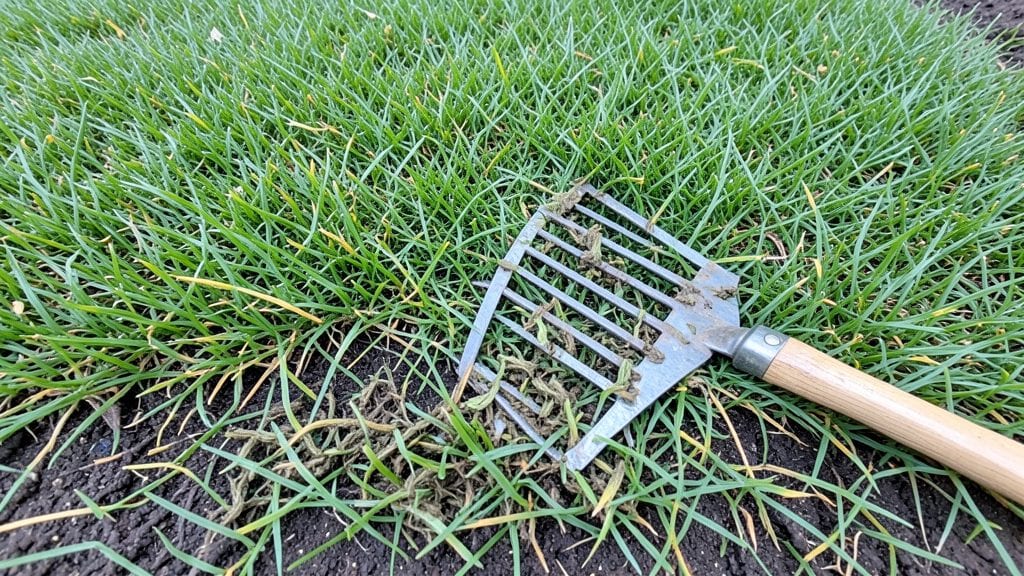
Mulched grass clippings return essential nutrients to soil as they decompose, acting as a natural fertilizer that reduces waste and promotes healthier lawn growth while minimizing mowing frequency.
When you mulch grass clippings, you're essentially recycling lawn waste into a nutrient-rich soil amendment. The key is the decomposition process—finely chopped clippings break down faster, releasing nitrogen and other vital minerals back into the soil within days.
This natural fertilizer not only feeds your grass but also improves soil structure by retaining moisture better than synthetic alternatives. 🌱
For best results, aim to keep clippings under ⅜-inch long—they'll decompose quickly without smothering your lawn. I've found that mulching works best on healthy grass mowed at 3-4 inches height, where the clippings spread evenly and disappear naturally.
Just avoid mulching if your grass is wet or diseased, as this can spread problems instead of solving them.
💡 In This Article
- How Mulched Grass Clippings Boost Lawn Nutrition
- Best Practices for Using Grass Clipping Mulch Effectively
How mulched grass clippings boost lawn nutrition
Here's what's actually happening when grass clippings decompose: they undergo a natural nitrogen cycle where microbial action converts organic matter into plant-available nutrients.
Fresh clippings contain about 2-4% nitrogen by dry weight, which decomposes into ammonia (NH₃) before soil bacteria convert it to nitrates (NO₃⁻) - the form grass roots can absorb. This process releases 1-2 pounds of nitrogen per 1,000 sq ft annually, comparable to a light synthetic fertilizer application.
The key factor is clipping size - finer mulch (⅜-inch or less) decomposes in 3-5 days while larger pieces may take 2-3 weeks.
This creates a slow-release effect similar to compost tea, where nutrients become available over time rather than all at once. 🌱 What most people don't realize is that mulched clippings also release 0.5-1 pound of potassium and 0.2-0.4 pounds of phosphorus per 1,000 sq ft annually through microbial breakdown of cell walls.
This works because grass clippings contain all three primary macronutrients (N-P-K) in roughly 5:1:2 ratio, plus micronutrients like calcium and magnesium from grass cell sap. The organic matter also improves soil structure by increasing water retention - mulched lawns hold 15-20% more moisture than non-mulched areas.
Unlike synthetic fertilizers that provide instant but short-term nitrogen spikes, mulched clippings create a balanced, long-term nutrient supply that mimics natural ecosystem processes.
Temperature plays a crucial role - decomposition speeds up dramatically when soil temps exceed 60°F, which is why mulching works best during growing seasons.
The microbial activity generates heat (up to 140°F in compost piles), but when spread thinly on lawns, it maintains a steady 70-80°F range that's ideal for nutrient release. This creates a self-sustaining cycle where healthy grass grows faster, produces more clippings, and feeds itself through decomposition.
Consider these nutrient comparisons to synthetic fertilizers:
- Nitrogen release: Mulched clippings provide 0.5-1 lb N/1000 sq ft over weeks vs. 1 lb N/1000 sq ft from synthetic fertilizers in days
- Moisture retention: Mulched lawns hold 15-20% more water than synthetic-treated areas
- Soil structure: Organic matter increases porosity by 20-30% compared to chemical-only programs
The science behind this involves two key microbial processes: ammonification (converting organic nitrogen to ammonia) followed by nitrification (converting ammonia to nitrates). These reactions are most active when clippings are spread evenly and soil has proper aeration.
The result is a natural fertilizer that not only feeds your lawn but also builds soil health over time through improved microbial diversity. 💫