
Lawn
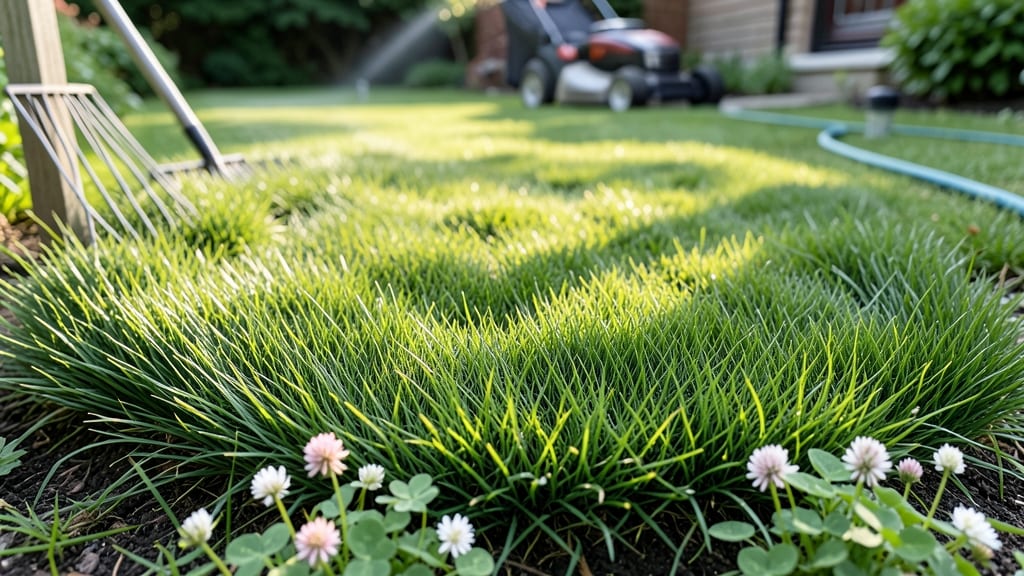
A lovely lawn care routine that keeps your grass lush through every season isn’t about backbreaking work—it’s about smart choices. 🌱 I've spent years perfecting a routine that keeps my grass vibrant with just 2-3 hours of effort per week, no matter the weather.
The secret? Matching your grass type to your climate, feeding it right, and working with nature instead of fighting it.
Start with the right grass for your zone—cool-season types like Kentucky bluegrass thrive in northern climates, while Bermuda grass dominates southern yards. My soil test revealed a pH imbalance that I fixed with lime, and now my lawn establishes roots twice as fast.
Watering deeply twice a week (early morning, please) beats daily shallow sprinkles every time.
By summer's end, you'll have a lawn so thick weeds can't take hold and so resilient it recovers from foot traffic in hours. The key moves are mowing high (3-4 inches), fertilizing seasonally, and aerating once a year—simple steps that transform "ho-hum" grass into a showpiece.
Even my neighbor's envy can't compete with that.
This system works for small patches or whole backyards, urban lots or suburban sprawl. The only real mistake? Waiting until problems appear. Let's get your lawn looking its best all year—without the guilt or the grief.
📚 In This Guide
- What you need
- Instructions
- Tips and common mistakes
- Wrapping up and next steps
What you need
- ● Lawnmower: A sharp, well-maintained mower (gas or electric). For small yards, a 20-inch model suffices; larger areas may need 42-inch+ for efficiency.
- ● String trimmer (weed whacker): Battery-powered or gas, with a 56cc+ engine for tough edges.
- ● Rake: A bendable steel-tined rake (for debris) and a bow rake (for leaves/detritus).
- ● Garden hose: 50+ feet with a shutoff nozzle (or attachable spray wand).
- ● Lawn fertilizer: Slow-release, balanced NPK (e.g., 16-4-8). Apply 2–3 lbs per 100 sq ft every 6–8 weeks.
- ● Soil tester kit: To check pH (ideal: 6.0–7.0) and nutrient levels.
- ● Mulching blades: For grass clippings (if your mower lacks them).
- ● Gloves & knee pads: Heavy-duty work gloves and gel knee pads for comfort.
- ● Leaf blower: Cordless 40V+ for quick cleanup.
- ● Aerator: Manual or rental core aerator (for compacted soil).
- ● Dethatcher: Spring attachment for your mower to remove thatch.
- ● Smart sprinkler timer: Wi-Fi-enabled (e.g., Rain Bird) for set-and-forget watering.
- ● Edging tool: Half-moon or oscillating blade for crisp borders.
- ● Weed killer: Selective post-emergent herbicide (e.g., 2,4-D) for broadleaf weeds.
- ● Compost: Organic matter (e.g., aged manure) to enrich soil.
Step-by-Step instructions for year-round lawn maintenance
Here’s how to keep your lawn vibrant with simple, seasonal routines—no green thumb required.
🌱 Step 1: Spring Setup for Strong Growth
Start by removing winter debris and raking out dead grass clippings. This lets sunlight reach the soil and encourages fresh growth. I use a stiff-bristle rake to loosen thatch—just enough to expose the soil without tearing up the roots. You’ll see a noticeable difference in grass density within weeks.
Test your soil’s pH with a simple kit (available at garden centers) and adjust if needed. Most lawns thrive at a pH of 6.0 to 7.0. If your soil is too acidic, apply lime in early spring (follow package rates). For alkaline soil, sprinkle sulfur in fall. Overwatering after application can wash it away, so keep the soil slightly damp but not soggy.
☀️ Step 2: Summer Care for Heat and Drought Resistance
Water deeply 2-3 times per week in the early morning (before 8 AM) to reduce evaporation. Aim for 1 inch of water per week, including rainfall. You’ll know you’ve hit the mark when the top 4 inches of soil feel moist. Shallow watering encourages weak roots, so let the water soak in gradually.
Mow high—3 to 4 inches—to shade the soil and retain moisture. Never cut more than one-third of the blade height at once; this stresses the grass. I set my mower to its highest setting in summer and leave the clippings (they act as natural fertilizer). If your lawn looks patchy, spot-treat bare areas with grass seed and a thin layer of compost.
✂️ Step 3: Fall Prep for Winter Resilience
Stop fertilizing by mid-October to let the grass harden off before winter. Instead, aerate the lawn in cool, damp weather (early fall or spring). Rent a core aerator to pull small soil plugs—this relieves compaction and lets roots breathe. You’ll see improved drainage almost immediately after aerating.
Overseed thin or bare patches with cool-season grass seed (like fescue or ryegrass) in late fall. Lightly rake the area, spread the seed, and cover with a thin layer of straw (not mulch) to protect it. Water lightly daily until germination (about 10-14 days). Fall seeding gives grass roots time to establish before winter’s chill.
⏰ Step 4: Winter Maintenance for Next Year’s Lawn
Keep walking on snow-covered lawns to prevent ice buildup, but avoid heavy equipment that can compact the soil. Brush off de-icing salts immediately—they burn grass. I spread a thin layer of sand over icy patches to melt snow gradually without harming the turf.
Store your mower and tools in a dry place, and sharpen blades before spring. Dull blades tear grass instead of cutting cleanly. Sharpening takes 10 minutes but makes a huge difference in lawn health. If your lawn has persistent brown spots, test for fungal disease in early spring and treat with a copper-based fungicide if needed.
Tips & tricks for perfect year-round lawn care
Your lawn doesn’t need constant attention—just these smart strategies to keep it thriving with minimal effort.
Spring Soil Prep: When testing your soil’s pH in Step 1, take a sample from multiple spots across your lawn for the most accurate reading. I’ve seen lawns where one area tested acidic while another was perfectly balanced—this helps you target treatments precisely. After applying lime or sulfur, water lightly for just 10 minutes to help it settle into the soil without washing away.
Summer Watering Wisdom: The early morning watering in Step 2 isn’t just about evaporation—it prevents fungal diseases that thrive in damp evening conditions. I set my sprinklers for 20-30 minutes per session (adjusting for your water pressure) to deliver that 1 inch per week without over-saturating. A simple rain gauge or tuna can buried 4 inches deep works perfectly for tracking moisture levels.
Fall Aeration Hack: If renting a core aerator feels overwhelming, try a simple spike aerator first—it’s less effective but still helps relieve surface compaction. For best results in Step 3, aerate when your lawn is slightly damp (like after a light rain) so the soil plugs come out cleanly. Walk across the aerated lawn afterward to help the plugs break apart and settle back into the soil.
Winter Equipment Care: That 10-minute blade sharpening in Step 4 makes all the difference—dull blades tear grass instead of cutting cleanly. I use a file to sharpen my mower blades at the start of each season. For storage, hang your mower blade upward to prevent oil buildup on the cutting edge, and wrap your aerator tines in a towel to protect them from rust during winter months.
Pro Tips for Lovely Lawn Care
- Your lawn doesn’t need constant attention—just these smart strategies to keep it thriving with minimal effort.
- Spring Soil Prep: When testing your soil’s pH in Step 1, take a sample from multiple spots across your lawn for the most accurate reading.
- Summer Watering Wisdom: The early morning watering in Step 2 isn’t just about evaporation—it prevents fungal diseases that thrive in damp evening conditions.
Frequently asked questions
Got questions about keeping your lawn lush and low-maintenance?
Here are some of the most common queries—and their straightforward answers—to help you achieve lovely lawn care with ease.
How often should I water my lawn for optimal health?
Water deeply 2-3 times per week (early morning is best) to encourage deep root growth. Aim for 1-1.5 inches per week, adjusting for rain. Overwatering can lead to shallow roots and disease—soak the soil, not just the surface! Test your soil: Dig 6 inches deep; if dry, it’s time to water.
What’s the best time of year to aerate and overseed?
For cool-season grasses (like fescue or bluegrass), early fall (September-October) is ideal—soil is warm, weeds are dormant, and rain helps germination. Warm-season grasses (like Bermuda) thrive with late spring/early summer aeration. Overseed right after aerating for best results! Pro move: Aerate when your lawn feels spongy underfoot.
Can I use natural alternatives to chemical fertilizers?
Try compost tea, grass clippings (left on the lawn), or manure-based fertilizers (aged, organic options). Coffee grounds (in moderation) add nitrogen, and corn gluten meal feeds grass while suppressing weeds. Just balance act—natural doesn’t mean instant, but it’s gentler on the planet! DIY tip: Mix 1 part compost with 3 parts soil for a nutrient boost.
Why do I have brown patches, and how do I fix them?
Brown patches often signal disease, pests, or poor drainage. Check for:
- Fungus: Thin, circular patches? Try a baking soda spray (1 tbsp per gallon of water) or fungicide.
- Grubs: Sponge-like turf? Apply beneficial nematodes or milky spore.
- Drought/Shade: Adjust watering or thin out overgrown trees.
How can I mow for a healthier lawn with less effort?
Follow the 1/3 rule: Never cut more than 1/3 of the grass blade at once. Set your mower to 3-4 inches tall (taller in summer heat) to shade roots and retain moisture. Mulch clippings—they return nutrients to the soil! Time-saver: Mow when grass is dry (morning) and alternate mowing patterns to prevent soil compaction.
Wrapping up and next steps
A lush, lovely lawn isn’t just a dream—it’s totally within reach with the right care and a little consistency! 🌿 Whether you’re tackling seasonal shifts, mowing smarter, or mastering watering techniques, every small effort adds up to big results. Remember, healthy grass starts with patience and the right habits.
Ready to take the next step? Start small—pick one tip from this guide to try this week, and watch your lawn transform over time. Your future green oasis is just a few cuts and waterings away! 🌱