
Light Requirements
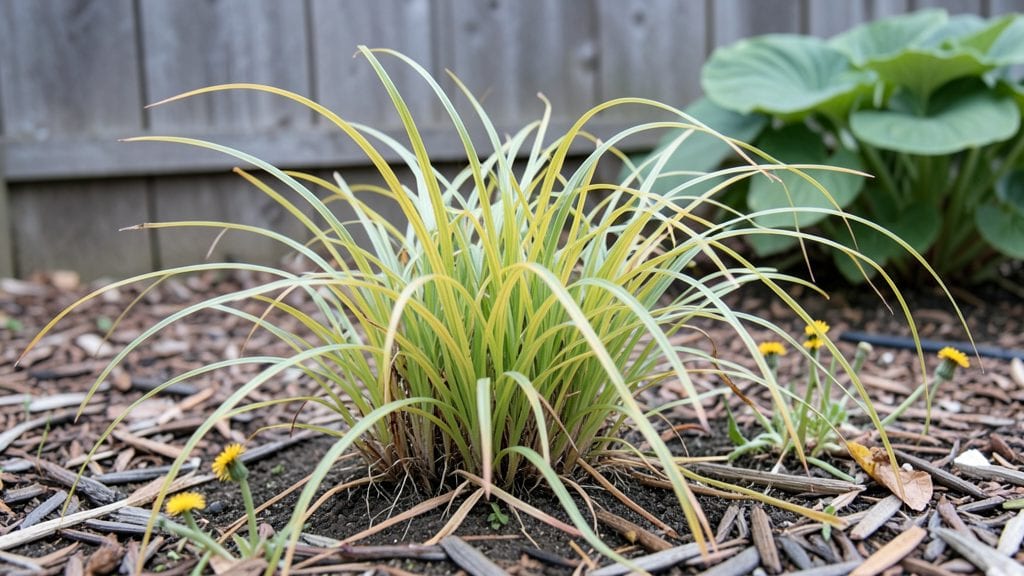
Japanese forest grass thrives in full sun with proper care: choose drought-resistant varieties like Hakonechloa macra 'Aureola', water deeply but infrequently, and amend soil with organic matter to retain moisture while allowing drainage. Mulch heavily to protect roots from extreme heat and wind exposure.
Many gardeners assume these ornamental grasses need shade, but the right varieties actually crave sunlight—it intensifies their golden hues and strengthens their upright growth. 🔥 The key lies in their deep root systems, which pull moisture from lower soil layers while their narrow leaves reflect excess heat.
For example, 'Aureola' develops its signature golden stripes more vividly in full sun, though it still needs protection from harsh afternoon rays during peak summer months.
My biggest tip? Start with well-draining soil mixed with compost—this prevents root rot while keeping moisture available. I’ve found that planting in late spring after the last frost gives them time to establish before summer’s intensity.
And while mulching is essential, use straw or pine needles instead of thick bark, which can suffocate the roots in dry conditions.
💡 In This Article
- How Japanese Forest Grass Adapts to Full Sunlight
- Best Practices for Planting and Maintaining Sun-Loving Varieties
How Japanese forest grass adapts to full sunlight
The secret to Japanese forest grass thriving in full sun lies in its specialized leaf anatomy and root structure. These grasses evolved with silver-blue or golden variegation that reflects up to 30% more sunlight than dark green foliage, reducing heat absorption.
Their narrow, upright blades create natural airflow, preventing overheating of the growing tips. This adaptation is particularly evident in Hakonechloa macra varieties, where the golden stripes intensify under direct sunlight through increased chlorophyll production in the green tissue.
Below-ground, their fibrous root systems extend 12-18 inches deep, accessing moisture from lower soil layers where evaporation rates are slower. Miscanthus sinensis, for example, develops a dense network of rhizomes that spread horizontally, creating a natural cooling system by shading soil surfaces.
What's fascinating is how these roots release exudates that encourage beneficial soil microbes, which in turn improve water retention during dry spells. This biological partnership explains why established clumps often survive weeks without supplemental watering.
Sunlight intensity triggers dramatic color changes in ornamental grasses. 'Aureola' develops its signature golden stripes more vividly in full sun due to increased anthocyanin production, while 'Alpina' maintains its silver-blue hue through epicuticular wax layers that reflect UV light.
During peak summer, many varieties enter a partial dormancy—growth slows but roots remain active, allowing them to rebound quickly when temperatures drop. This seasonal adaptation is why late spring planting works best: the grass establishes roots before summer's intensity, while still benefiting from 6-8 hours of morning sun daily.
Not all Japanese forest grasses handle full sun equally. Hakonechloa varieties like 'Feather Grass' prefer partial shade in hot climates, while Miscanthus species such as 'Malepartus' thrive in full sun exposure with minimal care.
The key difference lies in their leaf pubescence—fuzzy leaf surfaces on Miscanthus reduce water loss through transpiration, while Hakonechloa's smoother blades require more frequent moisture. This explains why mulching with straw (which breaks down slowly) works better than bark chips for sun-loving varieties.
Coloration changes aren't just aesthetic—they're survival mechanisms. The golden hues in 'Aureola' indicate carotenoid accumulation, which protects chlorophyll from photooxidation during high-light conditions. In contrast, silver varieties like 'Alpina' use their reflective surfaces to maintain cooler leaf temperatures, sometimes 10°F lower than surrounding air.
This thermal regulation allows them to photosynthesize efficiently even when other plants wilt. The trade-off? Silver varieties may require 20% more frequent watering than golden types due to their higher reflective heat absorption.
What most gardeners overlook is how sunlight affects dormancy cycles. In Zone 5-6 climates, full-sun exposure can trigger earlier fall dormancy by 4-6 weeks compared to shaded plants. This is why late-season pruning (after first frost) is crucial—it prevents new growth that would be killed by winter cold.
The science here involves phytochrome pigments that detect light duration, signaling the plant to conserve energy. For container-grown specimens, this means choosing heat-tolerant cultivars like Miscanthus 'Gracillimus', which maintains its upright form even under 100°F+ temperatures.
For the best results, pair sun-loving varieties with ground covers like Ajuga or Sedum to reduce soil heat. I've found that planting in raised beds with 30% perlite improves drainage while maintaining moisture—critical for grasses that need 1-1.5 inches of water weekly during peak sun months.
The payoff? Your grasses will develop denser clumps with more vibrant coloration, proving that full sun isn't a challenge but an opportunity for these resilient plants. ✨