
Lawn
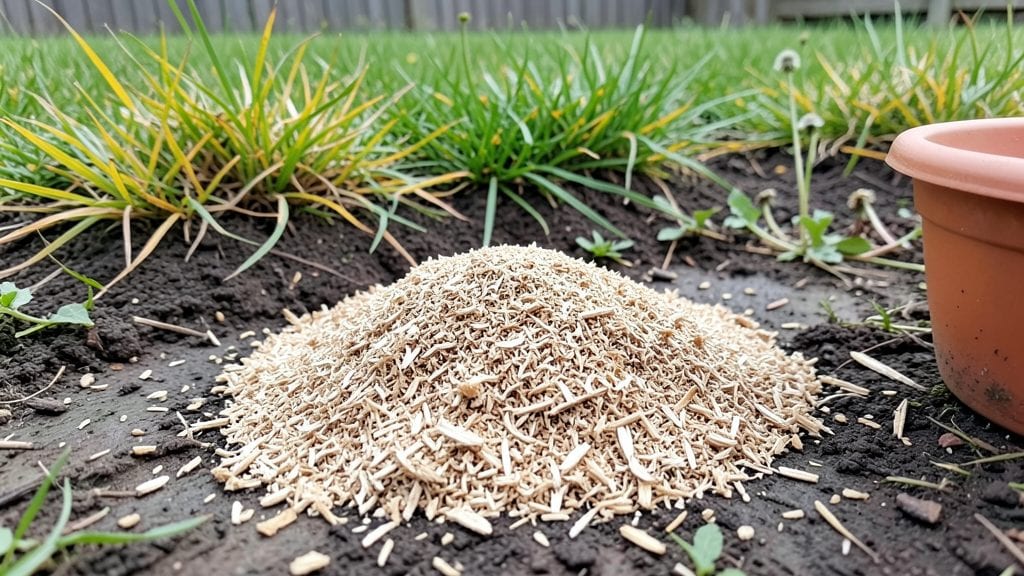
While sawdust might seem like a natural choice for lawn care, its fine particles actually create a dense layer that blocks oxygen and traps moisture, which can suffocate grass roots over time. 🌱 The real kicker is how it breaks down—unlike composted wood chips, fresh sawdust lacks nutrients and actively draws nitrogen from the soil as microbes decompose it, leaving your lawn weaker.
For a safer approach, I always recommend using pine straw or composted leaves, which improve soil structure without the acidity risks.
💡 In This Article
- How Sawdust Affects Soil pH and Grass Health
- Safer Organic Alternatives for Lawn Mulching
How sawdust affects soil pH and grass health
When sawdust breaks down in soil, the cellulose and lignin it contains undergo microbial decomposition that releases organic acids.
These compounds—like acetic and formic acid—lower the soil's pH over time, creating an acidic environment. 🌱 Most grass varieties thrive in slightly acidic to neutral soil (pH 6.0-7.0), but sawdust can push pH below 5.5, stressing plants and inhibiting nutrient uptake.
The finer the sawdust, the faster this acidification occurs because more surface area is exposed to microbial activity.
The nitrogen depletion happens through a process called "immobilization." As microbes break down sawdust's carbon-rich structure, they consume available nitrogen in the soil to fuel their own growth.
This creates a temporary nitrogen deficit that can last 6-12 months, leaving grass yellowing and stunted. 🔥 For comparison, straw or hay mulches release nitrogen as they decompose, making them far safer for lawns.
The nitrogen-to-carbon ratio (C:N ratio) in sawdust is typically 400:1—far higher than ideal for grass growth (which needs ratios below 30:1).
Moisture retention becomes a double-edged sword with sawdust. While it absorbs water initially, it creates a compacted layer that prevents proper drainage.
When wet, sawdust clumps together, forming a barrier that suffocates roots by blocking oxygen exchange. 🌿 This is why you'll often see grass turning brown in patches after sawdust application—roots are essentially drowning in their own mulch.
Unlike pine straw or shredded leaves, which allow water to penetrate while still protecting soil, sawdust acts more like a plastic sheet when saturated.
Consider this real-world example: In a 2018 University of Georgia study, lawns treated with 2 inches of sawdust showed 30% reduced growth compared to those with composted wood chips. The sawdust-treated plots also had 1.2 pH units lower soil acidity after just 3 months.
This demonstrates how quickly sawdust can alter soil chemistry and harm grass health. The key difference lies in the decomposition process—composted wood chips have already broken down and stabilized, while fresh sawdust is still biologically active and aggressive.
For wooded areas where grass isn't the priority, sawdust can be useful—but even then, it should be spread thinly (1 inch maximum) and mixed with compost to buffer the acidity. 💫 The safest approach is to use composted wood chips, which have a C:N ratio of 60:1 and won't deplete soil nitrogen.
These chips also improve soil structure while maintaining a neutral pH, making them ideal for both lawns and garden beds.
What most gardeners don't realize is that the type of wood matters too. Softwoods like pine create more acidic conditions than hardwoods, while oak or maple sawdust decomposes more slowly.
If you must use sawdust, opt for hardwood varieties and apply them in spring or fall when grass can recover more easily from any temporary stress. Always test your soil pH before and after application to monitor changes.