
Lawn
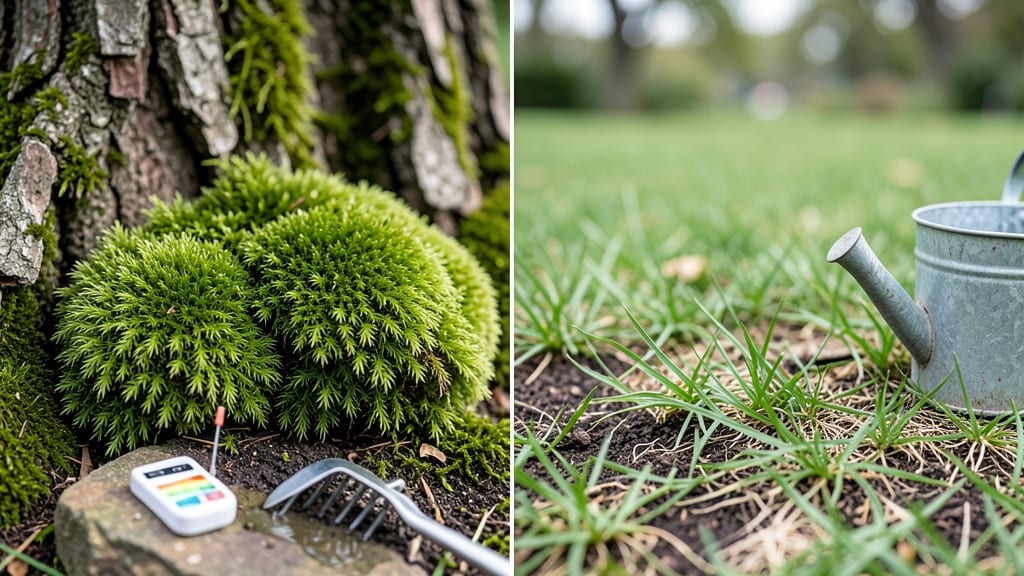
Moss in lawns isn't inherently bad—it often thrives where grass can't survive, signaling compacted soil, poor drainage, or acidic conditions, but it also helps retain moisture and suppress weeds. However, it can outcompete grass, indicating deeper lawn health issues that need addressing.
Moss actually plays an ecological role by preventing erosion and improving soil structure in problem areas. 🌱 The real issue arises when it spreads across healthy grass patches, smothering roots and creating an unsightly, spongy lawn.
I've seen moss take over after heavy foot traffic compacts soil or when lawns get too much shade—it's nature's way of telling you something's off with your growing conditions.
If you're dealing with moss dominance, the key is to fix the underlying issues first. Aerating compacted soil, adjusting pH levels, and improving drainage can help grass reclaim its space naturally.
For stubborn patches, targeted treatments like sand top-dressing or iron-based solutions work best when applied during cooler months when moss is most active.
💡 In This Article
- Why Moss Grows in Lawns and Its Environmental Role
- When and How to Remove Moss from Your Lawn
Why moss grows in lawns and its environmental role
Moss thrives in lawns primarily because it's a hardy survivor that dominates where grass struggles. It prefers acidic soil with a pH below 6.0—often found in shaded areas where grass can't photosynthesize efficiently.
Moss also loves compacted soil, which grass roots can't penetrate, and it thrives in poorly drained spots where water pools after rain. 🌱 The spongy texture you see isn't just coincidence—moss cells retain 20 times their weight in water, making it perfect for moisture retention in dry or damp conditions.
Ecologically, moss serves important functions that benefit lawn ecosystems. Its dense mat prevents soil erosion by holding particles together, especially on slopes or in high-traffic areas. It also acts as a natural weed suppressant by outcompeting invasive plants for nutrients.
However, the trade-off is that moss doesn't contribute to soil fertility like grass does—it lacks deep roots and doesn't decompose into nutrient-rich organic matter. This creates a vicious cycle where lawns remain nutrient-poor, perpetuating moss dominance.
The real problem arises when moss spreads beyond its natural niche. Unlike grass, which has extensive root systems, moss grows in shallow mats that smother grass roots by blocking sunlight and air circulation.
Studies show moss can reduce grass growth by up to 40% in heavily infested areas, creating that familiar spongy, uneven feel underfoot. The texture difference is dramatic—where grass feels firm, moss gives a soft, springy sensation that's unappealing for play or aesthetics.
Seasonal patterns also play a role in moss behavior. It becomes most active during cooler months (spring and fall) when temperatures hover between 50-65°F, while grass growth slows. This timing explains why moss often appears lush and green when grass looks brown and dormant.
The contrast highlights why moss isn't just a cosmetic issue—it's a biological indicator of environmental conditions that grass can't tolerate.
Consider these key factors when evaluating moss's role in your lawn:
- Soil pH: Test your soil—moss prefers acidic conditions (pH 4.5-6.0) while most grasses thrive at 6.0-7.5
- Shade exposure: Moss dominates in areas with less than 4-6 hours of direct sunlight daily
- Moisture levels: It thrives in consistently damp conditions (soil moisture > 30% by volume)
- Compaction: Heavy foot traffic creates soil density that grass can't penetrate
The environmental benefits of moss make it a double-edged sword. While it prevents erosion and suppresses weeds, its presence signals that your lawn's growing conditions need adjustment. The challenge is finding that balance—preserving moss's ecological benefits while encouraging grass to reclaim its rightful place in your landscape. 🌿