
Lawn
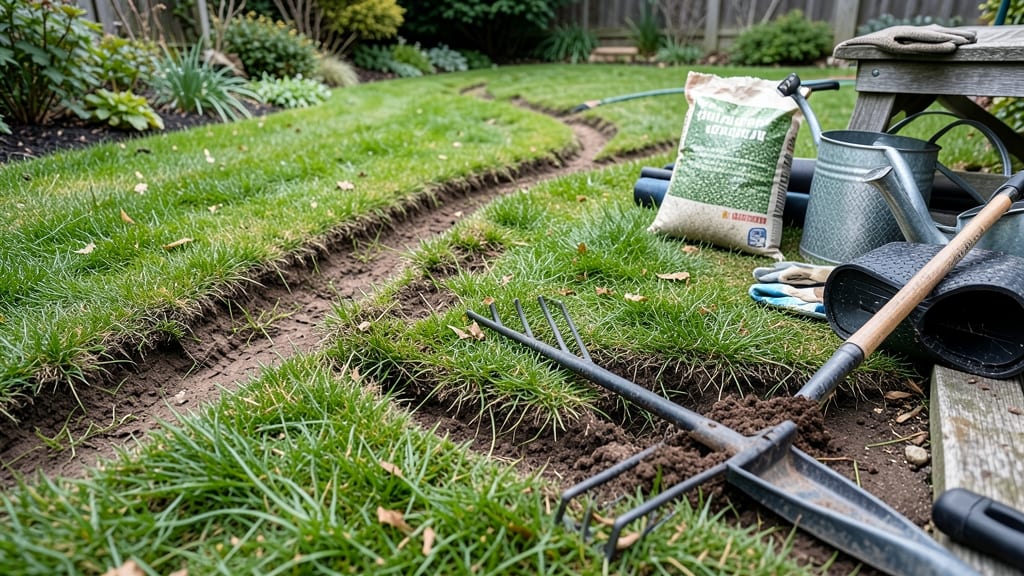
Fixing tire tracks in your lawn doesn’t require a miracle—just a little elbow grease and the right technique. 🌱 I’ve turned my kids’ muddy tire trails into smooth, green lawns in under an hour, and you can too.
The secret lies in leveling the soil and giving grass a fighting chance to recover.
You’ll need a sturdy rake, some topsoil or compost, grass seed or sod, and a watering can or hose. The process starts by raking out the ruts, then filling them with soil, and finally covering with seed or sod.
It’s simpler than it sounds—and way better than watching those tracks turn into permanent scars.
Within weeks, you’ll see new grass sprouting, filling in the gaps until the tracks disappear completely. The key is keeping the area moist during recovery, which helps roots establish faster. Before you know it, your lawn will look like you never drove over it at all.
For next time, consider laying down gravel paths or protective mats where vehicles park. It’s a small investment that saves hours of repair work down the road. Trust me, your lawn will thank you!
📚 In This Guide
- What you need
- Instructions
- Tips and common mistakes
- Wrapping up and next steps
What you need
- ● Lawn rake: A sturdy, medium-tooth rake (12–18 inches wide) for lifting and leveling soil.
- ● Garden roller or heavy board: A 3–5-foot-wide roller (or a flat, heavy board) for compacting the soil back into place.
- ● Water source: A garden hose with a sprinkler attachment (or a watering can for smaller areas).
- ● Topsoil or sand: A 5–10-gallon bag of topsoil or coarse sand (for filling deeper grooves).
- ● Garden gloves: A pair of durable gloves to protect your hands.
- ○ Knee pads (optional but helpful): For extra comfort during raking.
- ● Lawn seed: If your lawn has bare spots, a small bag of grass seed can help repair them.
- ● Lawn fertilizer: A light application to encourage faster recovery.
- ● Plastic sheeting: To cover the area overnight if working in hot/dry conditions (helps retain moisture).
- ● String line or stakes: For marking deeper tracks before filling.
Step-by-step instructions for fixing tire tracks in your lawn
Here's how to restore your lawn's smooth look after heavy equipment passes through.
🪴 Step 1: Wait for the Right Conditions
Don't rush to fix tracks right after driving over the lawn. Wait until the soil is slightly damp—this helps the grass blades stand up straight and makes repairs easier. You'll know it's ready when footprints leave a faint impression but don't sink completely. If the ground is bone-dry or muddy, wait until conditions improve.
Check the weather forecast too. You want 24-48 hours of dry weather after repairs so the soil can firm up properly. Rain immediately after fixing tracks will wash away your work and create new ruts.
✂️ Step 2: Rake the Tracks Gently but Thoroughly
Use a bow rake (not a leaf rake) to break up the compacted soil. Work in small sections, raking across the tracks at a 45-degree angle to lift the soil without tearing grass. You're not trying to level the area—just loosen the compacted layer so grass can recover.
Focus on the center of the tracks first where the soil is most compressed. Lightly rake the edges too, but avoid pulling grass out of the surrounding turf. Stop when the soil looks rough and uneven—this is normal and necessary for the next step.
💧 Step 3: Fill and Level the Tracks
Spread a thin layer of topsoil or compost (about ¼ inch thick) over the loosened tracks. Use a hand tamper or flat board to press it down gently—you're not compacting, just settling the material. The goal is to create a smooth, even surface that matches the surrounding lawn height.
For deeper tracks, you might need two passes—first to fill the lowest points, then to level everything. Check your progress by walking across the area: if your feet sink more than ½ inch, add a little more soil and tamp again. Don't overfill, though—too much soil will create bumps that look worse than tracks.
☀️ Step 4: Roll for a Professional Finish
Rent or borrow a lawn roller (the kind with water in it) to press the repaired area firmly. Fill the roller halfway with water for the right weight—too much will compact the soil again. Roll slowly over the tracks in straight lines, overlapping slightly with each pass.
This step is what gives you that "instant smoothness" the tracks ruined. You'll see the grass blades stand up straighter immediately, and the area will blend seamlessly with the rest of your lawn. If you don't have a roller, use a heavy board or even a filled garbage can to press down the soil evenly.
🌱 Step 5: Water and Recover
Give the repaired area a light watering right after rolling to help settle the soil. Use a gentle sprinkler setting—you're not trying to soak the ground, just help the grass blades lie flat. Water just enough so the soil looks damp but not puddled at the surface.
For the next 7-10 days, keep the area lightly watered (about ¼ inch per week) to encourage grass recovery. Avoid heavy foot traffic—even kids playing will push the grass back down. In about 2-3 weeks, the tracks should be completely unnoticeable as the grass fills in the repaired spots.
Tips & tricks for perfect lawn track recovery
Here's what I've learned from fixing dozens of tire tracks—these tricks make all the difference between a temporary fix and a lasting repair.
Timing is Everything: That 24-48 hour dry weather window after repairs is non-negotiable. I learned this the hard way when a sudden rainstorm turned my freshly repaired tracks into a muddy mess. Check your weather app's hourly forecast—you want those dry conditions guaranteed. If rain is predicted within 24 hours, delay your repair until conditions improve.
Raking Technique Matters: In Step 2, when you're working with that bow rake, think of it like fluffing a pillow—you want to lift and separate the soil fibers without tearing the grass. I always start with the center of the tracks where the soil is most compacted, then work my way outward. Pro tip: If you're dealing with really deep tracks, consider doing a second lighter pass after the soil has settled for 10-15 minutes—this helps prevent over-disturbing the grass roots.
Soil Selection Strategy: The instructions mention topsoil or compost, but here's what I've found works best: For sandy soils, add a little compost to improve moisture retention. For clay-heavy soils, mix in some sand to help with drainage. I keep a small bag of each on hand specifically for track repairs. And remember, that ¼-inch layer should be just enough to fill the depressions—any more and you'll create new bumps.
Roller Alternatives: Don't have a lawn roller? No problem. I've used everything from a filled garbage can (with water or sand for weight) to a heavy piece of plywood dragged across the area. The key is creating even pressure—move slowly and overlap your passes by about 6 inches. For really large areas, even a filled wheelbarrow can work in a pinch. Just make sure whatever you use is heavy enough to press the soil firmly without compacting it too much.
Pro Tips for Fix Tire Tracks In Lawn
- Here's what I've learned from fixing dozens of tire tracks—these tricks make all the difference between a temporary fix and a lasting repair.
- Timing is Everything: That 24-48 hour dry weather window after repairs is non-negotiable.
- Raking Technique Matters: In Step 2, when you're working with that bow rake, think of it like fluffing a pillow—you want to lift and separate the soil fibers without tearing the grass.
Frequently asked questions
about fixing tire tracks in your lawn—because we’ve all been there! Here’s what you need to know before rolling up your sleeves.How soon after tire tracks appear should I fix them?
Act fast—ideally within 24–48 hours. Fresh tracks are easier to repair because the grass blades haven’t flattened permanently. If you wait longer, the soil compaction becomes harder to reverse, and recovery takes more effort (and time!).
Can I fix tire tracks in my lawn during rain or after heavy dew?
Wait for dry conditions! Working on wet grass or soil can worsen the damage by spreading mud or making the area even more compacted. Aim for a sunny day when the ground is firm but not bone-dry. If you must work in damp conditions, use a tarp to cover the area overnight to let it dry.
What if my lawn has deep ruts? Will raking alone fix them?
For deep ruts, raking is just the first step. After loosening the soil, fill the grooves with a mix of topsoil and compost (or sand for sandy soils) to level them out. Overseed the area afterward to encourage grass regrowth. Think of it like patching a pothole—you need more than just a rake!
Is there a way to prevent tire tracks from forming in the first place?
Drive slowly over your lawn, especially with heavy equipment. Use gravel paths or mulch mats near garages or driveways to redirect traffic. If you must park on the grass, place wooden boards or pallets under tires to distribute weight. A little prevention goes a long way!
How long until my lawn looks “fixed” after repairing tracks?
With proper care, you’ll see noticeable improvement in 1–2 weeks, but full recovery can take 4–6 weeks, depending on grass type and weather. Water lightly daily (not soaking) to help roots establish, and avoid foot traffic until the area is firm. Patience is key—your lawn will bounce back!
Wrapping up and next steps
Fixing tire tracks in your lawn doesn’t have to be a hassle—with the right tools and techniques, you can restore that lush, smooth look in no time! 🌱 Whether you opt for raking, rolling, or a mix of both, consistency is key to achieving professional results.
Remember, patience and a gentle touch will keep your grass healthy and happy.
Now that you’re armed with the know-how, grab your tools and get started! Your lawn will thank you with a vibrant, track-free glow. For extra tips, check out our FAQ section or explore more lawn care hacks to keep your outdoor space looking its best.