
Lawn
How do you remove moss from your lawn? The answer is simpler than you think—boiling water spot treatment is the fastest way to shock it out without harsh chemicals. 🌱 I’ve battled it for years, and the method works by targeting the moss directly while leaving your grass intact. The key is precision: you want to kill the moss without scorching the soil or nearby grass. You’ll need a kettle (or large pot) of freshly boiled water, a watering can with a narrow spout, and a pair of gloves. On a dry, sunny day, pour the boiling water directly onto the moss patches—about 1 quart per square foot. The heat kills the moss instantly, and within 24-48 hours, it’ll turn brown and crumble away. What you’ll end up with is a lawn that looks healthier and greener in just a couple of days. The grass roots will recover quickly, and you’ll avoid the slow, labor-intensive process of raking or chemical treatments. This method works best for small patches—for larger areas, combine it with sand top dressing. Just avoid doing this in freezing temperatures or on wet grass, or you’ll risk damaging your lawn further.
📚 In This Guide
- What you need
- Instructions
- Tips and common mistakes
- Wrapping up and next steps
What you need
- ● Boiling water – At least 1-2 gallons per affected spot (use a large pot or kettle with a spout for precision).
- ● Heavy-duty gloves – Heat-resistant (e.g., silicone or rubber) to protect your hands from scalding.
- ● Long-handled spoon or ladle – For safely pouring boiling water without spills.
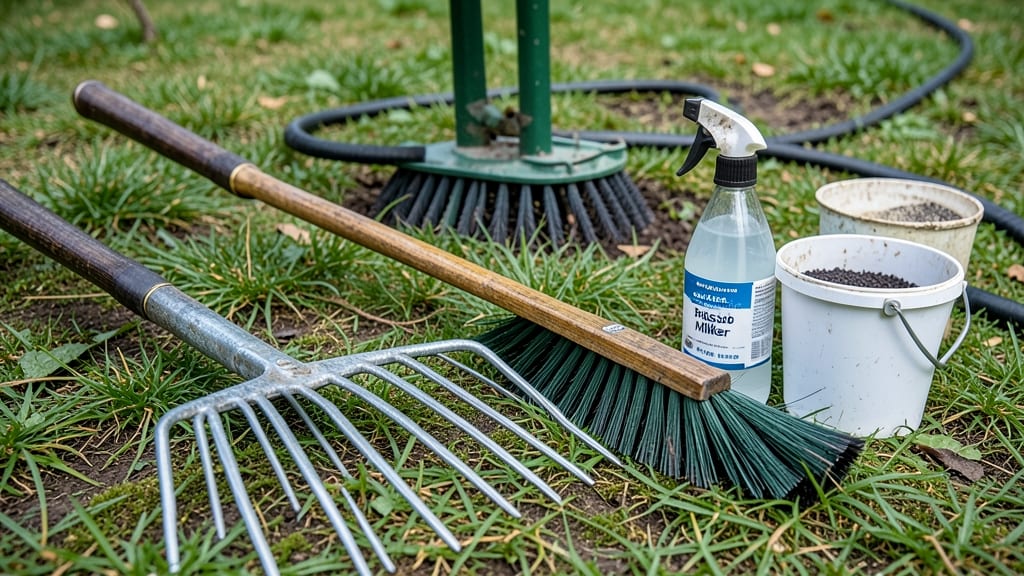
- ● Garden rake or stiff brush – To scrape away dead moss after treatment.
- ● Garden hose with nozzle – For rinsing the area post-treatment.
- ○ Lawn fertilizer (optional but recommended) – A nitrogen-rich fertilizer (like 20-0-5) to encourage grass regrowth after moss removal.
- ● Vinegar (white, 5% acetic acid) – Mix with water (1:1 ratio) as a pre-treatment to weaken moss before boiling.
- ● Baking soda or lime – Sprinkle lightly after treatment to raise soil pH (moss thrives in acidic conditions).
- ● Lawn aerator or garden fork – If moss is deep-rooted, aerate the soil to improve drainage.
- ● Weed killer (non-selective) – For stubborn moss patches that won’t budge with boiling water alone.
Step-by-Step instructions for removing moss from your lawn
Here's the fast, targeted method I swear by for spot-treating moss without harming your grass.
💧 Step 1: Identify and Mark the Moss Patches
First, walk your lawn on a dry morning to spot the moss—it'll feel spongy underfoot while grass stays firm. I like to mark the edges with small flags or a garden hose outline so I don't miss any spots. Moss thrives in shady, damp areas, so check under trees and along fences first.
Use a 12-inch ruler to measure each patch. You'll want to treat at least 6 inches beyond the visible moss to prevent regrowth. Write down the measurements if you're treating multiple areas—this helps when mixing boiling water later.
🔥 Step 2: Prepare the Boiling Water Solution
For each square foot of moss, you'll need 1 gallon of freshly boiled water. I use a large stockpot or kettle—never reuse cooled water, as it loses effectiveness. Bring water to a rolling boil (you'll see steady bubbles breaking the surface) and let it sit for 2-3 minutes to reach its peak temperature.
Add 1 tablespoon of white vinegar per gallon to boost the treatment's ability to kill moss cells. The vinegar also helps break down the moss's waxy coating, making it easier to remove later. Keep the solution hot—never let it cool below 180°F—or it won't work.
✂️ Step 3: Apply the Boiling Water Spot Treatment
Pour the boiling water directly onto the moss in slow, even streams. Start at the center of the patch and work outward to ensure full coverage. You'll see the moss turn white almost instantly—that's your signal it's working. For thick patches, repeat the treatment once more after 24 hours to guarantee complete eradication.
Here's the thing—don't pour on grass. The heat will scorch healthy blades, so only target the moss. I use a small spray bottle filled with cool water to mist the surrounding grass immediately after treatment. This protects the edges and keeps your lawn looking neat.
🌱 Step 4: Rake and Reseed the Treated Areas
Wait 48 hours after treatment before raking—this gives the boiling water time to fully penetrate the moss. Use a stiff-bristled lawn rake to remove all dead moss and debris. You'll notice the area looks patchy, but this is normal. Rake until you see the bare soil underneath.
Sprinkle grass seed over the treated spots, using 1/4 pound per 100 square feet. Lightly press the seed into the soil with the back of a rake or a lawn roller. Water gently but thoroughly—soaked but not soggy—to help the seed establish. Avoid walking on the area for at least 7 days to prevent disturbing the new seedlings.
☀️ Step 5: Maintain and Prevent Regrowth
For the next 2 weeks, keep the treated areas moist but not waterlogged. You'll see new grass blades emerge in 7-10 days, but don't be alarmed if the coverage looks uneven at first. Once the new grass reaches 2 inches tall, gradually reduce watering to encourage deep root growth.
To prevent moss from coming back, improve your lawn's drainage and sunlight. Aerate the lawn in the fall and top-dress with 1/4 inch of sand to help water drain away from the roots. If your lawn stays shady, consider overseeding with moss-resistant grass varieties like tall fescue or perennial ryegrass.
Tips & tricks for fast moss removal from your lawn
This method works fast, but these little tweaks make it even more effective—and save you time and frustration.
Timing Secret: The 2-3 minutes you let the water boil after reaching a rolling boil is crucial. This ensures the water reaches its peak temperature of 180°F—any less heat and the moss won't die completely. I always use a thermometer to verify the temperature, especially if I'm treating large areas. The extra minute at peak heat makes all the difference for stubborn patches.
Application Technique: When you're pouring the boiling water in Step 3, work in small sections—about 1 square foot at a time. This prevents the water from cooling too quickly as you treat larger areas. I keep a thermometer nearby to ensure the water stays above 180°F when I pour it. Also, pour slowly and evenly to avoid splashing onto nearby grass, which can cause scorching.
Preventing Regrowth: The 6-inch buffer you treat beyond the visible moss edge in Step 1 is your best defense against regrowth. I've found that moss roots can spread invisibly into healthy grass, so don't skimp on this step. After treatment, I like to apply a thin layer of sand (about 1/4 inch) over the entire treated area—this improves drainage and makes future moss growth much harder.
Reseeding Strategy: Don't rush the 48-hour wait before raking in Step 4. This waiting period allows the boiling water to fully penetrate and kill the moss roots, making removal easier. I've learned the hard way that rushing this step often leaves behind moss fragments that regrow. Once you rake, I recommend using a moss-resistant grass seed blend—it's worth the extra cost for long-term results.
Pro Tips for How Do You Remove Moss From Your Lawn
- This method works fast, but these little tweaks make it even more effective—and save you time and frustration.
- Timing Secret: The 2-3 minutes you let the water boil after reaching a rolling boil is crucial.
- Application Technique: When you're pouring the boiling water in Step 3, work in small sections—about 1 square foot at a time.
Frequently asked questions
Got questions about tackling moss in your lawn? Here are some of the most common ones—and their answers—to help you get back to a lush, green yard without the fuss.
Can I use boiling water on all types of grass?
Boiling water is generally safe for most cool-season grasses like fescue, ryegrass, and bluegrass, but it can damage warm-season grasses like Bermuda or Zoysia. Always test a small area first, and avoid using it on drought-stressed or thin grass. If you’re unsure, opt for a moss-killing spray or iron-based treatments instead.
How long does it take for moss to disappear after treatment?
With boiling water, you’ll see results within 24–48 hours, but full moss removal can take 1–2 weeks, depending on the severity. Reapply if needed, and keep an eye out for regrowth—especially in shady, damp spots. For faster results, combine boiling water with a moss killer or overseeding.
Is boiling water safe for pets and kids?
Boiling water is not pet- or child-safe while it’s being applied, so keep them away until the area cools completely (about 30–60 minutes). Once dry, the treated spot is safe, but avoid letting pets walk on it for a day or two to prevent irritation. For extra caution, use a moss killer labeled as pet-friendly instead.
Will moss come back if it rains after treatment?
Rain won’t undo your efforts, but it can slow down the drying process, delaying moss death by a day or two. If moss keeps returning, it’s a sign of poor drainage, shade, or compacted soil. Improve airflow, aerate your lawn, or consider overseeding with shade-tolerant grass to prevent future outbreaks.
What’s a natural alternative to boiling water?
If boiling water isn’t your style, try these eco-friendly options:
- White vinegar: Spray undiluted vinegar on moss (avoid grass).
- Baking soda: Sprinkle on mossy areas, then rinse with water.
- Salt: Use sparingly (can harm soil long-term).
- Iron sulfate: A chemical-free moss killer that also fertilizes.
Wrapping up and next steps
Removing moss from your lawn doesn’t have to be a daunting task—with the right tools, like boiling water spot treatment, you can restore a lush, healthy green space in no time! 🌿 Whether you’re tackling small patches or larger areas, consistency and proper aftercare are key to preventing moss from returning.
Now that you’ve got the know-how, roll up your sleeves and give your lawn the fresh start it deserves!
Ready to take action? Start with one section of your lawn today and watch the transformation unfold. Your future self (and your grass) will thank you!