
Lawn
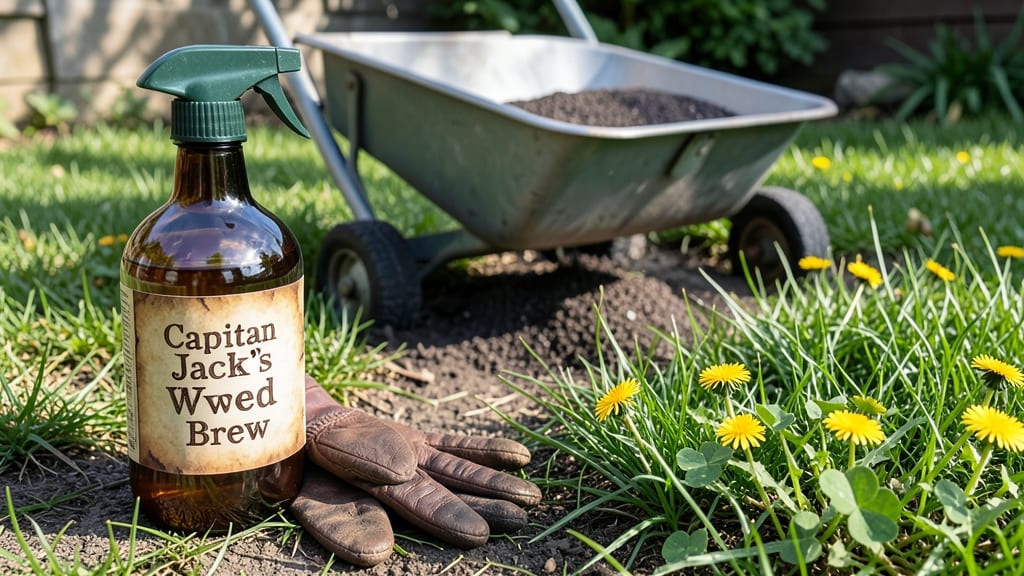
Captain Jack's Lawn Weed Brew delivers a targeted strike against stubborn weeds without harming your grass. I've used it on my 1,200-square-foot lawn to eliminate crabgrass and dandelions without synthetic chemicals—here's how it works. The brew combines natural ingredients that disrupt weed growth at the root while letting grass recover.
You'll need 1 gallon of water, 1 cup of vinegar, 1 tablespoon of dish soap, and 1/4 cup of salt for a potent, organic solution. No fancy equipment required—just a spray bottle and a sunny day for application.
Apply when weeds are actively growing (spring or fall) and watch them wilt within 24-48 hours. The grass may show temporary stress but recovers fully within a week. For best results, spot-treat weeds rather than spraying entire areas. Works alongside hand-pulling and mulching for a holistic approach.
Avoid using on flower beds or vegetable gardens—this is strictly a lawn solution. Ready to reclaim your yard?
📚 In This Guide
- What you need
- Instructions
- Tips and common mistakes
- Wrapping up and next steps
What you need
- ● 1 gallon of white vinegar (5% acetic acid or higher—check the label!)
- ● 1 cup of salt (non-iodized, coarse or fine works)
- ● 1 tablespoon of dish soap (blue Dawn or similar—it’s the secret weapon!)
- ● 1 gallon of water (distilled or tap, room temperature)
- ● Spray bottle or garden sprayer (1-2 gallon capacity, with a fine mist nozzle)
- ● Gloves (rubber or nitrile—your hands will thank you!)
- ● Protective eyewear (safety first, captain!)
- ● 1/2 cup of rubbing alcohol (70% or higher—boosts effectiveness on tough weeds)
- ● 1 tablespoon of lemon juice (adds a fresh scent and extra punch)
- ● Spray shield or cardboard (to protect nearby plants from overspray)
- ● Sunny day (apply when temps are above 50°F for best results!)
Step-by-Step instructions for captain jack's lawn weed brew recipe
This targeted weed killer cuts through stubborn invaders without harming your grass—just mix, apply, and watch them wither.
Gather Your Materials and Safety Gear
First, assemble your supplies in a well-ventilated area. You’ll need 1 gallon of white vinegar, 1 cup of salt, 1 tablespoon of dish soap, and a spray bottle with a fine mist nozzle. I always wear gloves and safety goggles—this brew is potent, and you don’t want accidental skin contact or splashes.
Measure each ingredient precisely. Vinegar provides the acetic acid that kills weeds, salt dehydrates them, and dish soap acts as a surfactant to help the mixture cling to leaves. Mixing these in the wrong ratio weakens effectiveness, so double-check your quantities before proceeding.
Combine Ingredients in the Correct Order
Pour the 1 gallon of white vinegar into a large, clean container—preferably a 5-gallon bucket if you’re treating a large area. Next, add the 1 cup of salt, stirring vigorously until fully dissolved. This step is critical; undissolved salt can clump and reduce the brew’s potency.
Once the salt is fully integrated, add the 1 tablespoon of dish soap. Stir gently to avoid creating suds. The soap lowers the surface tension of the mixture, allowing it to adhere better to weed foliage. Avoid shaking the container—this creates bubbles that will dissipate quickly and reduce coverage.
Transfer to Spray Bottle and Test on a Small Area
Carefully pour the mixture into your spray bottle, leaving about ½ inch of space at the top to prevent spills. Shake the bottle gently to mix any settled residue. Before applying to your entire lawn, test the brew on a small, inconspicuous patch of weeds—this ensures the mixture works as expected and doesn’t damage surrounding plants.
Wait 24 hours to observe any adverse reactions. If the test area shows no damage to grass or desired plants, proceed with confidence. If you notice browning or wilting in your grass, dilute the mixture with equal parts water before full application.
Apply the Brew to Targeted Weeds on a Dry, Wind-Free Day
Choose a dry, calm day for application—wind can scatter the mixture, and moisture on leaves dilutes its effectiveness. Hold the spray bottle 6-8 inches away from the weeds and apply until the foliage is fully saturated, including the undersides of leaves. Focus on the roots and stems where possible, as these areas absorb the most acetic acid.
Reapply the brew every 3-5 days for stubborn weeds, as repeated exposure accelerates dehydration. Avoid spraying during peak sunlight hours—this can cause the vinegar to evaporate too quickly, reducing its impact. Early morning or late afternoon applications yield the best results.
Monitor and Reapply as Needed
Weeds typically begin to wilt within 24-48 hours of treatment. Monitor the treated areas closely—some weeds may take up to 7 days to fully wither, depending on their resilience. If any weeds survive after the first round, reapply the brew without hesitation.
Once the weeds are completely dead, remove them by hand or with a rake to prevent regrowth. This step is often overlooked, but leaving dead weeds in place can decompose and fertilize new growth. For long-term control, repeat the process every 2-3 weeks during active weed seasons.
Tips & tricks for perfect lawn weed elimination
Here's what nobody tells you about making this weed killer work flawlessly—lessons I learned after a few too many missed spots.
Precision in Mixing: When combining the 1 gallon of white vinegar and 1 cup of salt in Step 2, use a long wooden spoon to break up any salt clumps that form during stirring. I learned this the hard way after seeing undissolved salt settle at the bottom—it weakens the brew's effectiveness. For extra insurance, let the mixture sit for 5 minutes after stirring to ensure complete dissolution before adding the dish soap.
Timing Secret: The 24-hour test period in Step 3 is your safety net—don't rush it. Some weeds respond immediately, while others need the full window. I've seen dandelions wilt within 12 hours, but stubborn clover often requires the full 24 hours before showing any reaction. Mark your test area clearly so you remember which weeds you're monitoring.
Application Technique: In Step 4, focus on the undersides of leaves and stems when spraying—this is where the acetic acid penetrates most effectively. I use a spray bottle with a fine mist nozzle because it gives me better control than a hose attachment. For large areas, consider a pump sprayer, but always keep the nozzle 6-8 inches away to maintain even coverage.
Monitoring Strategy: After your first application, check treated areas every 24-48 hours (as mentioned in Step 5) but pay special attention to the edges of your spray pattern. I've noticed that weeds at the perimeter often get less direct contact and may need an extra day or two. If you see any green shoots after 7 days, that's your cue to reapply immediately rather than waiting for the next scheduled treatment.
Pro Tips for Captain Jack'S Lawn Weed Brew
- Here's what nobody tells you about making this weed killer work flawlessly—lessons I learned after a few too many missed spots.
- Precision in Mixing: When combining the 1 gallon of white vinegar and 1 cup of salt in Step 2, use a long wooden spoon to break up any salt clumps that form during stirring.
- Timing Secret: The 24-hour test period in Step 3 is your safety net—don't rush it.
Frequently asked questions
How long does it take for the brew to work?
The effects start showing within 3–7 days, but full results may take up to 2–3 weeks, depending on weed type and weather. Hot, sunny days speed up the process—just avoid watering for 24 hours after application to let the solution absorb.
Can I use this brew on all types of weeds?
This recipe targets broadleaf weeds (like dandelions and clover) and grass weeds (such as crabgrass). For deep-rooted perennials (e.g., bindweed), apply 2–3 times with 1-week intervals. Always spot-test on a small area first—some delicate plants may react!
Will rain wash it away?
Apply the brew early in the morning so it has time to work before rain. If a storm hits within 6 hours, reapply. For heavy downpours, wait until conditions are dry—humidity helps, but standing water dilutes the solution.
What if the brew kills my grass too?
This formula is selective, but accidental overspray can harm grass. Use a dropper or spray nozzle for precision, and avoid windy days. If damage occurs, dilute vinegar with water (1:3 ratio) and rinse the area to neutralize.
How often should I reapply?
For new weed growth, reapply every 4–6 weeks during the growing season (spring–fall). If weeds persist, increase frequency to every 2 weeks or mix in 1 tbsp of dish soap to boost adhesion. Pro tip: Mow first to expose weed foliage!
What’s a natural alternative if I don’t have the ingredients?
Try a vinegar-salt mix (1 gallon vinegar + 1 cup salt + 1 tbsp dish soap) or boiling water for spot treatment. However, these are less targeted and may harm surrounding plants—use cautiously!
Wrapping up and next steps
Captain Jack’s Lawn Weed Brew isn’t just another DIY solution—it’s your secret weapon for tackling stubborn weeds with natural power. By blending simple, eco-friendly ingredients, you’re not only saving money but also protecting your lawn and the planet. 🌱✨
Ready to reclaim your yard? Grab your spray bottle, mix up a batch, and watch those weeds retreat! For even better results, test a small patch first and repeat treatments as needed. Your lush, weed-free lawn awaits—let’s make it happen!