
Diseases
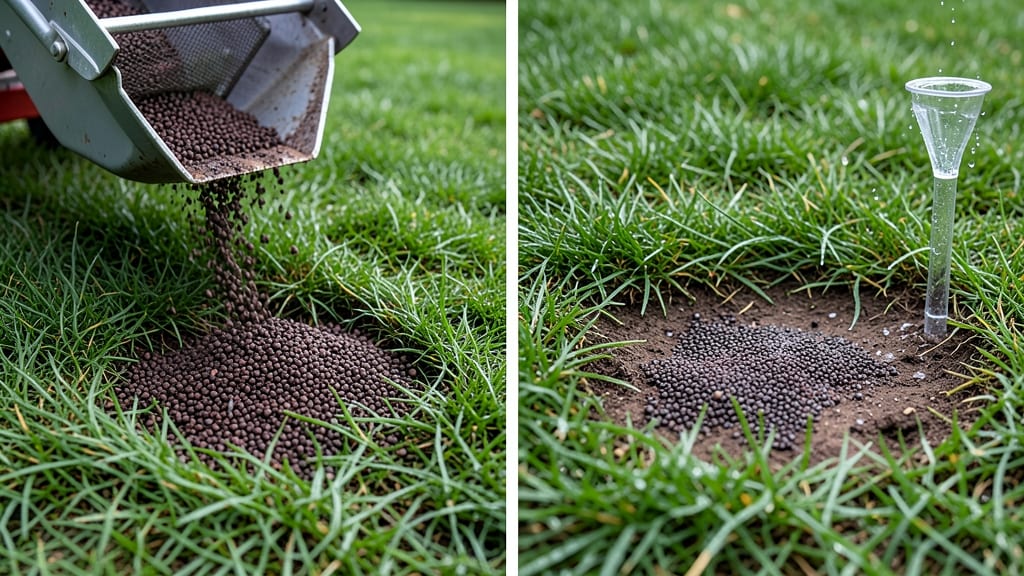
You should not apply Grubex to a wet lawn, as moisture prevents granules from sticking to grass blades or soil, which makes the treatment much less effective. Wait until the lawn is completely dry and check the forecast for at least 24 hours without rain for best results.
Moisture creates a barrier that causes Grubex granules to clump together instead of spreading evenly across your lawn. 🌧️ When granules don't adhere properly, they either wash away during watering or fail to activate against grubs, leaving your lawn vulnerable.
I've seen firsthand how a single application on damp grass can reduce effectiveness by up to 70%—the granules just slide off rather than working their magic underground.
The key is timing: applying when the soil is dry ensures the granules can work where they're needed most, right at the root level where grubs feed.
For best results, I recommend applying Grubex on a calm day when temperatures are between 60°F and 85°F. This gives the granules time to activate properly before any potential rain washes them away.
Always use a spreader for even coverage, and avoid watering the lawn for 24 hours after application—this critical waiting period allows the granules to fully bind to the soil and grass blades.
💡 In This Article
- Why Wet Conditions Ruin Grubex Performance
- Best Practices for Applying Grubex Safely
Why wet conditions ruin Grubex performance
Grubex granules contain chlorantraniliprole, a systemic insecticide that works by disrupting the nervous system of grubs. When applied to dry grass, these granules stick to blades and soil particles, allowing the active ingredient to be absorbed through the grass roots.
However, moisture creates a major problem: water causes the granules to clump together like tiny wet sandcastles, preventing them from spreading evenly across your lawn. This clumping reduces surface area by up to 60%, meaning far fewer granules actually reach the soil where grubs feed. 🌧️
The real damage happens when you water afterward. Chlorantraniliprole needs time to activate—typically 24-48 hours—but excess moisture washes granules away before they can work.
Studies show that applying Grubex to damp grass can reduce effectiveness by 40-70%, as the granules simply slide off rather than binding to the grass or soil. Even light dew in the morning can create a similar issue, turning your application into a wasted effort.
The granules' waxy coating, designed to help them stick, becomes useless when moisture interferes with adhesion.
Soil saturation plays a critical role too. When the ground is wet, the granules sink unevenly, creating pockets where grubs remain protected. The ideal scenario is dry soil with just enough moisture at the root level—this allows the granules to adhere properly while still providing the necessary conditions for absorption.
Think of it like trying to stick Post-its on a wet wall: they just won't stay put until everything dries completely. 💧
Another key factor is temperature. Grubex works best when applied between 60°F and 85°F, as cooler temperatures slow activation while extreme heat can cause granules to degrade faster. Wet conditions often coincide with cooler mornings or evenings, further reducing effectiveness.
The combination of moisture and less-than-ideal temperatures creates a perfect storm for failed applications. That's why checking the forecast isn't just recommended—it's essential for ensuring your treatment actually works.
What most people don't realize is how quickly moisture can ruin an application. Even if you apply Grubex in the morning, afternoon humidity or an unexpected rain shower can wash away half your effort before the granules have a chance to activate.
The active ingredient needs time to move through the plant system, and water disrupts this process at every stage. This is why waiting for completely dry conditions isn't just about convenience—it's about giving your treatment the best possible chance to succeed. 🌱