
Lawn
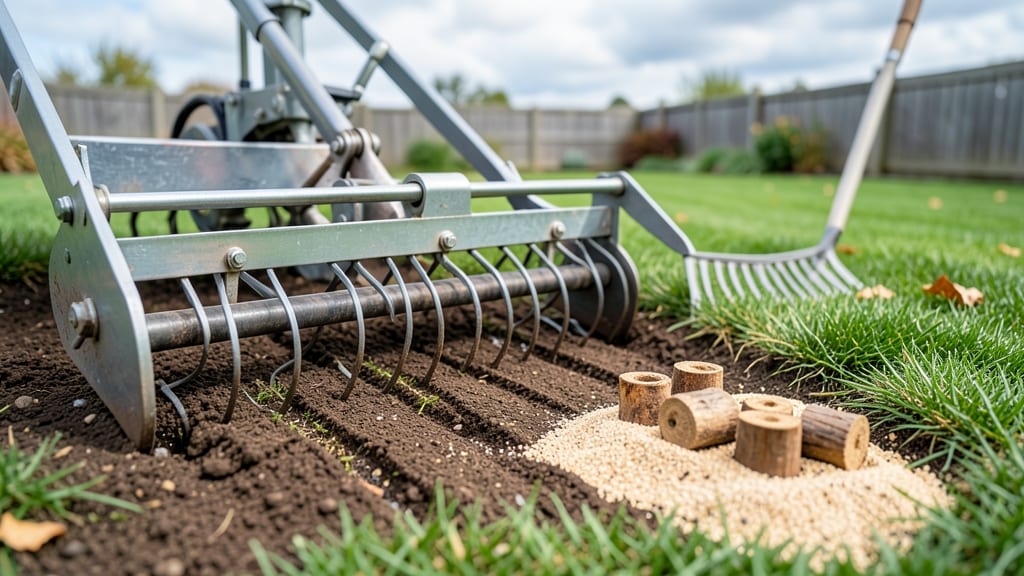
Aerating your lawn before and after overseeding is the secret weapon for that thick, weed-resistant turf everyone envies. 🌱 I’ve seen bare patches transform into lush carpets after just one proper aeration session—it’s not luck, it’s science.
The key is timing: do it when the soil is moist but not soggy, and you’ll create the perfect conditions for grass roots to thrive.
Most people skip the prep work and wonder why their lawn doesn’t improve. Here’s the deal: mow short a day before, water deeply the night before, and rent a core aerator (or hire one) to pull out small soil plugs—this relieves compaction and lets nutrients reach the roots.
Warm-season grasses like Bermuda need aeration in late spring or early fall, while cool-season grasses like Kentucky bluegrass do best in early fall.
After aerating, you’ll notice those little soil plugs—don’t toss them! Spread them out to dry, then crumble them back into the lawn. Then overseed and top-dress with compost. Within 4-6 weeks, you’ll see new grass sprouting where there were once thin spots.
The real magic happens when you repeat this process every 12-18 months—it’s the difference between a lawn that fights weeds and one that smothers them.
Pro tip: Avoid aerating when the ground is frozen or waterlogged—you’ll just compact it more. And if you’re dealing with heavy clay soil, consider renting a spike aerator first to break up the worst of it. Trust me, your lawn will thank you for the extra care.
📚 In This Guide
- What you need
- Instructions
- Tips and common mistakes
- Wrapping up and next steps
What you need
- ● Core Aerator (Machine or Manual): Rental: 18-24” spike or core aerator (check local hardware stores or rental shops).
- ● Purchase: Gas- or electric-powered core aerator (e.g., blank">Brinkmann or blank">Sun Joe models).
- ● Lawn Mower: Set to 1-2 inches mowing height (sharp blades preferred).
- ○ Rake or Dethatcher: Bow rake (for debris removal) or a vertical mower/dethatcher (optional but helpful).
- ● Overseeding Supplies (Post-Aeration): Seed: 5-10 lbs of blank">high-quality turfgrass seed (e.g., Kentucky bluegrass, fescue, or ryegrass—match your climate!).
- ● Spreaders: 1 blank">broadcast spreader (for even distribution).
- ● OR 1 blank">drop spreader (for precision).
- ● Fertilizer: Starter fertilizer (high in phosphorus, e.g., 10-20-10 ratio) or a blank">slow-release organic option.
- ● Watering Tools: Hose with soaker hose or sprinkler (or a blank">rain barrel for eco-friendly hydration!).
- ● Lawn Roller: Lightweight (50-100 lbs) to gently press seed into soil after spreading.
- ● Soil Test Kit: To check pH and nutrient levels (blank">DIY kits available at garden centers).
- ● Compost or Topsoil: ¼” layer to top-dress after aeration (improves seed contact).
- ● Knee Pads or Work Gloves: For comfort during manual tasks.
- ● Weather App: To track ideal aeration conditions (cool temps, no rain for 24-48 hours post-aeration).
- ● Timing: Aerate in spring (early) or fall (late) when soil is moist but not soggy.
- ● Lawn Condition: Mow 24-48 hours before aeration (remove thatch/debris).
- ● Avoid aerating if soil is frozen, waterlogged, or overly dry.
- ● Safety Gear: Closed-toe shoes, sunglasses, and sunscreen (if working in full sun).
Step-by-step guide to aerating your lawn for a thick, weed-resistant turf
Here’s how I prep my lawn for aeration—both before and after—to keep grass lush and weeds at bay.
🌱 Step 1: Mow and Prep the Lawn Before Aerating
Mow the lawn to a height of 1 to 1.5 inches—this ensures the soil is exposed and the aerator can work effectively. I skip the bagging step to avoid missing any patches. If your grass is long or tangled, give it a closer trim a day before aerating to prevent clumping.
Remove any debris like leaves or branches, as they’ll clog the aerator tines. I like to rake lightly in one direction to lift loose thatch without tearing up the grass. This step keeps the aerator running smoothly and prevents uneven holes.
⏰ Step 2: Aerate at the Right Time and Depth
Spring and fall are the best times—when soil is soft and slightly moist (like a damp sponge). I aerate in early morning or late afternoon to avoid stressing the grass in peak heat. For most lawns, set the aerator to 2 to 3 inches deep—this breaks up compacted soil without damaging roots.
Overlap passes by 6 inches to ensure full coverage. You’ll see plugs of soil left behind—that’s normal! These decompose naturally and return nutrients to the lawn. If your soil feels rock-hard, water it 24 hours before aerating to soften it.
💧 Step 3: Water and Fertilize Immediately After Aerating
Water the lawn deeply right after aerating to help the soil plugs settle and encourage root growth. Aim for 1 inch of water—this keeps the soil moist for the next 7-10 days, which is critical for recovery. I set my sprinkler to run for 30-45 minutes to avoid runoff.
Apply a slow-release fertilizer with high potassium (like 10-10-20) to strengthen roots. Spread it evenly over the aerated areas and water again lightly to activate it. This step jumpstarts recovery and helps the lawn bounce back faster.
☀️ Step 4: Maintain for Optimal Results
Keep the lawn well-watered for the next 2 weeks, but avoid heavy foot traffic until the soil plugs break down. You’ll notice new grass growth in 7-14 days—that’s your sign it’s working! If weeds pop up, pull them early before they take hold.
Mow again at 1.5 to 2 inches once the grass regrows to encourage deeper roots. I like to leave the clippings to return nutrients to the soil. Repeat aeration once a year (spring or fall) for long-term thickness and weed resistance.
✂️ Step 5: Overseed for a Dense Lawn (Optional but Recommended)
If your lawn looks thin, overseed 2-4 days after aerating while the soil is still loose. Use a high-quality grass seed matched to your climate and spread it evenly. Lightly rake the area to ensure seed-to-soil contact, then water daily for 10-15 minutes to keep the seedbed moist.
Keep the area moist for 3-4 weeks until new grass reaches 3 inches tall. This step fills in bare spots and crowds out weeds naturally. I’ve seen dramatic improvements in lawn density after just one overseeding session!
Tips & tricks for perfect lawn aeration
Real talk: Aerating your lawn transforms it from struggling to stunning—but only if you nail these key details. Here's what nobody tells you about getting the best results.
Timing Secret: The 24-hour watering before aeration isn't just about softening soil—it's about creating the perfect moisture window. Test your soil by squeezing a handful: it should hold together but not be sticky. If it crumbles, water more and wait another 12 hours. Too much moisture delays aeration by clogging the machine, while too little means you're just punching holes in hardpan.
Equipment Strategy: Renting a core aerator (the one that pulls soil plugs) is worth it for most lawns, but if you're using a spike aerator, you're actually making the problem worse. Spike aerators only create small holes that don't relieve compaction—they're like using a toothpick to eat a steak. For small areas, a manual aerator with hollow tines works well, but expect to spend 20-30 minutes on a 1,000 sq ft lawn.
Post-Aeration Care: That 1 inch of water after aeration should go down slowly—like a gentle rain, not a flood. Set your sprinkler to run for 30 minutes, then check soil moisture. If water pools on the surface, reduce time by 5 minutes. The goal is to moisten 4-6 inches deep, not just wet the surface. This encourages roots to grow downward where they'll find nutrients and water.
Weed Prevention: The 7-10 day window after aeration is prime time for weeds to sprout. Keep an eye out and pull them when they're just seedlings—it takes 10 seconds per weed and prevents them from establishing deep roots. I've found that a quick walk through with a dandelion puller (the long-handled kind) makes this job almost enjoyable. The key is consistency: check daily for the first week, then weekly for the next three weeks.
Pro Tips for Aerate Lawn Before And After
- Real talk: Aerating your lawn transforms it from struggling to stunning—but only if you nail these key details.
- Timing Secret: The 24-hour watering before aeration isn't just about softening soil—it's about creating the perfect moisture window.
- Equipment Strategy: Renting a core aerator (the one that pulls soil plugs) is worth it for most lawns, but if you're using a spike aerator, you're actually making the problem worse.
Frequently asked questions
Got questions about aerating your lawn?
You’re not alone! Here are answers to the most common concerns—from timing to troubleshooting—to help you get the best results before and after aeration.
When is the best time to aerate my lawn?
The ideal times are early fall (September–October) or spring (April–May), when soil is warm and grass is actively growing. Avoid aerating during droughts or extreme heat—soil should be slightly moist for optimal results. Cool-season grasses thrive with fall aeration, while warm-season grasses benefit from spring.
How often should I aerate my lawn?
For most lawns, aerate once a year. High-traffic areas or compacted soil may need it twice annually (spring + fall). Over-aerating can damage roots, so stick to the schedule unless you notice severe compaction or thinning grass. Think of it like a spa day for your lawn—once a year keeps it lush!
What if my lawn looks worse after aerating?
Don’t panic! Aeration creates small holes, making grass temporarily look patchy or uneven. This is normal—roots are stretching to fill the gaps. Water lightly for 1–2 weeks and avoid heavy foot traffic. Within 2–4 weeks, your lawn should bounce back thicker and greener. Patience pays off!
Is renting an aerator worth it, or should I hire a pro?
Renting a core aerator (the best type) costs $50–$100/day and works for small to medium lawns. For large yards or severe compaction, hiring a pro ($100–$300) saves time and ensures even aeration. Weigh your DIY skills and lawn size—both options work, but pros handle tough spots effortlessly.
Can I aerate if my lawn is wet or muddy?
Nope!
Aerate only when soil is moist but not soggy—think of it like a damp sponge, not a mud puddle. Wet conditions clump soil, making holes uneven and damaging equipment. Wait 1–2 days after rain or water deeply the day before aerating. Your lawn (and your tools) will thank you!
What’s the difference between spike aeration and core aeration?
Spike aeration (using solid tines) only pokes holes but doesn’t remove soil plugs, which can compact soil further. Core aeration (removing small soil plugs) is the gold standard—it relieves compaction and boosts root growth. Skip the spikes unless you’re prepping for overseeding in very loose soil.
Wrapping up and next steps
Aerating your lawn in spring and fall is one of the simplest yet most effective ways to achieve a thick, vibrant, and weed-resistant turf—without breaking the bank!
By giving your grass roots the room to breathe, you’re not just fighting weeds; you’re setting the stage for a lawn that’s healthier, greener, and more resilient year-round.
Ready to see the difference? Start small—pick a section of your lawn this weekend, gather your tools, and get aerating! And remember: consistency is key. With a little effort now, you’ll be rewarded with a lawn that’s the envy of the neighborhood. 🌱✨