
Lawn
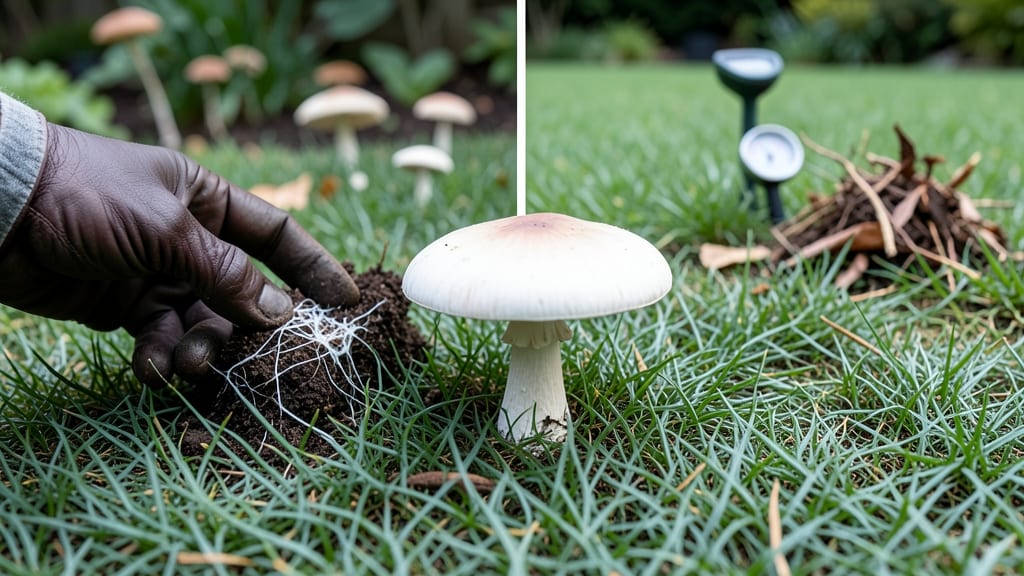
Why have I got mushrooms in my lawn? Those mysterious mushrooms popping up in your grass aren’t just a weird sight—they’re your soil’s way of telling you something important. 🌱 I’ve seen this happen after heavy rains or in shady spots where grass struggles, and it’s usually a sign your lawn needs better airflow or drainage. The good news? This isn’t a disease or pest—it’s actually a natural process, but one that can hint at deeper soil issues if ignored.
Most of the time, mushrooms appear because your lawn has too much moisture trapped in the soil, often from decaying roots, thatch buildup, or poor drainage.
They’re the fruiting bodies of fungi living underground, breaking down organic matter—but when they keep coming back, it’s your cue to aerate or improve water flow. Think of them like little soil detectives pointing out where your lawn might be stressed.
You can tackle this by aerating compacted areas in the fall, spreading a thin layer of compost to balance moisture, or even just raking out the mushrooms (they don’t harm grass).
If they persist after these steps or appear in large clusters, it might be worth checking for hidden drainage problems or even soil compaction that’s limiting root growth.
For most gardeners, a little maintenance is all it takes to send these fungal visitors packing. But if your lawn starts looking patchy or mushrooms keep returning year after year, that’s when it’s time to dig deeper—literally.
A soil test can reveal if your lawn needs more organic matter or better structure to stay healthy without the unexpected guests.
The Hidden Triggers Behind Lawn Mushrooms
Mushrooms popping up in your lawn aren’t just a quirky natural oddity—they’re often a sign that your soil is sending you a message. Understanding the why behind these fungal friends (or foes?) helps you address the root cause before they multiply. Here’s what’s likely happening under your grass:
Mushrooms thrive in damp, shaded environments, and if your lawn retains excess water, you’re creating the perfect fungal buffet. Here’s why:
- Compacted or Clay Soil: Heavy, dense soil struggles to drain water, leaving the top layer soggy.
Mushrooms like Agaricus and Coprinus love this environment because their mycelium (root-like threads) can’t compete with waterlogged conditions. - Overwatering: While grass needs moisture, excessive watering—especially in the evening—keeps the soil damp longer than necessary.
Fungal spores in the soil germinate when moisture levels rise above 30%. - Low Sunlight: Shady spots under trees or fences stay damp longer, slowing grass growth and giving mushrooms an edge. They rely on decaying organic matter, which breaks down faster in moist, shaded areas.
Actionable Fix: Test your soil’s drainage by digging a 6-inch hole and filling it with water. If it doesn’t drain within 24 hours, amend with sand or compost to improve aeration. Water early in the day to allow evaporation.
Mushrooms are nature’s recyclers, breaking down dead plant material. If your lawn has a surplus of organic debris, you’ll see more fungal growth.
- Thatched Grass Clippings: A thick layer of thatch (dead grass, roots, and debris) traps moisture and nutrients, feeding mushrooms like Stropharia (garden giant mushrooms).
That’s why you might spot them after mowing—fresh clippings provide a feast. - Leaf Litter or Mulch: Fallen leaves or wood chips left on the lawn create a dark, humid microclimate.
Mushrooms like Marasmius (fairy ring mushrooms) often appear in these conditions. - Buried Wood or Roots: Stumps, branches, or even buried tree roots contain cellulose, a primary food source for fungi. If you’ve recently tilled or dug, disturbed roots can trigger mushroom growth.
Actionable Fix: Rake up thick thatch or leaf litter and compost it. For buried wood, remove it if possible, or apply lime or sulfur to raise the soil pH, which can inhibit fungal growth.
Mushrooms often appear when your lawn’s nutrient balance is off, particularly if nitrogen levels are low or phosphorus is high.
- Over-Fertilized with Phosphorus: Too much phosphorus (common in bone meal or slow-release fertilizers) encourages fungal growth while weakening grass roots.
Mushrooms like Lentinula edodes (shiitake-like varieties) can colonize in these conditions. - Lack of Nitrogen: Grass struggling from nitrogen deficiency leaves gaps in the turf, allowing mushrooms to take over.
They compete for space and nutrients, often forming in fairy rings (where the outer edge of the ring grows while the center dies). - pH Imbalances: Fungi prefer slightly acidic to neutral soil (pH 6.0–7.5).
If your lawn’s pH is too high (alkaline) or too low (acidic), it can disrupt the natural microbial balance, tipping the scales in favor of mushrooms.
Actionable Fix: Test your soil’s pH and nutrient levels (kits are cheap and easy). If phosphorus is high, switch to a nitrogen-rich fertilizer (like 30-0-4). For low pH, add lime; for high pH, use sulfur or peat moss.
Physical stress to your lawn—like aeration, construction, or even animal activity—can expose fungal spores buried in the soil.
- Recent Aeration or Digging: Aerating or tilling disturbs the soil, bringing dormant spores to the surface where they can germinate.
Mushrooms like Psathyrella (inky caps) often appear after soil disruption. - Foot Traffic or Pets: Compacted areas from heavy use create uneven moisture levels, while pet waste (especially urine) can alter soil pH locally, encouraging fungal growth. - Newly Laid Sod or Seed: Freshly planted grass is vulnerable until its roots establish.
Mushrooms may appear as the soil settles, especially if the area was previously disturbed.
Actionable Fix: Avoid over-aerating unless necessary, and water deeply after sod installation to encourage root growth. For compacted areas, core aeration (removing small soil plugs) can help.
Pro Tip 💡: If mushrooms keep returning, consider fungal-resistant grass varieties like tall fescue or Kentucky bluegrass, which outcompete fungi in healthy conditions. And remember—most lawn mushrooms are harmless (even edible in some cases!), but addressing the cause ensures they don’t become a permanent fixture.
Quick Fixes for Lawn Mushrooms
Finding mushrooms popping up in your lawn can feel like a surprise party—unwanted and a little unsettling. But don’t panic! Most cases are harmless, and with the right approach, you can tackle the issue head-on.
Below, we’ve mapped out practical, step-by-step solutions based on the most common causes, plus tips to keep your lawn fungus-free long-term.
Problem: Mushrooms thrive in damp, dense soil where water pools and roots struggle.
How to Fix It:
- 🔥 Reduce Watering Frequency
- Water deeply 2–3 times per week (early morning) instead of daily light sprinkles. Aim for 1–1.5 inches of water per session.
- Pro Tip: 💡 Use a rain gauge or tuna can to measure—overwatering is a top culprit!
- 👨🍳 Aerate Your Lawn (DIY or Rent a Core Aerator)
- Rent a core aerator (or hire a pro) to pull small soil plugs, relieving compaction.
- When to do it: Late spring or early fall, when grass is actively growing.
- 🌱 Top-Dress with Compost or Sand
- Spread a ¼-inch layer of compost or coarse sand over the lawn after aerating to improve drainage.
- Prevention Tip: ✨ Reapply annually to maintain soil health.
- ⏰ Monitor Moisture Levels
- Stick your finger 2 inches into the soil—if it’s soggy, hold off on watering.
Problem: Thatch buildup (a layer of dead grass and roots) traps moisture, inviting mushrooms.
How to Fix It:
- 🔪 Dethatch in Early Fall
- Rent a dethatching rake or vertical mower to remove thatch (target ½-inch thick layers).
- Safety First: ⚠️ Wear gloves—thatch can be sharp!
- 🌿 Mow High & Regularly
- Set your mower to 3–4 inches to shade soil and reduce moisture loss.
- Mow when grass is dry to avoid clumping.
- 🍃 Overseed Bare Spots
- Fill thin areas with disease-resistant grass seed (e.g., tall fescue or Kentucky bluegrass).
- Pro Tip: 🌡️ Wait until soil temps are above 60°F for best germination.
- 🧹 Clean Up Debris
- Remove fallen leaves, clippings, and weeds—these smother grass and hold moisture.
Problem: Mushrooms love shaded, damp spots where grass struggles to grow.
How to Fix It:
- 🌳 Prune Overhanging Branches
- Trim trees/shrubs to let at least 6 hours of sunlight reach the lawn daily.
- 🚰 Install a French Drain or Swale
- For persistently soggy patches, redirect water with a gravel trench drain or berm (swale).
- DIY Hack: 🔧 Use a shovel to create a slight slope away from the lawn.
- 🌱 Replace Grass with Ground Covers
- In permanently wet areas, consider creeping thyme, clover, or moss—they tolerate moisture better than turf.
- 💦 Use a Sprinkler Timer
- Avoid watering after dark—evening moisture lingers, encouraging fungi.
Problem: If mushrooms keep returning despite fixes, a targeted treatment may help.
How to Fix It:
- 🍄 Spot-Treat with Fungicide
- Use a lawn-safe fungicide (e.g., propiconazole or trifloxystrobin) on mushroom clusters.
- Follow Labels: ⚠️ Apply when no rain is forecasted for 24–48 hours.
- 🌱 Boost Soil Health First
- Fertilize with a low-nitrogen, high-phosphorus blend (e.g., 5-10-10) to strengthen grass roots.
- Avoid Over-Fertilizing: 🎯 Too much nitrogen = softer grass = more fungal food.
- 🔄 Reapply as Needed
- Fungicides may require 2–3 applications, spaced 2–3 weeks apart.
Keep mushrooms from crashing your lawn party with these easy habits:
- 🌱 Test your soil (pH 6.0–7.0 is ideal)—amend with lime or sulfur if needed.
- 🍂 Rake up mushrooms as they appear (don’t compost them—they’ll regrow!).
- 💧 Water in the morning to allow grass to dry by evening.
- 🌿 Mow frequently to prevent thatch buildup.
- 🌳 Thin out dense plantings to improve airflow.
Remember: Most lawn mushrooms are harmless and even beneficial (they break down organic matter!). But if they’re ruining your yard’s look or spreading fast, act now—your grass will thank you. 🌿✨
Frequently asked questions
Are mushrooms in my lawn dangerous?
Most lawn mushrooms are harmless and actually help break down organic matter in your soil. However, some species can be toxic if ingested, so avoid touching or eating them. If you notice mushrooms appearing in large clusters or your lawn starts looking patchy, it may signal deeper soil issues like poor drainage or compaction.
Will removing mushrooms make them come back?
Yes, they’ll likely return if the underlying conditions (like excess moisture or thatch buildup) aren’t addressed. Simply pulling mushrooms out doesn’t fix the problem—you’ll need to improve drainage, aerate your lawn, or reduce thatch. Think of it like treating a symptom rather than the cause.
Can I use vinegar or bleach to kill lawn mushrooms?
Vinegar (1:1 with water) or bleach can kill mushrooms on contact, but they’re not long-term solutions. Vinegar may harm grass over time, while bleach can damage soil microbes. Instead, focus on improving drainage, aerating, and reducing thatch—these methods tackle the root cause without harming your lawn.
Do mushrooms mean my lawn has pests or disease?
Not necessarily! Mushrooms are a natural part of the soil ecosystem and don’t indicate pests or disease. They thrive in damp, shaded areas where grass struggles. If your lawn is otherwise healthy, mushrooms are just a sign of excess moisture or organic matter—no need to panic about grubs or fungal infections.
When is the best time to fix mushroom problems?
The ideal time to address lawn mushrooms is in early fall or late spring, when grass is actively growing. Aerate, dethatch, and overseed during these seasons for the best results. Avoid heavy treatments in summer heat or winter dormancy—your lawn needs energy to recover.