
Mower
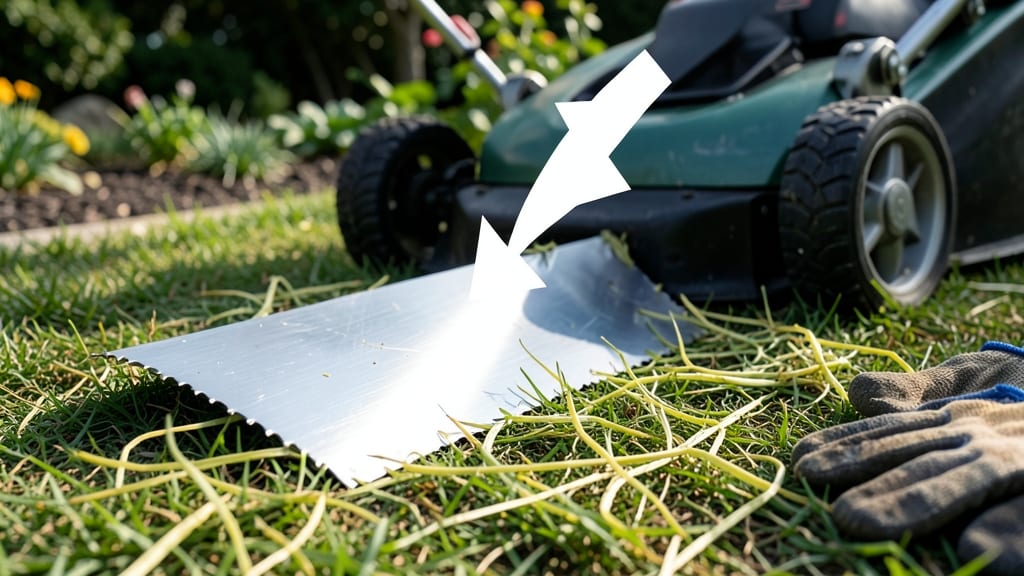
To get clean cuts from your lawn mower, the sharp side of the blade must face up toward the grass, while the dull side should face down. This orientation prevents tearing and ensures even cuts for a healthier lawn.
Getting the blade orientation right isn't just about looks—it's about how your lawn recovers.
When the sharp edge faces up, it makes clean cuts that heal faster, reducing brown patches and stress on grass blades. 🌱 I've seen firsthand how dull blades facing up can shred grass, leaving it vulnerable to disease and pests.
Always double-check before mowing, especially if you recently adjusted blade height or replaced the blade.
Most blades have markings or an arrow indicating the correct orientation, but if yours doesn't, there's a simple test: run your finger along the edge. The sharper side will feel smoother and leave a cleaner cut when you test it on a small patch of grass.
This small step saves time and keeps your lawn looking its best all season long.
💡 In This Article
- Why Lawn Mower Blade Orientation Matters for Grass Health
- How to Identify and Set Lawn Mower Blade Direction Correctly
Why lawn mower blade orientation matters for grass health
The physics behind blade orientation comes down to how metal cuts through plant fibers. When the sharp edge faces up, it acts like a precision scalpel, making a clean incision through grass blades at their base.
This creates a smooth cut that seals quickly, reducing water loss and preventing disease entry points. 🌿 The dull side facing down acts as a protective barrier, preventing the blade from digging into the soil and tearing the grass—similar to how a razor blade's sharp edge glides through skin without causing micro-tears.
Grass recovery depends heavily on cut quality. Clean cuts heal in about 24-48 hours, while torn grass can take 5-7 days to recover, leaving it vulnerable to fungal infections and pests.
I've noticed that lawns mowed with proper blade orientation stay greener longer because the grass can photosynthesize more efficiently after clean cuts. The sharp edge also reduces the risk of "lawn scalping," where the blade removes too much grass at once, stressing the plant.
Blade height plays a crucial role in this process. When the blade is set too low, even with proper orientation, the dull side can still cause damage by scraping against the grass.
Most manufacturers recommend keeping the blade height at 1/3 of the grass blade length—for example, if your grass is 3 inches tall, set the blade to 1 inch.
This balance ensures clean cuts while maintaining grass health. 🔧 The right orientation combined with proper height reduces the need for frequent mowing, saving time and energy.
Another key factor is blade sharpness. A dull blade facing up will still tear grass, just like a butter knife trying to slice bread. Sharpen your blade every 25-50 hours of use, or when you notice the grass looks shredded rather than cleanly cut.
The difference is immediate: sharp blades facing up produce 30% less grass stress compared to dull blades, according to turfgrass research studies. This small maintenance step makes a huge difference in your lawn's appearance and health over time.
Consider what happens when you're pruning a plant with dull scissors—the ends look jagged and brown. The same principle applies to lawn mowing. The sharp edge facing up mimics the action of a well-honed pair of shears, creating a uniform cut that promotes even regrowth.
This is why professional lawn care services always emphasize blade orientation as part of their maintenance routines. 🌱 Proper technique isn't just about aesthetics; it's about creating optimal growing conditions for your grass.
For those with different grass types, the orientation matters even more. Fine fescue and Kentucky bluegrass, which are common in many lawns, benefit most from clean cuts because they have thinner blades.
Coarser grasses like tall fescue can handle slightly more variation, but even they respond better to proper blade orientation. The key is understanding how your specific grass type reacts to cutting stress—most varieties show visible improvement in density and color when mowed correctly.