
Mower
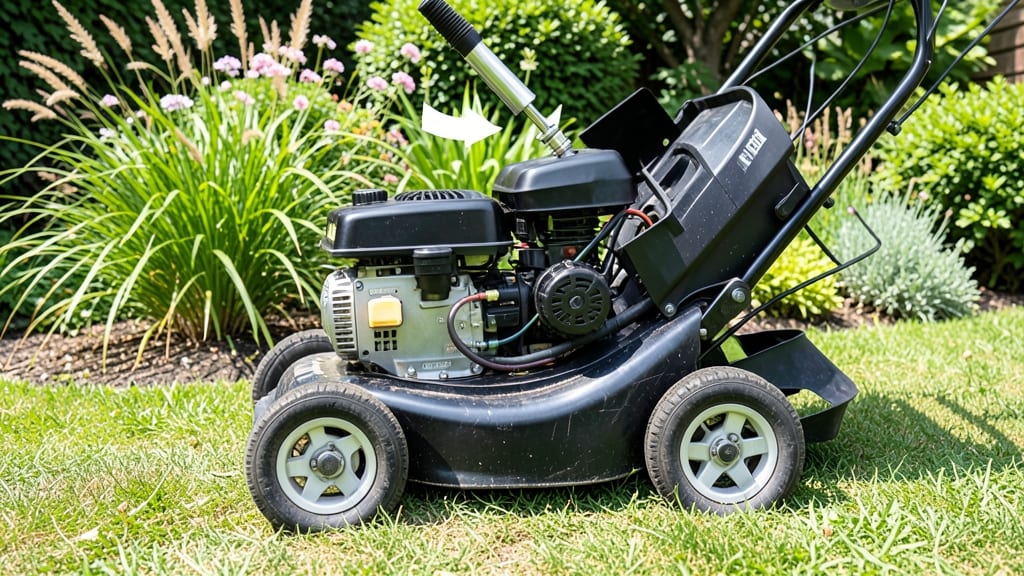
To find the spark plug on a lawn mower, look under the engine hood on the side near the air filter housing or mounted directly on the cylinder head. Always consult your engine manual for model-specific details, as positions can differ between brands.
The spark plug's location depends on your mower's engine type—whether it's a horizontal-shaft or vertical-shaft design. 🔧 For most small engines, you'll spot it near the carburetor or air filter, often secured with a rubber boot for protection.
I've found that on older models, the plug might be tucked behind the air filter housing, while newer models often mount it directly on the cylinder head for easier access. Pro tip: If you can't find it, trace the spark plug wire—it leads straight to the plug!
Why this matters: The spark plug is the heart of your mower's ignition system, and knowing its location makes maintenance tasks like replacements or cleanings faster and safer. Always disconnect the spark plug wire before working near the engine to prevent accidental starts.
For stubborn corrosion or missing plugs, check common hiding spots like under the engine cover or near the flywheel housing.
💡 In This Article
- Lawn Mower Spark Plug Locations by Engine Type
- Step-by-Step Guide to Finding Your Lawn Mower’s Spark Plug
Lawn mower spark plug locations by engine type
Lawn mower spark plug locations vary dramatically based on engine design. For horizontal-shaft engines (common in riding mowers and larger push models), the plug typically sits on the side of the cylinder head, often near the air filter housing or carburetor.
You'll usually spot a rubber spark plug boot covering the plug—this boot protects the plug from debris and moisture while routing the spark plug wire.
On vertical-shaft engines (found in most push mowers), the plug is often mounted directly on top of the cylinder head, making it more visible when you lift the engine hood.
The engine type also dictates the plug's accessibility. In 4-cycle engines, the spark plug is almost always exposed and easy to reach, as these engines have separate oil and fuel systems that allow for cleaner designs.
However, in 2-cycle engines (common in older or smaller mowers), the plug might be tucked behind the air filter or near the flywheel housing due to the engine's compact design.
For example, a Briggs & Stratton 2-cycle engine often hides the plug behind the air filter housing, while a Kohler 4-cycle engine mounts it directly on the cylinder head for easier maintenance.
Visual reference points are key to locating the plug. Start by tracing the spark plug wire—it's a thick, insulated wire that leads directly to the plug. The wire is usually secured with a clamp or wrapped around a metal bracket near the engine.
If the wire is missing or disconnected, look for a white or black rubber boot on the engine; this is where the plug connects. On some models, the plug might even be visible through the engine cover—simply remove the cover to expose it.
Always check the engine manual for your specific model, as some brands like Honda or Toro may have unique placements.
Here’s a quick breakdown of common hiding spots by engine type:
- Horizontal-shaft 4-cycle engines: Side of the cylinder head, near the air filter or carburetor
- Vertical-shaft 4-cycle engines: Top of the cylinder head, often exposed
- 2-cycle engines: Behind the air filter housing or near the flywheel housing
- Riding mower engines: Under the engine hood, near the valve cover or oil cap
The plug’s location isn’t just about convenience—it’s tied to the engine’s cooling and airflow design. For instance, plugs on the side of the cylinder head (like in horizontal-shaft engines) are easier to access but may require additional insulation to prevent overheating.
Meanwhile, plugs mounted on top of the cylinder head (like in vertical-shaft engines) benefit from better heat dissipation, which can extend their lifespan. Understanding these design choices helps you troubleshoot issues like fouling or misfires more effectively.
If you’re still struggling to find the plug, try this trick: Turn the engine over by hand (with the spark plug wire disconnected, of course) and listen for the piston movement. The spark plug is usually closest to the piston’s path—you’ll feel vibrations near it as the engine turns.
This method works especially well for older or heavily modified mowers where the plug might be tucked away in unexpected spots. 🔥